Tehran: Iran on Saturday said the Strait of Hormuz will be closed and opened only under Tehran’s command, sharply responding to US President Donald Trump’s claim that he would soon declare the strategic waterway a US territory.
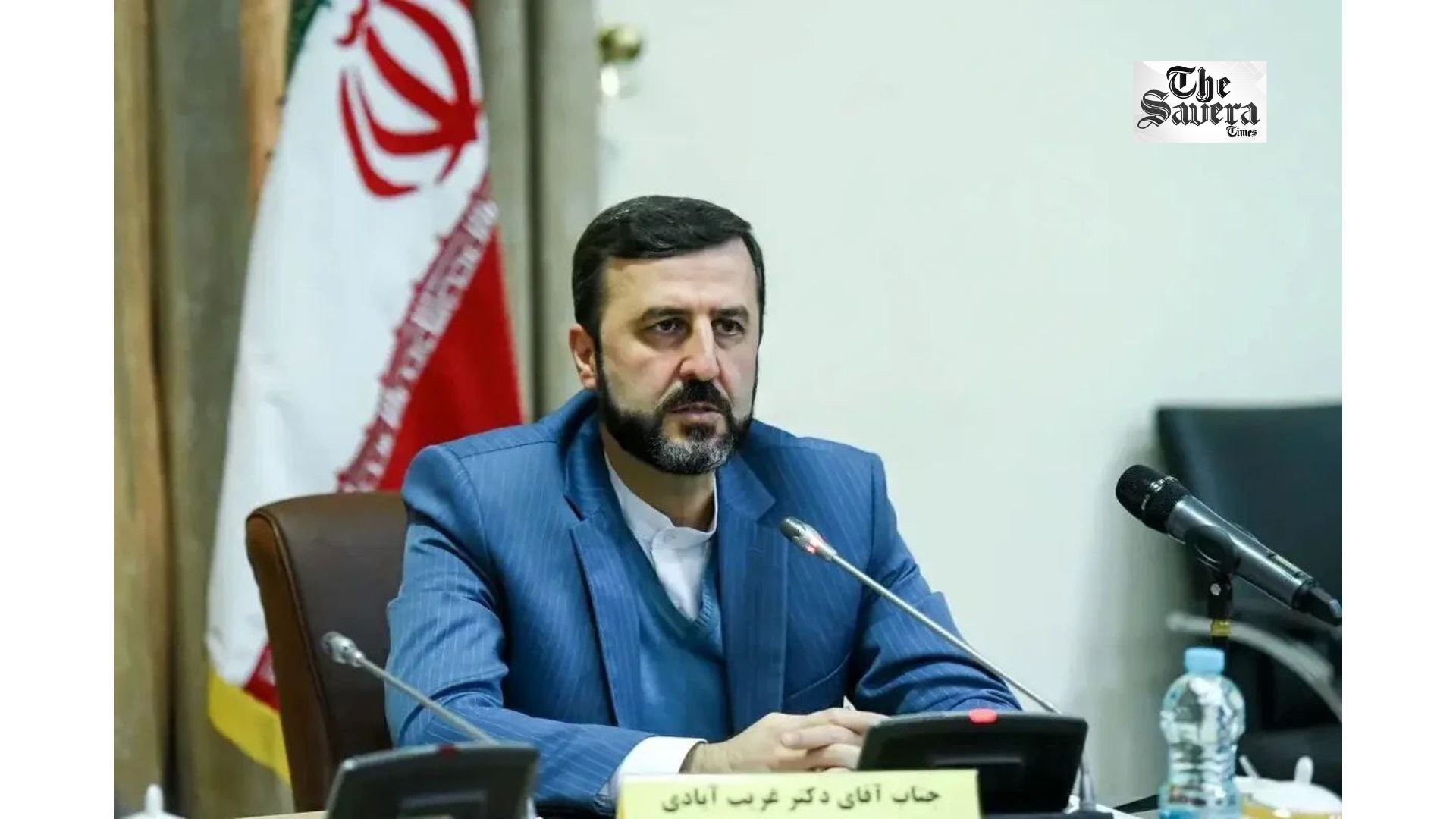
Iranian Deputy Foreign Minister for Legal and International Affairs Kazem Gharibabadi made the remarks in a post on X, saying Iran would not be intimidated by US threats or military power.
“The Strait of Hormuz can be captured neither with a tweet and aircraft carriers nor by issuing orders and a stump speech. Iran is neither afraid of threats nor intimidated by displays of power,” he said.
Gharibabadi added that the strait would “only be closed and opened under Iran’s command.”
Iran Responds to Trump’s Strait of Hormuz Claim
The Iranian statement came after Trump said during a rally in New York on Friday that he would declare the Strait of Hormuz a territory of the United States after defeating Iran.
Trump’s remarks have further heightened tensions surrounding the strategically important waterway, through which a significant share of global oil supplies passes.
Iran Says No Decision on Resuming US Talks
Meanwhile, Iranian Foreign Minister Seyed Abbas Araghchi said Tehran has not yet decided whether to resume negotiations with the United States.
Speaking to state-run IRIB, Araghchi said messages were being exchanged between Iran and the US through mediators, but stressed that this did not amount to formal negotiations.
He said the two sides had signed a memorandum of understanding in June aimed at ending the war in the region, but alleged that the United States had violated the agreement, following which clashes resumed.
Iran, Oman Discuss Alternative Route for Ships
Araghchi also said Iran and Oman were discussing a new route to ensure the safe passage of vessels through the Strait of Hormuz.
He said the two countries were currently working on a temporary route that could eventually become permanent.
According to Araghchi, a conclusion could be reached soon, but he stressed that the reopening of the strait would depend on the fulfilment of other conditions to which the United States would have to commit.
The latest statements come amid continuing uncertainty over the future of US-Iran negotiations and the status of shipping through the strategically vital Strait of Hormuz.