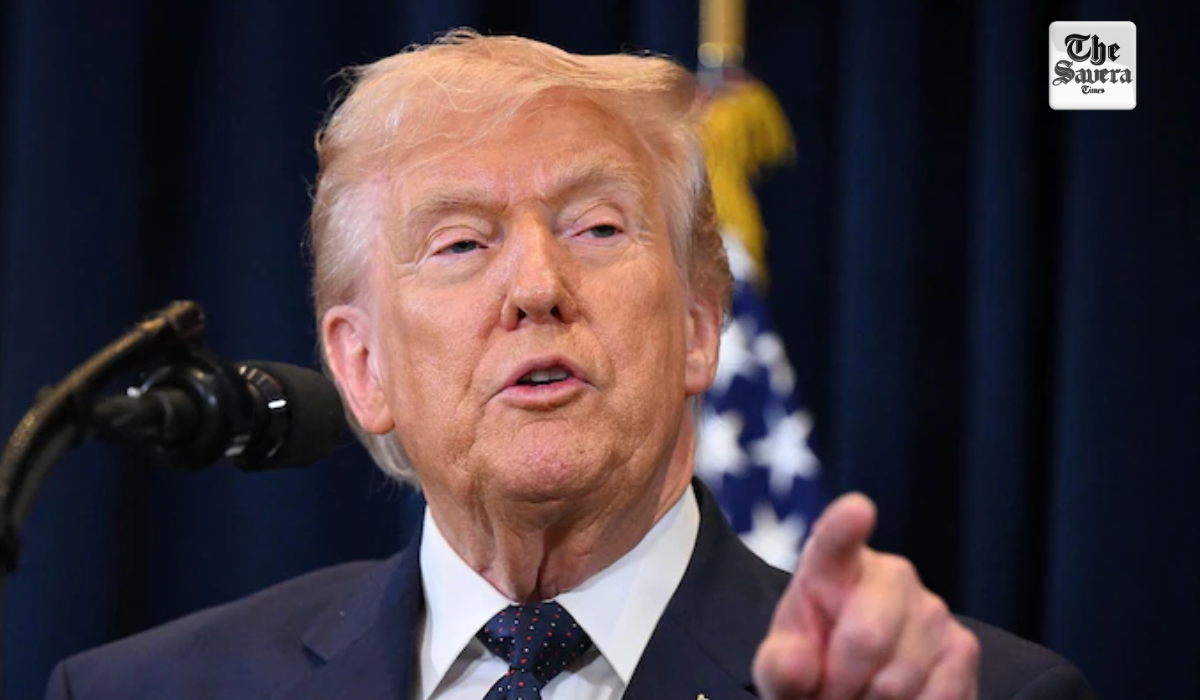
Washington: US President Donald Trump has said that Israel will refrain from attacking Iran’s crucial South Pars Gas Field unless Tehran makes the “unwise” decision to strike what he described as an “innocent” nation like Qatar.
His remarks come amid escalating tensions in the Gulf following a series of retaliatory attacks on energy infrastructure.
Trump Distances US From Israeli Strike
Trump stated that Israel’s strike on Iran’s South Pars gas field was carried out independently and without prior knowledge of the United States.
He described the Israeli action as a reaction driven by anger over ongoing Middle East conflicts, adding that only a limited portion of the massive gas field was affected. He also clarified that Qatar had no involvement or prior information regarding the Israeli strike.
According to Trump, Iran misinterpreted the situation and responded by targeting Qatar’s LNG infrastructure, an action he termed unjustified.
Warning to Iran Over Further Escalation
The US President warned that Israel would not carry out further attacks on the South Pars facility unless Iran escalates by targeting Qatar again.
He issued a strong caution that if Iran strikes Qatar’s gas infrastructure once more, the United States could respond with overwhelming force, potentially destroying the entire South Pars field.
While emphasising that he does not wish to authorise such large-scale destruction due to its long-term consequences, Trump made it clear that the US would act decisively if provoked.
Iran’s Strike on Qatar’s Energy Facilities
State-owned QatarEnergy reported that Iranian missile attacks caused significant damage to LNG facilities, sparking major fires.
Firefighting teams are working to control the situation, and no casualties have been reported so far. However, the damage could delay Qatar’s ability to resume full gas exports after the conflict subsides.
Qatar remains a critical supplier in global energy markets, and disruptions there have widespread implications.
Israel-Iran Conflict Spreads Across Gulf
Israel had earlier targeted Iran’s South Pars offshore gas field, intensifying pressure on the region’s energy sector. In retaliation, Iran expanded its attacks to neighbouring Gulf nations, including Qatar.
In response to the strike, Qatar ordered Iranian embassy officials to leave the country within 24 hours, further escalating diplomatic tensions.
Iran also targeted key energy installations in the United Arab Emirates, including the Habshan gas facility and the Bab field. Authorities in Abu Dhabi described the attacks as a dangerous escalation but confirmed that operations had already been halted and no major damage occurred due to successful interceptions.
Rising Global Energy Concerns
The ongoing conflict has increased pressure on Gulf nations, which have so far focused on defensive measures despite repeated attacks on their infrastructure.
Global oil markets have reacted sharply, with prices rising over 5 per cent to exceed $108 per barrel. Brent crude has surged nearly 50 per cent since the conflict began, largely due to Iran’s actions affecting the strategic Strait of Hormuz, through which a significant portion of the world’s oil supply passes.
US Looks to Stabilise Oil Supply
Amid rising energy concerns, the US administration has taken steps to stabilise supply. The Treasury Department recently eased sanctions on Venezuela, allowing American companies to engage with its state-owned oil sector to help offset global shortages.
The situation continues to evolve as tensions in the region remain high, with potential implications for global energy security and geopolitical stability.