Last Updated: October 3, 2026
Last Updated: October 3, 2026





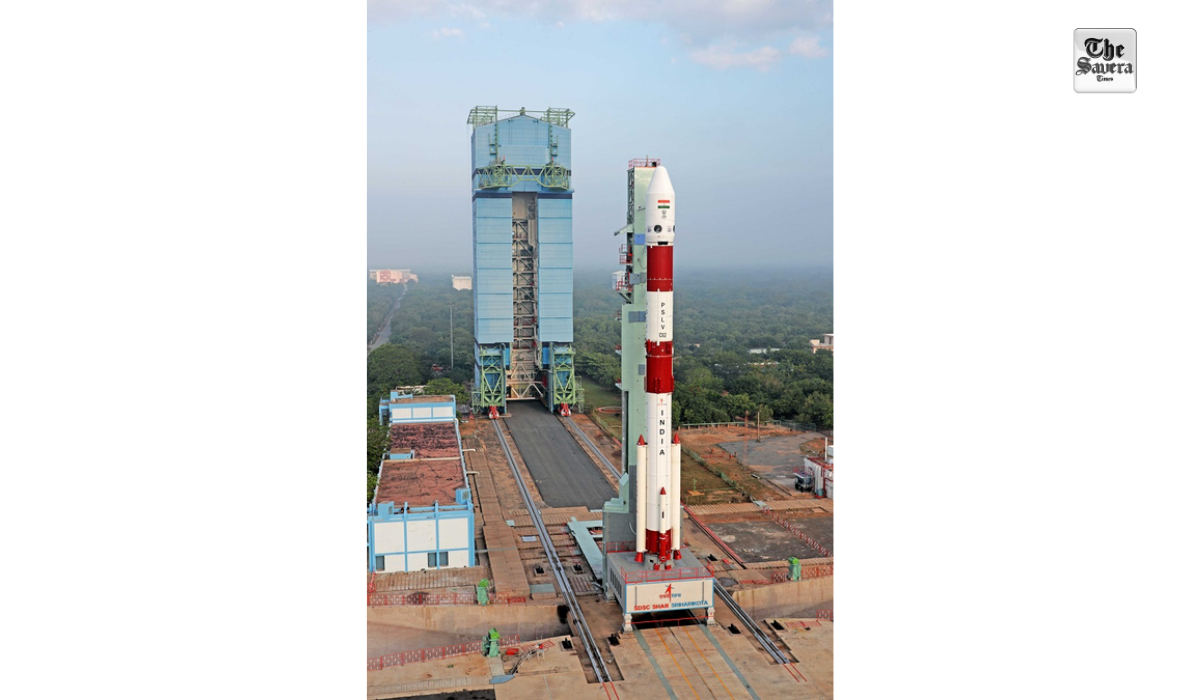
New Delhi: The Indian Space Research Organisation (ISRO) is set to begin 2026 with the launch of the EOS-N1 Earth observation satellite. The satellite will be launched aboard a PSLV-C62 rocket on January 12. This mission will be the first space mission of 2026.
EOS-N1, also known as ‘Anvesha’, will strengthen India’s remote sensing capabilities. It will be used in areas such as agriculture, urban mapping, and environmental monitoring.
Launch Schedule and Mission Outline
ISRO stated, “Integration of the vehicle and satellites has been completed, and pre-launch checks are ongoing. The PSLV-C62 mission is scheduled to launch on January 12, 2026, at 10:17 AM, from the First Launch Pad of the Satish Dhawan Space Centre, Sriharikota.”
The mission will also carry 15 co-passenger payloads along with EOS-N1, making it a significant multi-satellite mission.
Foreign Payloads and Re-entry Testing
ISRO also informed that the mission will demonstrate the KID (Kestrel Initial Technology Demonstrator) developed by a Spanish startup. It is a miniature prototype of a re-entry vehicle.
According to the agency, “The KID will be placed into orbit last, after which it will re-enter the Earth’s atmosphere and splashdown in the South Pacific Ocean.”
PSLV’s Legacy and Commercial Achievement
The PSLV-C62/EOS-N1 mission will be the ninth dedicated commercial mission operated by New Space India Limited (NSIL)—the commercial arm of ISRO. This will be the 64th launch of the PSLV and the fifth mission with the PSLV-DL variant, equipped with two solid strap-on motors.
The PSLV has previously successfully launched landmark missions such as Chandrayaan-1, the Mars Orbiter Mission, Aditya-L1, and AstroSat. In 2017, the PSLV also set a world record by launching 104 satellites in a single mission.
Technical Challenges of Previous Mission
ISRO also recalled that during the PSLV-C61 mission in May, an attempt was made to place the 1,696 kg EOS-09 satellite into a 505 km Sun-Synchronous Polar Orbit. While the initial stages of the flight were normal, a technical failure in the third stage prevented the satellite from reaching its intended orbit.
Jalandhar, Punjab: Congress has appointed Jalandhar Cantonment MLA and former Olympian hockey player Pargat Singh as the new...

Guwahati: Assam Police on Saturday said they have launched a probe into the horrifying incident where a woman...

New Delhi: Prime Minister Narendra Modi on Saturday extended birthday greetings to Union Culture and Tourism Minister, Gajendra...
Mumbai: Bollywood actress Kriti Sanon and her younger sister Nupur Sanon shared a glimpse of their functioning side...

Washington: The United States has listed 50 countries whose nationals are subject to visa bonds of up to...

Washington: US President Donald Trump ruled out a ban on American diesel exports after European countries agreed to...

Aries: The day will be auspicious...