Last Updated: September 22, 2026
Last Updated: September 22, 2026





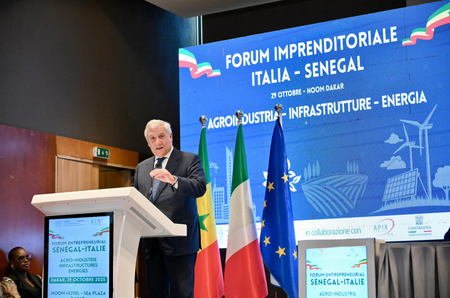
Antonio Tajani, the Deputy Prime Minister and Foreign Minister of Italy, is scheduled to visit India in December 2025 for a series of high-level meetings with External Affairs Minister S. Jaishankar. The visit is part of a broader Italian initiative to strengthen bilateral relations with key partners outside the European Union, with India identified as a top priority due to its growing economic and geopolitical importance.
Officials have indicated that Tajani’s agenda will focus on enhancing bilateral cooperation across trade, investment, defence, technology, and cultural ties, and on translating strategic frameworks like the Joint Strategic Action Plan (JSAP) 2025‑29 into actionable outcomes. The visit also underscores Italy’s interest in supporting India’s growth and development ambitions while deepening collaboration on global and regional issues.
The Italian delegation is expected to discuss a wide range of cooperation areas during the visit:
Trade and Investment: Both countries are expected to explore new avenues for bilateral trade and encourage Italian companies to invest in India’s rapidly expanding economy, particularly in sectors like manufacturing, clean energy, and infrastructure.
Defence and Security: Strengthening strategic cooperation, including maritime security, joint exercises, and defence technology collaboration. Initiatives like the India–Middle East–Europe Economic Corridor (IMEEC) are expected to be discussed as a framework for regional connectivity.
Science, Technology, and Innovation: Areas such as digital transformation, renewable energy, space research, advanced manufacturing, and technology transfer will be on the agenda, reflecting both nations’ commitment to innovation-led growth.
People-to-People Ties: Education, cultural exchange, and academic partnerships will be emphasized, including student mobility programs, research collaboration, and initiatives to promote mutual understanding and long-term bilateral engagement.
Tajani’s visit carries significant strategic weight. For Italy, India is a key partner in the Indo-Pacific region, offering opportunities for trade diversification, export promotion, and collaboration in technology and defence. For India, engaging with a G7 nation like Italy strengthens its global partnerships, enhances technological and industrial capabilities, and contributes to India’s ambitions in energy transition, innovation, and infrastructure development.
The visit also signals both nations’ commitment to deepening ties at a time when global geopolitics and economic landscapes are rapidly changing. By fostering stronger bilateral relations, Italy and India aim to jointly address challenges related to trade, security, energy, and sustainable development.
Observers expect several tangible outcomes from Tajani’s visit, including:
Signing of MoUs or agreements on trade, defence, technology, and research collaboration.
Advancement of the IMEEC project to enhance regional connectivity between Europe, the Middle East, and India.
Commitments from Italian firms for investments in clean energy, advanced manufacturing, and digital technologies.
Strengthened educational and cultural exchanges, including collaborative research projects, student programs, and mobility initiatives.
Experts note that Tajani’s visit could also pave the way for deeper alignment between India and Italy on international issues such as climate change, renewable energy, and multilateral cooperation in forums like the G20, where both countries are influential.
The visit is expected to have long-term implications for the India-Italy strategic partnership, reinforcing political trust, economic collaboration, and people-to-people ties. By focusing on innovation, sustainability, and defence collaboration, the engagement reflects a shared vision of a stable, connected, and prosperous Indo-Pacific region. It also demonstrates India’s growing role as a key global partner for European nations seeking reliable, long-term engagement outside the EU.
As Chinese research vessels operate in waters around Taiwan, Beijing has maintained that they are conducting only marine...
Putin's United Russia party has won 355 of 450 State Duma seats in Russia's first parliamentary election since...
Two crew members were injured after a tanker was struck by an unknown projectile while transiting the Strait...

New Delhi: Prime Minister Narendra Modi on Monday condoled the death of Sheikh Ahmed bin Rashid Al Maktoum,...
Chinese President Xi Jinping will visit the United States from September 23 to 25 for talks with President...
Indian Naval Ships Sahyadri and Kulish have arrived at Subic Bay in the Philippines to participate in the...

Aries: The day will be auspicious...