Last Updated: October 21, 2026
Last Updated: October 21, 2026





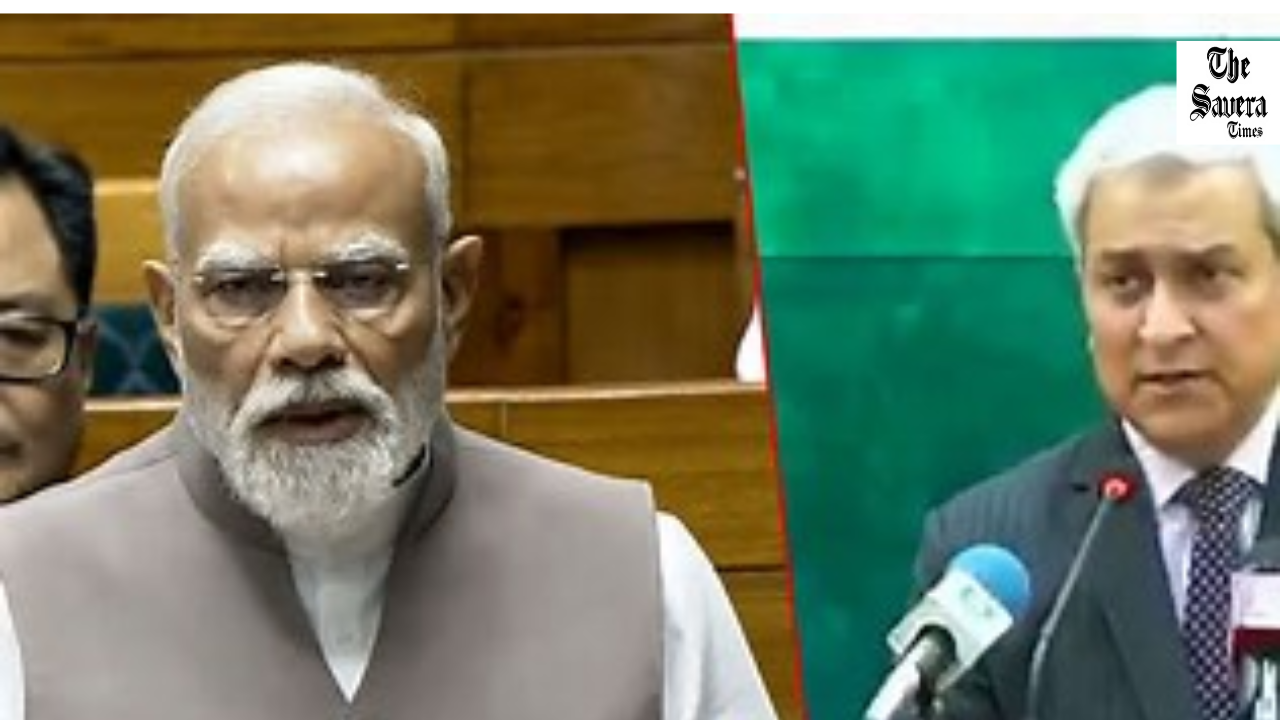
Pakistan has reacted strongly to India’s proposed Delimitation Bill 2026, which lays out a framework for redrawing constituencies in Jammu and Kashmir, including areas under Pakistan’s control. The development has sparked diplomatic tensions, with Islamabad rejecting the move and terming it “illegal” and “politically motivated.”
The bill, introduced by the government led by Narendra Modi in Parliament, seeks to redefine electoral boundaries in Jammu and Kashmir as part of a broader political restructuring of the region. Notably, the proposal includes provisions related to Pakistan-occupied Jammu and Kashmir (PoJK), a move that has drawn immediate criticism from Pakistan.
Responding to media reports, Pakistan’s Foreign Ministry spokesperson Tahir Andrabi stated that Islamabad does not recognise India’s delimitation exercise in Jammu and Kashmir. He asserted that the region remains a “disputed territory” and that any unilateral decision by India to alter its political or demographic structure would be considered invalid.
Andrabi further alleged that the delimitation process is aimed at changing the ground realities in the region. He said such measures undermine international norms and bilateral agreements, reiterating Pakistan’s long-standing stance on Kashmir. The spokesperson emphasised that any political or administrative changes in the region must be in accordance with international law and reflect the will of the people.
On the other hand, India maintains that Jammu and Kashmir is an integral part of the country and that delimitation is a constitutional and administrative process necessary for ensuring fair political representation. The proposed legislation is seen as part of ongoing efforts to strengthen democratic institutions in the Union Territory following the abrogation of Article 370 in 2019.
The inclusion of PoJK in the bill reflects India’s consistent position that the entire region of Jammu and Kashmir legally belongs to it, even though parts of it are currently under Pakistan’s control. Indian officials have often described such measures as internal matters, asserting that they do not require external approval.
The latest exchange highlights continuing tensions between India and Pakistan over Kashmir, a longstanding issue that has shaped relations between the two countries for decades. While diplomatic rhetoric has intensified following the introduction of the bill, there has been no indication of any immediate escalation beyond statements from both sides.
Observers note that such developments are likely to keep the Kashmir issue at the centre of regional discourse, especially as both nations continue to assert their respective positions on sovereignty and governance in the region.
Two people were killed and ten injured after a passenger bus met with an accident at Gala Pachound...

A Srinagar-bound bus with a Jammu and Kashmir registration number was attacked with stones outside the Divine Star...

An encounter broke out in Jumgund in Jammu and Kashmir's Kupwara district after troops detected suspicious movement near...

Higher reaches of Jammu and Kashmir received the season’s first snowfall, covering Doda, Gurez Valley and Pir Ki...

Several high-altitude areas in Jammu and Kashmir have received the season's first snowfall in the past 24 hours....
Jammu: Joint security forces recovered a cache of arms and ammunition during a search operation in Jammu and...
Aries: The day will be auspicious...