Last Updated: October 6, 2026
Last Updated: October 6, 2026





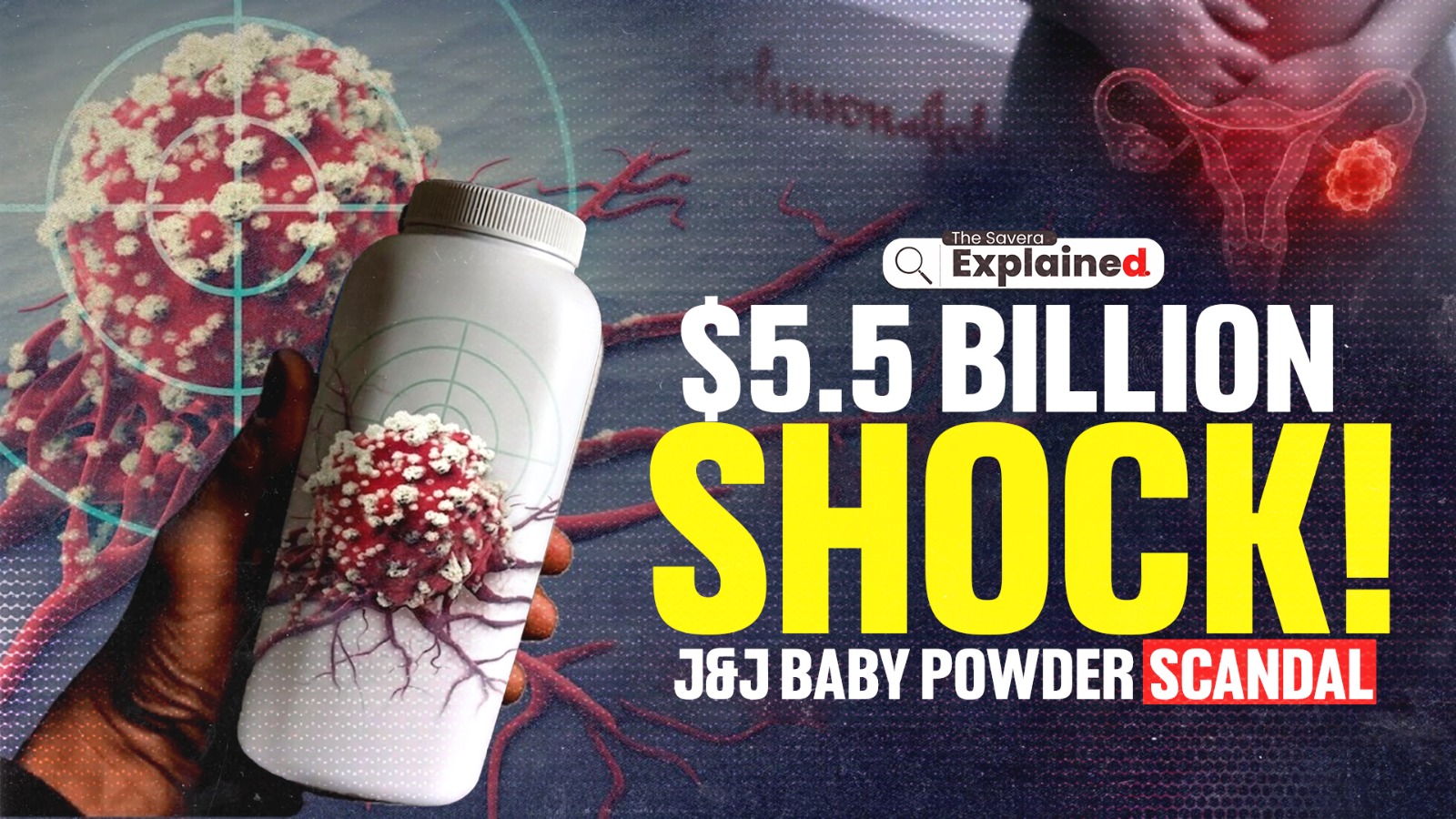
For decades, Johnson & Johnson’s baby powder was seen as a symbol of trust and care. Millions of families across the world used it for babies and personal hygiene. But today, the same product is at the centre of one of the biggest product liability cases in corporate history.
The company has now agreed to pay an estimated $5.5 billion to settle around 76,000 lawsuits that claim its talc-based baby powder caused ovarian cancer.
So, what exactly happened, why is the company paying such a huge amount despite denying the allegations, and what does it mean for one of the world’s most trusted brands? Here’s the complete story.
How Did the Controversy Begin?
The controversy revolves around talc, a naturally occurring mineral widely used in cosmetics because it absorbs moisture and reduces friction. For years, Johnson & Johnson sold talc-based baby powder across the world.
The lawsuits alleged that women who regularly used the powder for feminine hygiene developed ovarian cancer. Plaintiffs also claimed that some talc deposits naturally contained asbestos, a known cancer-causing substance, and that prolonged exposure increased cancer risk.
Johnson & Johnson has consistently denied these allegations. The company says decades of scientific studies have found its cosmetic talc to be safe and asbestos-free, and that there is no proven link between its products and ovarian cancer.
Why Is Johnson & Johnson Paying $5.5 Billion?
The company says the settlement is not an admission of guilt. Instead, it is an effort to end years of expensive and lengthy legal battles.
The proposed agreement covers nearly 76,000 existing ovarian cancer lawsuits in US courts. If 95 per cent of eligible claimants accept the settlement, it will become legally binding.
Johnson & Johnson expects to pay around $3 billion in 2027, with the remaining amount in 2028. Depending on the number of eligible claimants, the final payout could even exceed $7 billion.
Unlike earlier proposals, this agreement only covers existing lawsuits and does not include future claims.
The Legal Battle That Lasted Over 15 Years
The company has faced mixed results in court.
In 2018, a Missouri jury awarded $4.69 billion to 22 women who claimed the powder caused ovarian cancer. The amount was later reduced to $2.1 billion, and the US Supreme Court declined to review the case.
In 2024, Johnson & Johnson agreed to pay $700 million to settle allegations by 42 US states over deceptive marketing of its talc products.
The year 2025 brought more major verdicts. A Baltimore jury awarded $1.5 billion in a mesothelioma case involving Cherie Craft. In another case in Los Angeles, a jury awarded $966 million to the family of Mae Moore, although the $950 million punitive damages were later struck down. In a separate Los Angeles case, two women with ovarian cancer received $40 million, and that verdict was upheld.
In 2026, jury decisions showed how unpredictable these cases had become. In Philadelphia, the family of Gayle Emerson received only $250,000 in an ovarian cancer case. Meanwhile, another Los Angeles jury awarded $32 million to the family of a woman who died from pleural mesothelioma.
These varying verdicts created uncertainty for both the company and the plaintiffs.
The Failed Bankruptcy Strategy
Instead of fighting thousands of individual lawsuits, Johnson & Johnson tried a controversial legal strategy known as the “Texas Two-Step.”
It created separate subsidiaries to absorb talc-related liabilities and then filed them for bankruptcy, hoping to settle all claims through bankruptcy courts.
However, US courts rejected this strategy multiple times, ruling that a financially healthy company could not use bankruptcy simply to avoid mass lawsuits. After those failures, both sides returned to direct negotiations, leading to the current settlement proposal.
What Happens Next?
Johnson & Johnson stopped selling talc-based baby powder in the US and Canada in 2020 and later replaced it globally with a cornstarch-based formula. In 2023, it also separated its consumer health business into Kenvue, while retaining responsibility for talc lawsuits in North America.
The settlement still requires approval from 95 per cent of eligible claimants. If approved, it will end one of the biggest corporate legal battles in American history.
Impact on Johnson & Johnson’s Brand
Although Johnson & Johnson remains one of the world’s largest healthcare companies, the baby powder controversy has damaged the image of a brand that was once closely associated with safety and trust.
For many consumers, the issue is no longer only about scientific evidence but also about corporate transparency and accountability. Even though the company continues to deny any wrongdoing, paying billions of dollars to settle thousands of cases may further influence public perception.
Whether the settlement finally restores confidence or leaves a lasting mark on the company’s reputation will depend on how consumers respond in the years ahead. What is certain is that this case will remain one of the most significant product liability controversies in modern corporate history.
Imagine being seriously injured inside a flying aircraft, with blood on your clothes, passengers in panic and the...

Imagine the world’s biggest diesel exporter turning off its export taps. That is the concern after US President...
For India’s pharmaceutical industry, the latest US tariff decision brings relief — but not across the entire medicines...
One handshake, two superpowers and a long list of disagreements. US President Donald Trump and Chinese President Xi...
A river does not understand borders. But when two countries sharing that river are locked in a long-running...

A voter list revision — and now a software controversy A voter may have the right to vote,...

Aries: The day will be auspicious...