Last Updated: October 18, 2026
Last Updated: October 18, 2026





K Siva Prasad
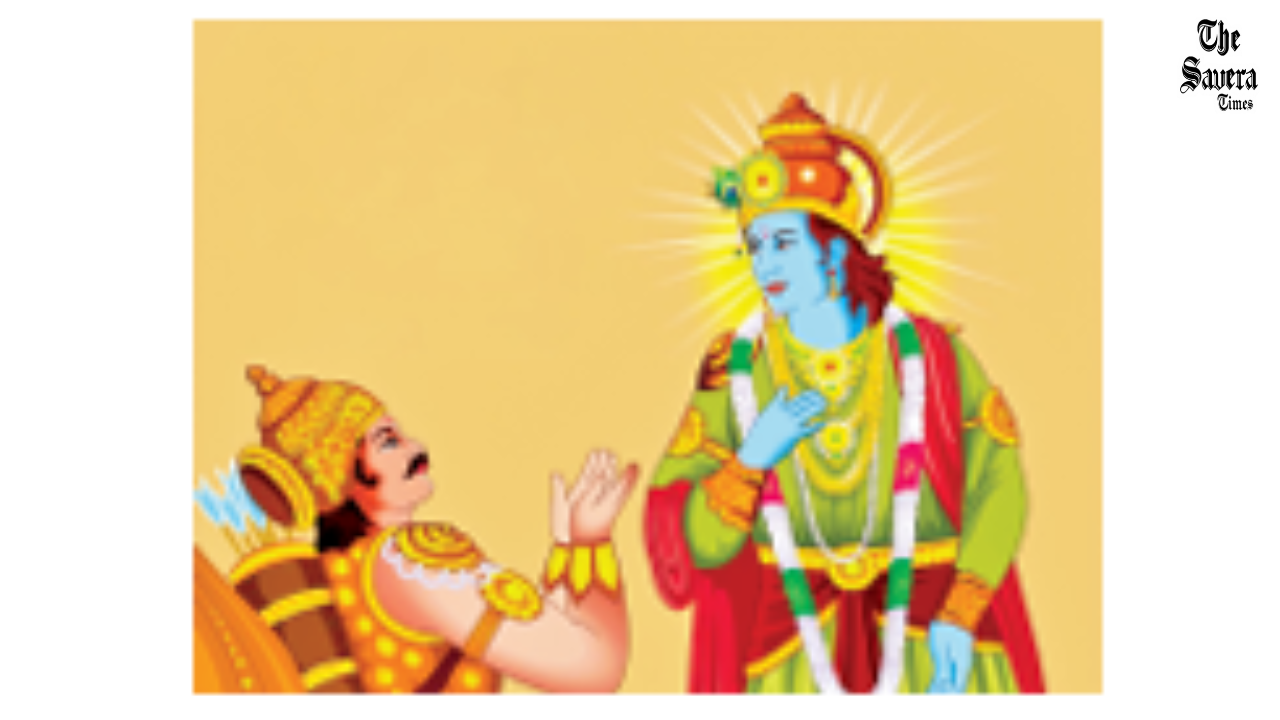
The phrase “act of commission and omission” is commonly used in legal terminology. A driver who fails to apply the brakes at the right moment commits an act of omission, resulting in an accident. This act of omission—or “akarma” (inaction)—leads to the “karma” (action) of the accident. For instance, when performing any action, we choose one option from the many available to us. When we act upon one of these choices, all the other options become “akarma” for us; this leads to the conclusion that “akarma” is hidden within every “karma”. These examples help us understand Sri Krishna’s profound statement: “He who sees inaction in action and action in inaction is wise among men; he is a yogi and a performer of all actions.” (4.18) Sri Krishna says, “What is action and what is inaction?—even the wise are bewildered in determining this.” (4.16). He further states, “One must understand the nature of action, the nature of inaction, and the nature of forbidden action ‘(vikarma); for the path of action is profound.” (4.17) A contemplative person once saw an animal running through the forest. Moments later, a butcher arrived and asked if he had seen the animal. The person faced a dilemma: telling the truth would result in the animal’s death, yet lying is unethical. If we were to aggregate all the prohibited acts across every culture and religion, living would become impossible. Thus, Sri Krishna points out that these issues are complex, and even the wise get entangled in them. Life presents us with many situations where we are caught between a rock and a hard place. On the material plane where we all exist, there are no easy answers. Clarity arises only when we shift from being the ‘doer’ to the ‘witness’ and live with choiceless awareness
Shri Krishna speaks of selfless action in the form of *Yajna* (sacrificial offering) in two sections (3.9–3.15 and...
K SIVA PRASAD Every culture has developed dos and don’ts for peace in society, and with the development...
The naturally formed Baba Barfani ice Shivling at the Amarnath Cave melted by the fifth day of the...
-Dr Tanu Jain The world teaches us how to succeed outside; the Guru teaches us how to become...
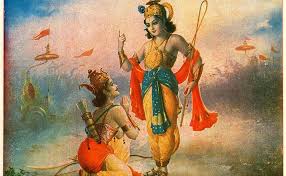
Tulsidas’s story helps us better understand Sri Krishna’s advice to conquer desire by disciplining the senses
As India gears up for Chaitra Navratri 2026, temples across the country are witnessing a flurry of activity....
Aries: The day will be auspicious...