Last Updated: October 18, 2026
Last Updated: October 18, 2026





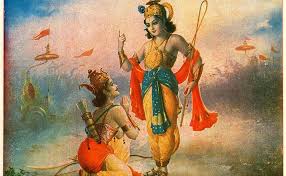
-Dr Tanu Jain
The world teaches us how to succeed outside; the Guru teaches us how to become whole within. Once, a devotee humbly asked a saint, “If I cultivate deep bhav (reverential feeling) for my Guru, will my welfare (kalyana) surely happen?” The saint smiled and replied, “The Guru, as a person, may not personally accomplish your welfare. But your bhav towards the Guru will certainly lead you to it.”
This profound truth reveals the mystery of spirituality. Transformation does not begin outside us; it begins in the sacred world of consciousness. The Guru becomes the divine mirror in which the seeker discovers his own highest Self. Our scriptures repeatedly affirm that bhav is not merely emotion—it is spiritual consciousness. The Bhagavad Gita (4.34) beautifully declares: “Tad viddhi pranipatena pariprasnena sevaya; upadeksyanti te jñanam jñaninas tattva-darsinah.” “Approach the wise with humility, sincere inquiry, and selfless service. Those who have realized the Truth will illuminate your path with knowledge.” Meditation is not simply the closing of the eyes; it is the awakening of bhav. It is through bhav-chetana that we enter an entirely different dimension— the bhav-jagat, the inner world. The material world is merely the vyavahara-jagat, the world of transactions, duties, and relationships. But beyond this exists a silent universe where the soul communes with the Divine.
The greatest challenge of modern life is not external instability but internal fluctuation. Today, our inner world swings constantly between happiness and sorrow, enthusiasm and despair, peace and anxiety. A small event can disturb the mind, leading it into disappointment, loneliness, or even depression. The scriptures call this an uncontrolled mind. The Bhagavad Gita (6.26) gently advises: “Yato yato niscarati manas cañcalam asthiram, tatas tato niyamyaitad atmany eva vasam nayet.” “Whenever the restless mind wanders, gently bring it back and establish it in the Self.” Spiritual life is the art of strengthening this inner world. The “in and out” system of consciousness must become stable. External circumstances will continue to change, but the sanctuary within should remain unwavering. True mastery lies not in controlling the world but in mastering one’s own mind. Every soul also longs for a place of complete surrender—a sacred refuge where there is no fear of judgment, no burden of performance, only unconditional acceptance. The Guru’s feet become that eternal refuge. In surrender, we do not become weak; we become free. Surrender is not the end of individuality—it is the beginning of divine creativity.
The wisdom of the Guru Gita reminds us: “Dhyana-mulam guroh murtih, puja-mulam guroh padam; mantra-mulam guroh vakyam, moksa-mulam guroh krpa.” “The Guru’s form is the foundation of meditation, the Guru’s feet the foundation of worship, the Guru’s words the foundation of all mantra, and the Guru’s grace the foundation of liberation.” A true Guru does not merely teach; he continually reads the disciple. Even in silence, the Guru understands the movements of the heart better than the disciple understands himself. Nothing remains hidden from that compassionate vision.
Therefore, anchor yourself in the Guru. Let the Guru become the unmoving centre while the storms of life continue around you. Anchored in surrender, your mind will no longer be tossed by the waves of emotion. Peace will replace restlessness, clarity will replace confusion, and joy will arise from within rather than from circumstances. Ultimately, spirituality is not about escaping the world; it is about discovering an inner world so luminous that the outer world loses its power to disturb you. When the heart is filled with unwavering bhav, the Guru silently guides every step, and what seemed like an ordinary life gradually becomes a sacred journey toward the Divine
Shri Krishna speaks of selfless action in the form of *Yajna* (sacrificial offering) in two sections (3.9–3.15 and...
K SIVA PRASAD Every culture has developed dos and don’ts for peace in society, and with the development...

K Siva Prasad The phrase “act of commission and omission” is commonly used in legal terminology. A driver...

The naturally formed Baba Barfani ice Shivling at the Amarnath Cave melted by the fifth day of the...

Tulsidas’s story helps us better understand Sri Krishna’s advice to conquer desire by disciplining the senses
As India gears up for Chaitra Navratri 2026, temples across the country are witnessing a flurry of activity....
Aries: The day will be auspicious...