Last Updated: October 18, 2026
Last Updated: October 18, 2026





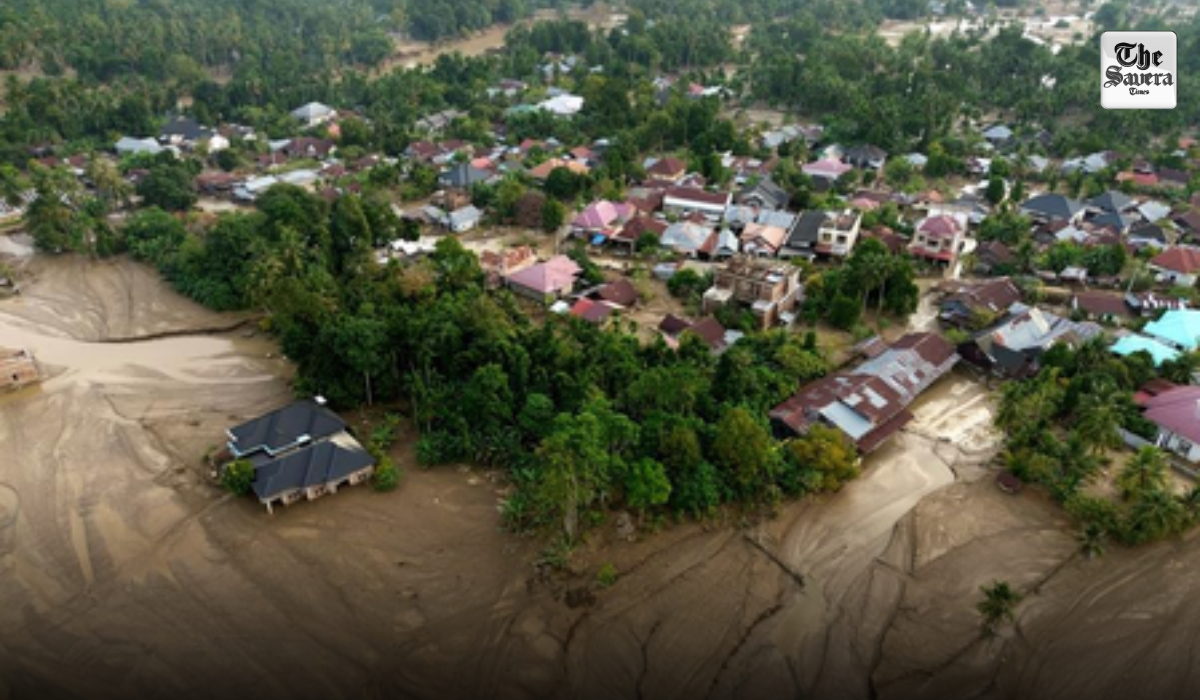
Jakarta: The death toll from floods and landslides in three provinces on Indonesia’s Sumatra island has surpassed 1,000, with 218 people still missing, according to the latest figures released Saturday by the National Disaster Management Agency (BNPB).
The disasters have caused extensive damage to infrastructure. According to BNPB data, nearly 1,200 public facilities have been damaged, including 219 health facilities, 581 educational institutions, 434 places of worship, 290 office buildings, and 145 bridges.
Abdul Muhari, head of BNPB’s data and information center, told a press conference on Friday that data verification and matching with civil records are being conducted at the sub-district level. He said that victims are being identified based on names and addresses, and the verification process is still ongoing in several districts, according to Xinhua news agency.
Meanwhile, Indonesian President Prabowo Subianto said on Friday during a visit to disaster-affected areas in Aceh that the government is continuously working to meet the various basic needs of the community.
“Together, we will overcome this situation. The government will step forward and provide all possible assistance,” Prabowo said.
He appealed to all citizens to remain patient and maintain high morale during the rehabilitation process. He also expressed hope that community activities, including children’s education, would soon return to normal.
Earlier this week, Subianto chaired a meeting on disaster response and rehabilitation efforts after inspecting several affected areas in Aceh.
He instructed the strengthening of joint operations between the military, police, National Search and Rescue Agency, BNPB, and local governments, particularly to expedite the delivery of relief supplies, ensure security, and restore connectivity to areas cut off by the disaster. According to the World Meteorological Organization, Asia is warming at nearly twice the global average rate, leading to an increase in extreme weather events and having a significant impact on the region’s economies, ecosystems, and societies.
Hijrah Saputra, a lecturer in disaster management at Airlangga University in Indonesia, said that early warning systems still haven’t reached remote villages, there is a lack of discipline in spatial planning, and environmental rehabilitation is still being carried out only sporadically.
“If we want to minimize loss of life and property in the future,” he said, “we must build resilience through spatial planning, watershed ecology, and regionally integrated early warning systems.”
A major fire at Canadian Forces Base Wainwright in Alberta has left several people dead and others injured....

Paris: France witnessed widespread unrest on Saturday as demonstrations over the rising cost of living, deteriorating public services...

Azad M. Madni, an Indian-American engineer and USC professor who grew up in Mumbai, has won the 2026...

Nairobi: Kenya’s Ministry of Health on Saturday confirmed four new cases of Ebola Bundibugyo virus disease, bringing the...

Increasing Houthi attacks on Saudi Arabia are testing Pakistan’s ability to defend Riyadh without affecting its ties with...

Nepal is seeking substantial financial assistance from India ahead of Prime Minister Balendra Shah’s proposed visit to New...

Aries: The day will be auspicious...