Last Updated: October 21, 2026
Last Updated: October 21, 2026





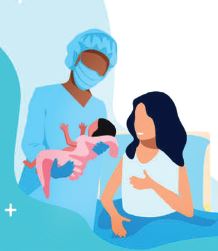
The World Health Organization (WHO) has introduced new global guidelines to prevent and manage postpartum haemorrhage (PPH), the leading cause of maternal deaths worldwide. The updated recommendations aim to enable quicker detection and faster medical intervention for women experiencing excessive bleeding after childbirth.
PPH, which results from heavy blood loss during or after delivery, is responsible for nearly 45,000 maternal deaths each year. Even when not fatal, the condition can lead to serious long-term health issues, including organ damage, hysterectomy, and lasting psychological trauma such as anxiety and postnatal stress.
Launched at the 2025 FIGO World Congress in Cape Town, South Africa, the new guidelines were developed jointly with the International Federation of Gynecology and Obstetrics (FIGO) and the International Confederation of Midwives. They stress that early recognition and timely response are key to saving lives, particularly in low-resource settings.
Dr Jeremy Farrar, WHO’s Assistant Director-General for Health Promotion, Disease Prevention and Care, said that postpartum haemorrhage remains one of the most dangerous childbirth complications because it can worsen rapidly. “While it is not always predictable, deaths are preventable with the right care,” he said, adding that the new guidelines are designed to help frontline health workers respond more effectively in high-burden regions.
One of the major updates in the guidelines is a shift in diagnostic criteria. Traditionally, PPH was diagnosed when blood loss exceeded 500 millilitres. The WHO now advises clinicians to act at a threshold of 300 millilitres or when abnormal vital signs appear. This lower limit is intended to trigger quicker intervention before bleeding becomes life-threatening.
To support early detection, the guidelines recommend the use of calibrated drapes—simple measuring devices that collect and quantify blood loss accurately. Health workers are advised to closely monitor women immediately after birth and begin treatment as soon as the criteria are met.
The WHO also outlined a structured set of actions known as the MOTIVE bundle, to be implemented once PPH is detected. This includes uterine massage, administration of oxytocic drugs to contract the uterus, tranexamic acid to reduce bleeding, intravenous fluids, thorough examination of the birth canal, and escalation of care if bleeding continues. In rare, severe cases, surgical procedures or blood transfusions are recommended to stabilise the patient.
The guidelines further underline the importance of improving antenatal and postnatal care, especially in countries where anaemia is widespread. Anaemia significantly raises the risk of PPH and worsens its effects. WHO advises daily iron and folate supplements during pregnancy and intravenous iron therapy for women who need rapid recovery or do not respond to oral treatment.
The updated recommendations aim to strengthen maternal health systems globally, ensuring that preventable deaths from postpartum bleeding can be reduced through timely diagnosis, coordinated response, and better overall care.
Start your day with The Savera Morning Brief, bringing you the latest news from India and around the...

Union Home Minister Amit Shah will pay tribute to police martyrs at the National Police Memorial in New...

Four more people, including two women, have been arrested in the Tiger Shroff firing case. Delhi Police are...
We are very proud that at present India is the number one country in the world by surpassing...

Every investor wants the wealth-creating power of equity and the reassuring stability of debt. Balanced Advantage Funds attempt...
Tourism is a major source of government revenue in our country. There are different types of tourism. Scenic...

Aries: The day will be auspicious...