Last Updated: October 15, 2026
Last Updated: October 15, 2026





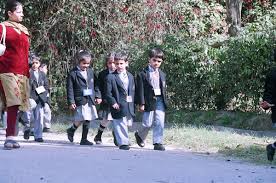
The school uniform concept evolved in India during the late 19th and 20th centuries during the British rule. The idea was to create equality and order among children from diverse backgrounds.After independence in 1947, the school uniform notion was followed both in government and private schools. By 1980s, wearing uniform was the standardised practice in all Indian schools.
With the rising number of private schools in rural and urban areas, the sale of uniforms is becoming a profitable business. The global school uniform market is a major segment of the apparel industry, valued at arond $18.9 billion in 2024, with a projected increase to $33.1 billion by 2034 at a compound annual growth rate of 5.8 per cent.c This data clearly indicates the market size of school uniform production, which is absolutely based on “take-make-dispose model” — a linear economy model that results in large-scale school uniform waste ending up in landfills, depleting the resources and causing environmental degradation.
There is a growing popularity towards circular economy (CE) owing to financial and environmental benefits. India generates an estimated 7.8 million tonnes of textile waste annually, including school uniforms. This is higher than the weight of the Giza pyramid (5.9 million tonnes).India has 246 million school-going children and if all of them just threw away one school shirt a year that would equate to 31,980 tonnes of non-wearable school shirts. Synthetic materials like polyester are used to make school uniforms.
While polyester’s durability makes it an ideal choice for school uniforms, making 1 kg of polyester fabric requires 62 litres of water, 153 kilogramme of petroleum and 217 megajoules of energy, and releases 21 kg of carbon dioxide into the atmosphere.Thus, instead of throwing away school uniforms produced in such resource-intensive processes, they must be kept in a circular loop, enabling reuse, extending its lifecycle and minimising waste. (Courtesy: DTE)
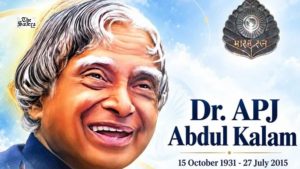
Union ministers and chief ministers paid tribute to former President APJ Abdul Kalam on his birth anniversary, recalling...
Start your day with The Savera Morning Brief, bringing you the latest headlines and important developments from India...

Prime Minister Narendra Modi extended Navratri greetings on the fifth day dedicated to Maa Skandamata, wishing love and...
DMK chief M.K. Stalin condemned the arrests of CJP functionaries Saurav Das and Ashutosh Ranka in Delhi and...
The Supreme Court is set to hear opposition leaders’ petition seeking transparency in the Election Commission’s SIR decisions,...

Congress MP Angomcha Bimol Akoijam has been summoned by Delhi Police for questioning over sexual harassment allegations involving...