Last Updated: October 10, 2026
Last Updated: October 10, 2026





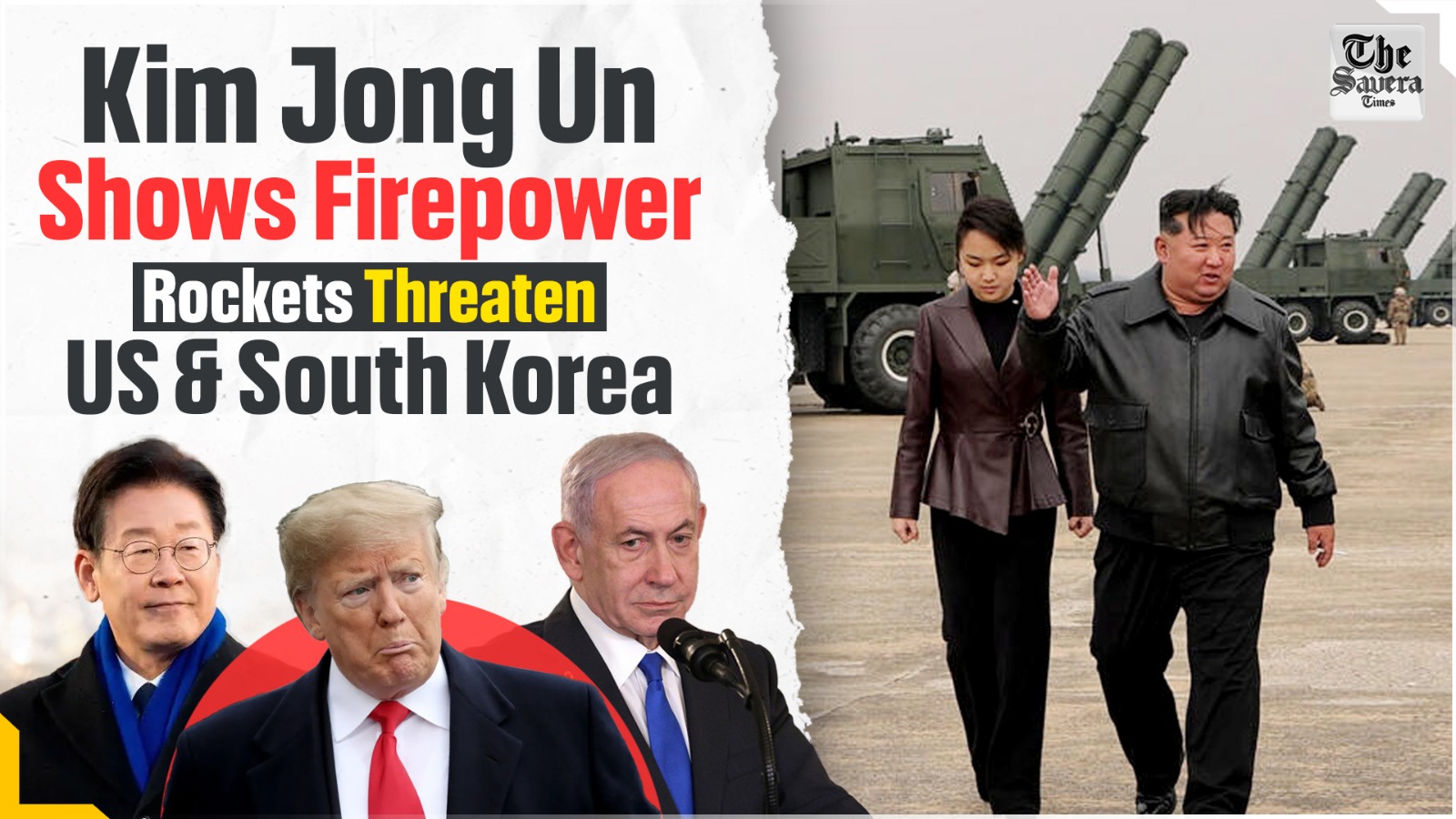
New Delhi: In a dramatic escalation this week, North Korea has fired multiple missiles and tested advanced rocket systems, directly warning the United States and South Korea. This comes as joint U.S.–South Korea military drills are underway and global tensions — including in the Middle East — are already high.
North Korea’s leader, Kim Jong Un, personally oversaw the launch of at least 10 ballistic missiles and large multiple rocket launchers. These systems are powerful enough to carry tactical nuclear weapons. The rockets flew hundreds of kilometres over the East Sea, in what state media called a “precision strike drill.”
Officials in Seoul confirm that none of the missiles landed near civilian areas. But the sheer number and capability of these weapons make this one of North Korea’s most significant displays in years.
Pyongyang says these exercises are a warning to Washington and Seoul against what it calls “provocative war rehearsals.” The U.S. and South Korea, however, insist their drills are purely defensive, aimed at preparing for potential threats from the North.
Why This Matters Now
This comes at a time of intense global tension. The U.S. is already focused on the Middle East, particularly on conflicts involving Iran and Israel. Analysts warn that stretched military attention may give North Korea an opportunity to escalate in Asia.
There are also growing signs of political alignment between North Korea and Iran, two nations historically opposed to U.S. policy. Recently, North Korea publicly backed Iran’s new leader and criticized U.S. and Israeli actions in the region. This signals shared strategic interests, though it does not mean a formal military alliance.
Historically, North Korea and Iran have shared missile technology. For example, Iran’s ballistic missile program, like the Shahab‑3 missiles, is based on earlier North Korean designs. While both countries pursue their own interests, this technical link adds to the regional risk.
The Big Picture
Let’s break it down simply:
These developments raise tensions, especially for Japan, South Korea, and U.S. forces in Asia.
So, what does this mean? Simply put, North Korea is signaling its power to warn its rivals and shape military talks. While this is serious, it’s more about strategy and signaling than immediate war. Still, with tensions high from Asia to the Middle East, the world will be watching closely to see what happens next.
Imagine a foreign national standing among Indian citizens at a political protest, raising questions about the government or...

For thousands of Indian tech workers in the United States, a job offer is only the beginning of...

Three years ago, on October 7, 2023, Israel woke up to one of the deadliest attacks in its...

Imagine being seriously injured inside a flying aircraft, with blood on your clothes, passengers in panic and the...

Imagine the world’s biggest diesel exporter turning off its export taps. That is the concern after US President...

For India’s pharmaceutical industry, the latest US tariff decision brings relief — but not across the entire medicines...

Aries: The day will be auspicious...