Last Updated: October 12, 2026
Last Updated: October 12, 2026





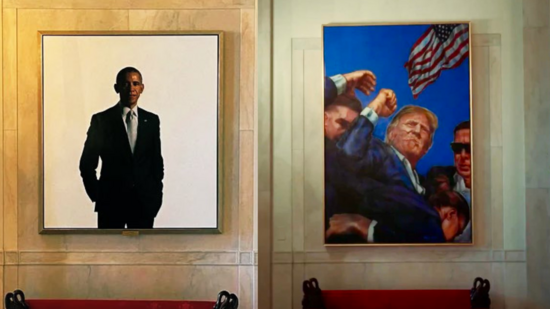
After a heavy defeat in the 2024 presidential election, the Democratic Party has now secured its first set of significant wins against President Donald Trump’s Republican base. The recent victories in New York City’s mayoral race, the gubernatorial elections in Virginia and New Jersey, and the redistricting referendum in California have provided the Democrats with a renewed sense of momentum.
These results also highlight a new political undercurrent: the quiet but growing re-entry of former President Barack Obama into national politics. Trump was not on the ballot in any of these contests. Yet, his presence was unmistakable. Today, he stands as the undisputed leader of the Republican Party. Every victory for the party strengthens his authority, and every defeat reflects back on him.
Similarly, Obama did not run in these races, but he openly endorsed several Democratic candidates. His candidates won. In a sense, it became a symbolic face-off between two former presidents, with Obama scoring a clear 4–0 in the latest round. This result has renewed discussions about whether the two could confront each other again in 2028.
The suggestion might sound unlikely at first, given that both Trump and Obama have already served two terms. The United States Constitution, through the 22nd Amendment, clearly states that no person can be elected president more than twice. Yet, legal restrictions have rarely discouraged Trump from pushing the limits of constitutional interpretation. His allies have already floated possible legal workarounds that could allow him to return to the presidency for a third term.
If such pathways ever gained traction, then the same logic could apply to Obama as well. Obama has never indicated that he intends to run again. For much of the last decade, his approach has been deliberate and restrained. During Joe Biden’s presidency, he kept some distance from public political battles, allowing room for the next generation of Democratic leadership to take shape. He focused largely on strategy, policy conversations, and private fundraising efforts. The message he projected during that period was one of confidence in the durability of American democratic institutions.
This confidence, according to political observers close to him, has shifted in recent years. A report by CNN, based on conversations with Obama’s long-time aides and allies, indicates that the former president now views the current political environment with a more somber outlook than before. The rise in political polarization, institutional pressure, and threats to legal norms is reshaping his engagement. Rather than hope guiding his role in national politics, a sense of urgency now appears to be driving his decisions.
During Trump’s second term, Obama initially opted not to confront him directly in public. He believed that the resilience of democratic systems would prevent lasting harm. But repeated challenges to federal agencies, the judiciary, and the civil service have altered that calculation. Those close to Obama say he fears the damage occurring now could make it difficult for future leaders to restore stability without stronger, active intervention. Former Attorney General Eric Holder, a close Obama confidant, gave shape to this concern.
He said that the harm being done to national democratic institutions is profound enough to require both a different strategic approach and a different degree of involvement f r o m O b a m a . H o l d e r expressed confidence that democracy can withstand the current turmoil, but also acknowledged that the United States will not emerge from this period unscarred. The goal, in this view, is not to avoid all damage, but to prevent irreversible damage. Obama’s political influence remains strong within the Democratic Party. Despite not holding office for nearly a decade, he continues to be one of its most reliable campaigners and fundraisers. His endorsements matter.
His speeches draw attention. His presence in campaign events elevates candidates. Younger Democrats continue to seek his advice. In a political culture where public relevance fades quickly, Obama is a rare exception.Surveys conducted over the past year suggest that Obama remains a popular figure among voters. They also indicate that if a hypothetical contest were held today, he could outperform Trump by a noticeable margin.
An Overton Insights survey conducted in April showed Obama receiving 53 percent support compared to Trump’s 47 percent. Another survey conducted by Daily Mail and JL Partners in July estimated the margin at 11 percentage points. Trump’s approval ratings have further declined during his second term, widening that gap. However, all of these scenarios remain hypothetical. The constitution bars both Obama and Trump from running for a third term. The only way around that restriction would involve redefining the nature of presidential succession. Some conservative strategists have argued that a person barred from being elected president could still become president through succession from the vice presidency.
The scenario they suggest involves Trump running as a vice-presidential candidate with a placeholder president who would resign after taking office. This interpretation of the 22nd Amendment is highly contested and would almost certainly lead to a constitutional crisis. Yet the fact that such discussions are taking place reveals the shifting nature of American political discourse. The boundaries that once appeared fixed now seem open to reinterpretation. Both the Democratic and Republican parties are preparing for a future where traditional assumptions may no longer apply.
For Obama, the central issue is not personal power but the state of the nation. His re-engagement in electoral politics appears to be driven by a belief that the country’s democratic framework is under stress. If that belief deepens, his involvement is likely to expand further. Whether or not Obama ever considers another bid for office, his renewed influence suggests that the political chapter between him and Trump may not be closed yet. The rivalry that once shaped a generation of American politics may be shaping another
The Royal Swedish Academy of Sciences on Monday announced the 2026 Nobel Prize in Economics to American economists...

A Sudanese rights group says at least 72 gold miners were killed in an air strike near the...

US President Donald Trump is scheduled to attend the ASEAN summit in Manila on November 16 before travelling...
An Indian national injured in the October 10 attack on Riyadh’s King Khalid International Airport has died, taking...
Ukrainian President Volodymyr Zelenskyy says he was unaware of Donald Trump’s announcement of an immediate energy ceasefire between...
Colombian businessman Alvaro Pulido Vargas has been arrested in Florida over two US federal cases involving alleged bribery...
Aries: The day will be auspicious...