Last Updated: October 18, 2026
Last Updated: October 18, 2026





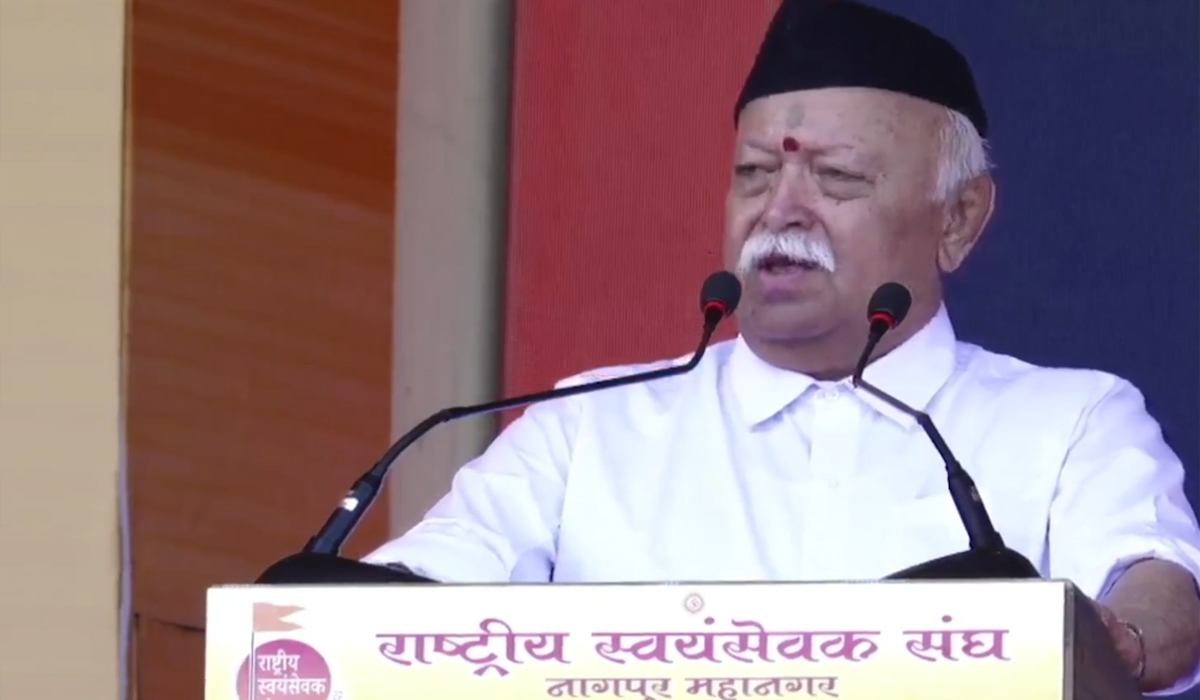
Nagpur: Rashtriya Swayamsevak Sangh (RSS) chief Mohan Bhagwat on Thursday said that the reactions of several countries following the Pahalgam terror attack in which 26 innocent people were killed and ‘Operation Sindoor’ made it clear who truly stands as a friend of India.
He stressed that while the nation has given a strong response to the perpetrators, greater vigilance and empowerment in the field of security are essential for the future. The RSS began its centenary year celebrations on Vijayadashami in Nagpur, marking 100 years since its founding by Dr K.B. Hedgewar in 1925.
The grand programme was held at the Reshimbag Ground, where Swayamsevaks assembled to recite the RSS Prarthana and participate in a ceremonial march past. Former President Ram Nath Kovind, Union Minister Nitin Gadkari and Maharashtra Chief Minister Devendra Fadnavis were also present on the occasion. Addressing the gathering, Bhagwat recalled the recent tragedy.
“Terrorists from across the border killed 26 people, mostly Indians, after asking about their religion. The nation mourned and felt anger over the terror attack. In response, our government and armed forces prepared thoroughly and delivered a strong retaliation. The commitment of the government and the bravery of the military were evident,” he said.
Underscoring the importance of remaining alert, he added, “Even though we remain friendly with everyone, we will have to remain vigilant about our security and will have to become more empowered.” On the international response, Bhagwat noted, “The statements of various countries after this attack and our operation revealed our true friends.”
He also issued a warning against disruptive forces within the country. “There are unconstitutional elements within the country trying to destabilise it. However, these elements will be addressed. Society and the administration should now concentrate on the development of the region (Kashmir),” he stated.
He also warned of broader internal threats like Naxalism, demographic changes, and societal division, while hailing the government’s efforts to tackle these challenges. He, however, insisted that the government and administration need to further expedite the development process so that some elements do not resort to adopting extreme activities.
Marking the centenary of Rashtriya Swayamsevak Sangh (RSS) on the auspicious occasion of Vijayadashami, the RSS Sarsanghchalak delivered a powerful speech reflecting on Bharat’s journey over the past century, highlighting challenges, achievements, and the vision for the future.
The speech coincided with significant anniversaries, 350 years of Guru Tegh Bahadur’s martyrdom, and the birth anniversaries of Mahatma Gandhi and Lal Bahadur Shastri, all hailed as icons of sacrifice, humility, and dedication.
The address emphasized the importance of national character, unity, and self-reliance (Aatmanirbharta) amid rising global instability, religious violence, and environmental degradation. The Pahalgam terror attack, which killed 26 Hindu tourists, was mentioned as a stark reminder of the need for vigilance and stronger security.
Referencing the record-breaking Maha Kumbh Mela, the Sangh chief cited it as a symbol of growing faith and unity. He also spoke of curbing Naxalism and called for development rooted in justice and harmony.
The speech urged the adoption of a Bharatiya development model, rejecting purely Western frameworks, and stressed the need for character-building (Vyakti Nirman) and revival of Bharatiya cultural systems. The Panch Parivartan initiative: focusing on social harmony, family values, environmental care, selfhood, and civic duty, was presented as a societal roadmap.
Calling the Hindu society the guardian of “Vasudhaiva Kutumbakam”, the RSS chief reiterated the Sangh’s commitment to social unity and nation-building, asserting that Bharat must lead by example, offering a spiritual and cultural model to the world.
The speech concluded with a call for collective effort to re-establish Bharat’s rightful identity on the global stage.
Mumbai: Bollywood actor Imran Khan has filed a writ petition in the Bombay High Court seeking a stay...
What if a decision taken in Washington could influence India’s oil bills, export earnings and trade relations with...

Apia: Minister of State (MoS) for External Affairs, Pabitra Margherita, on Saturday interacted with members of the Indian...
At least five workers were killed and six injured after a 15-kilolitre reactor exploded during a hydrogenation process...
New Delhi: Union Minister of State Jitendra Singh has said that India’s space economy — currently valued at...

New Delhi: The Supreme Court-constituted High Powered Enquiry Committee (HPEC) has started inviting complaints and representations from people...
Aries: The day will be auspicious...