Last Updated: October 13, 2026
Last Updated: October 13, 2026





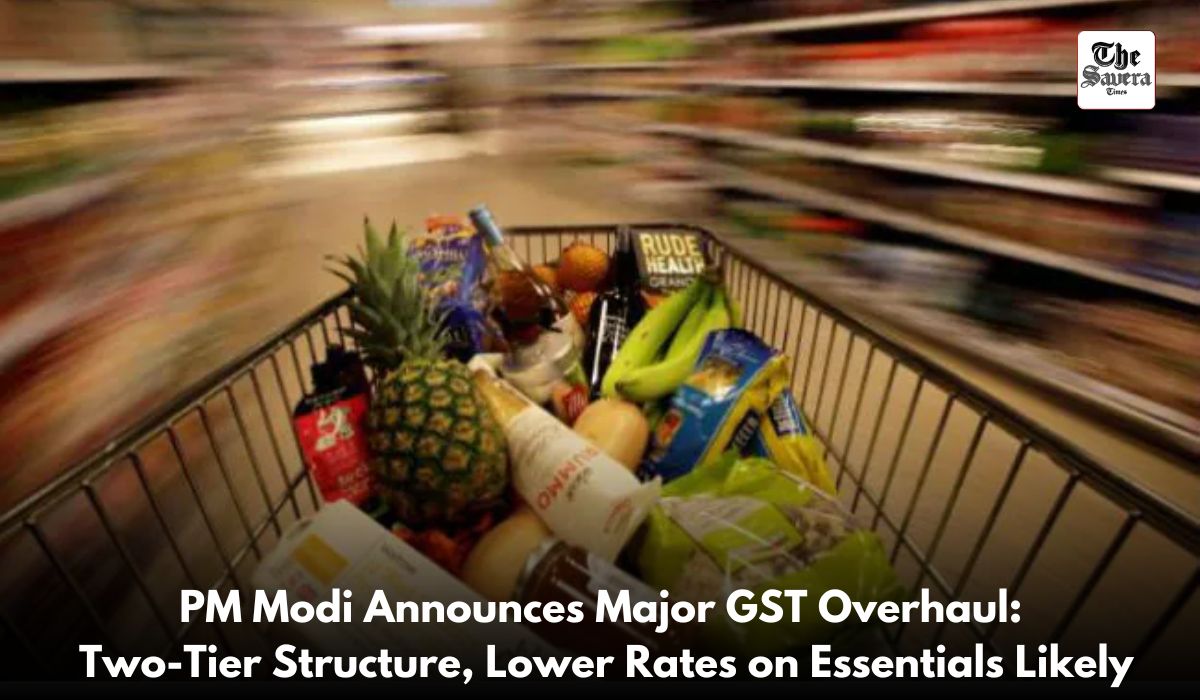
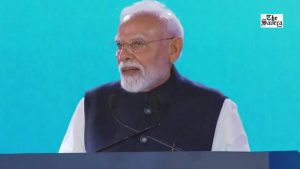
New Delhi, August 18: Prime Minister Narendra Modi on Friday announced a major change in the Goods and Services Tax (GST) regime, calling it a “Diwali gift” for the people of India. He said the reform would ease the tax burden on the common man, simplify compliance, and boost the economy.
According to reports, the Centre has proposed reducing the current four-tier GST structure (5%, 12%, 18% and 28%) to just two broad categories—standard and merit. Under this plan, most goods in the 12% slab are expected to move down to 5%, while nearly 90% of the items in the 28% bracket would shift to 18%.
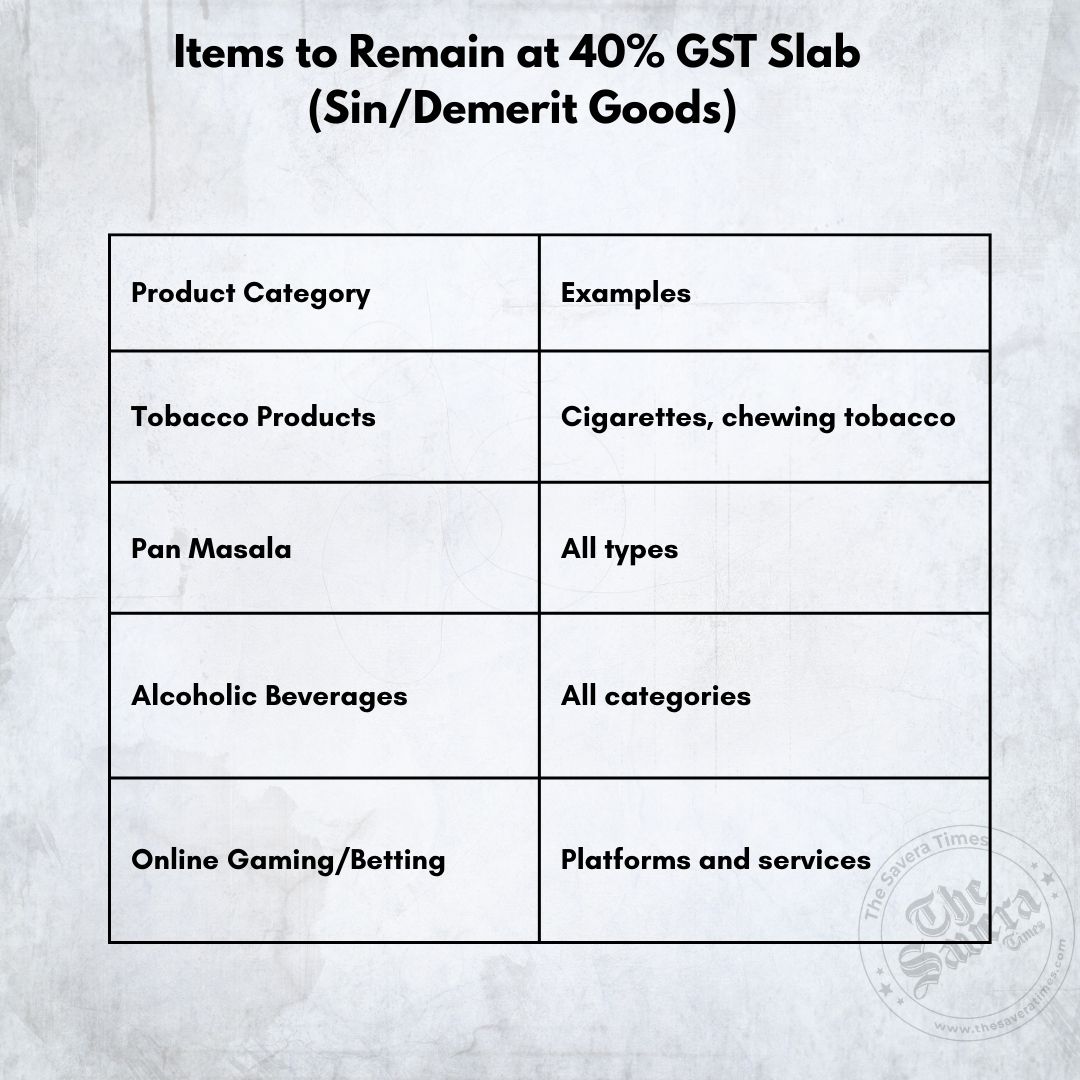
A special 40% GST slab will continue to apply to select sin or demerit goods, including tobacco, alcohol, pan masala and online betting. Sources confirmed that the Centre has shared this proposal with state governments and the GST Council’s Group of Ministers (GoM). The GoM will now study the recommendations, with a Council meeting likely in September–October.
PM Modi, in his Independence Day address, said: “This Diwali, taxes needed by the common man will be reduced substantially. Everyday items will become cheaper, MSMEs and small entrepreneurs will benefit, and the economy will get a new push.”
What Will Become Cheaper?
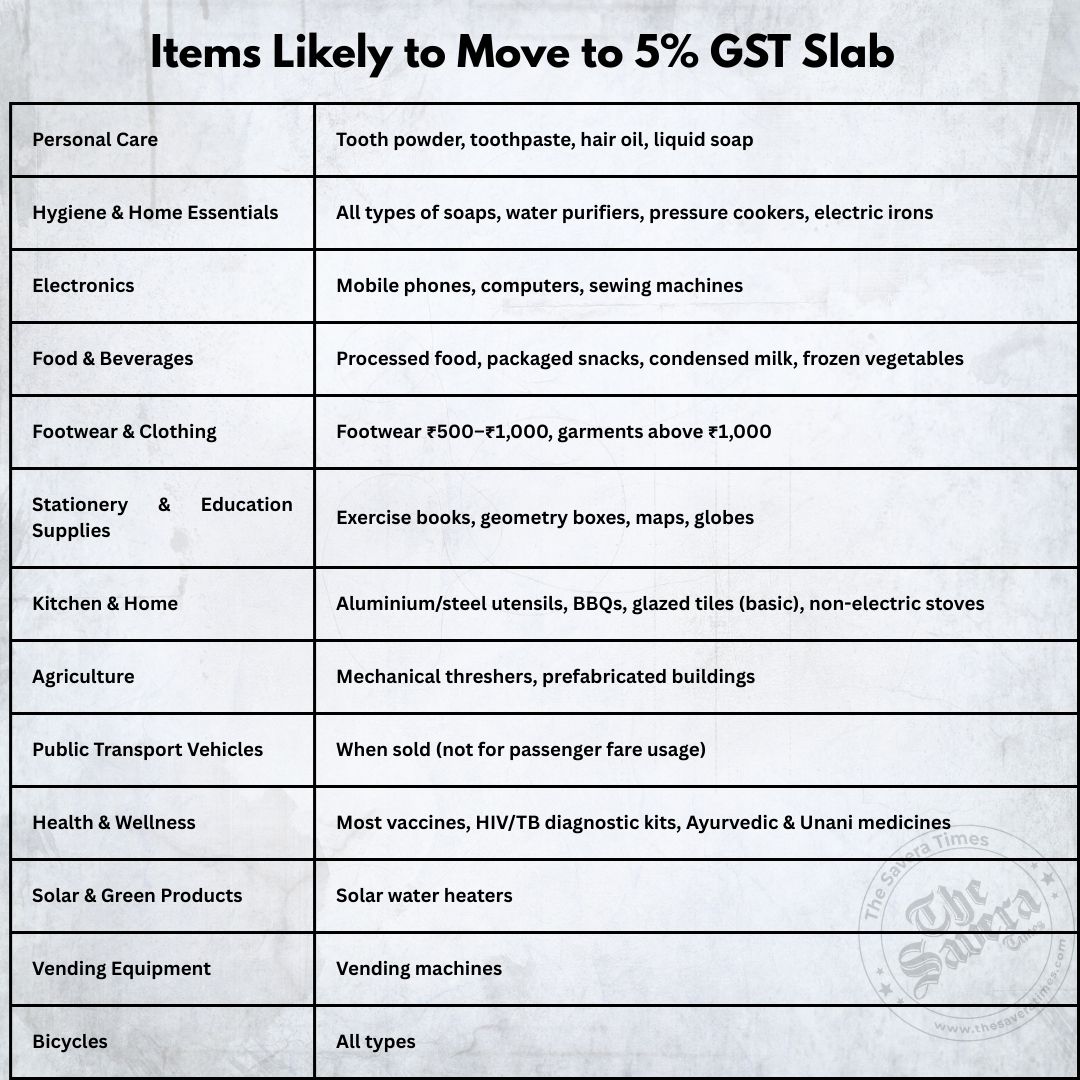
If the proposal is approved, several daily-use products currently taxed at 12% or 18% will move into the 5% slab, making them more affordable. These include:
•Tooth powder, toothpaste (select brands) and hair oil
•All categories of soaps
•Umbrellas
•Mobile phones, computers, sewing machines
•Processed food and packaged snacks
•Water filters and purifiers (non-electric)
•Pressure cookers, electric irons, water heaters, vacuum cleaners (non-commercial)
•Readymade garments priced above ₹1,000
•Footwear in the ₹500–₹1,000 range
•Most vaccines, diagnostic kits (HIV, Hepatitis, TB)
•Certain Ayurvedic and Unani medicines
•Exercise books, geometry boxes, maps and globes
•Aluminium and steel cookware and utensils
•Bicycles and non-kerosene stoves
•Barbecues and glazed tiles (basic variants)
•Liquid soap and vending machines
•Prefabricated buildings
•Public transport vehicles (when sold, not for fare)
•Agricultural equipment like mechanical threshers
•Packaged foods such as condensed milk and frozen vegetables
•Solar water heaters
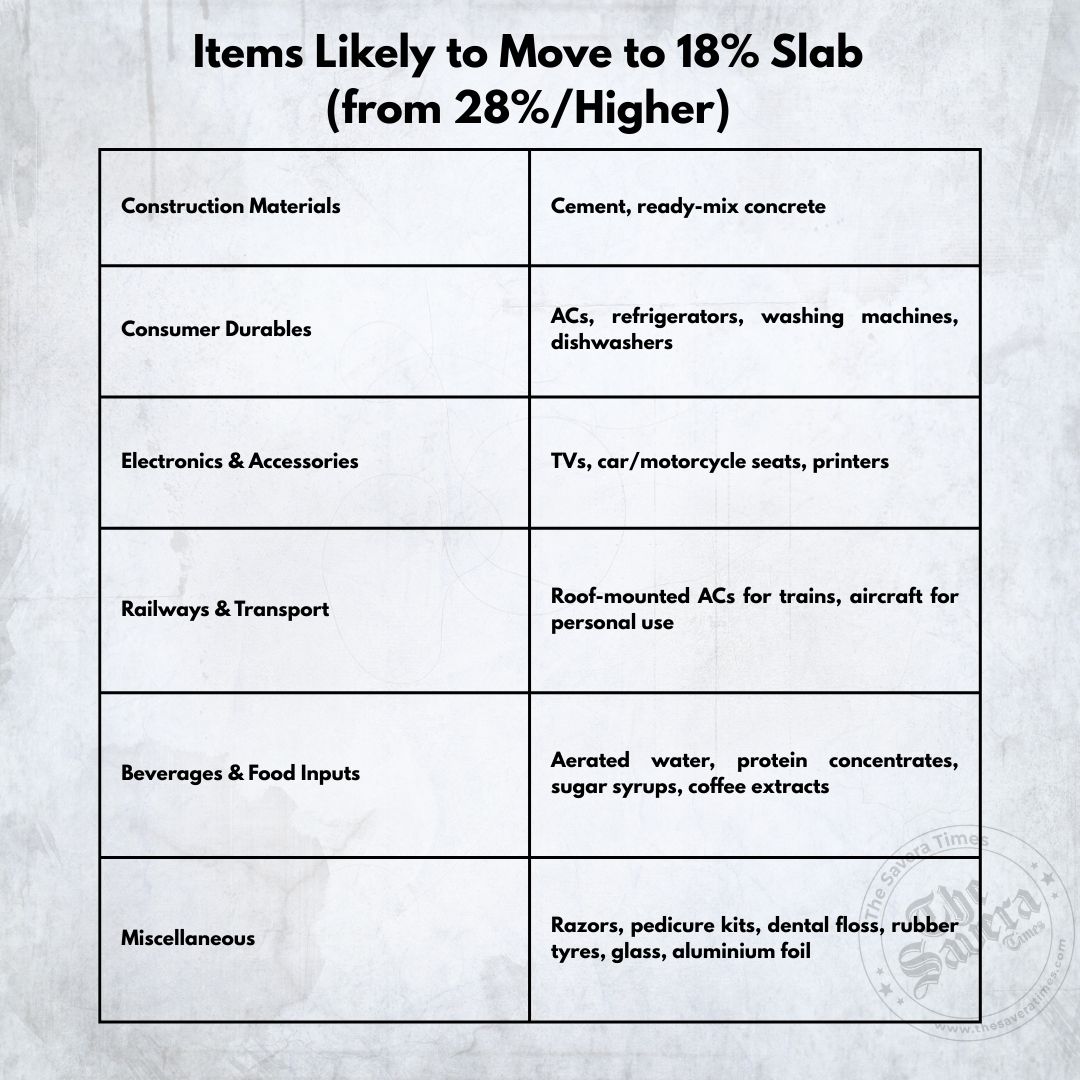
Items Likely to Move from 28%/18% to 18%
•Products in higher tax brackets that may soon attract lower GST rates include:
•Cement and ready-mix concrete
•Air conditioners, refrigerators, washing machines, dishwashers
•Televisions and car/motorcycle seats
•Roof-mounted air-conditioning units for railways
•Aerated water
•Aircraft for personal use
•Printers and commercial plastic products
•Protein concentrates, sugar syrups, coffee extracts
•Rubber tyres, plaster, tempered glass, aluminium foil
•Razors, manicure/pedicure kits, dental floss
Sin/Demerit Goods to Remain at 40%
•Certain items will continue to attract the maximum levy of 40%, including:
•Tobacco and cigarettes
•Pan masala
•Alcoholic beverages
•Online gaming and betting platforms
Cigarettes remain among the most heavily taxed products in India, currently bearing a total tax burden of 48–55% of MRP (GST, cess, excise, and duties combined). Reports suggest they may be shifted to a flat 40% GST slab, though experts believe the government may still maintain a neutral or slightly higher effective tax due to their sin categorisation.
At the stock market level, news of the proposed tax changes saw tobacco stocks like ITC, Godfrey Phillips and VST Industries decline up to 1%, while online gaming firms Nazara Technologies and Delta Corp dropped around 2%. Meanwhile, cement and consumer durable stocks rallied on expectations of cheaper GST rates.
With the GoM reviewing the Centre’s proposal, a formal decision is expected by September–October. If implemented, GST 2.0 will mark the biggest restructuring of the indirect tax system since its rollout in July 2017.
Jaipur: The ED filed a charge sheet before a Special Court (PMLA) in Jaipur in the Rs 932.54...
Dhaka: Amid growing political hostility in Bangladesh, a group of people attacked and vandalised the residence of Jatiya...
New Delhi: Air India Express on Tuesday suspended flights to and from Dammam, Jeddah and Riyadh until October...

New Delhi: The Reserve Bank of India (RBI) is expected to continue deploying measures to limit excessive volatility...
The decision to implement a 0.4% Merchant Discount Rate (MDR) on select UPI payments above ₹2,000 has been...
Sriganganagar: Security agencies have recovered a consignment of suspected explosives and weapons near the Pakistan border in Rajasthan’s...

Aries: The day will be auspicious...