Last Updated: October 15, 2026
Last Updated: October 15, 2026





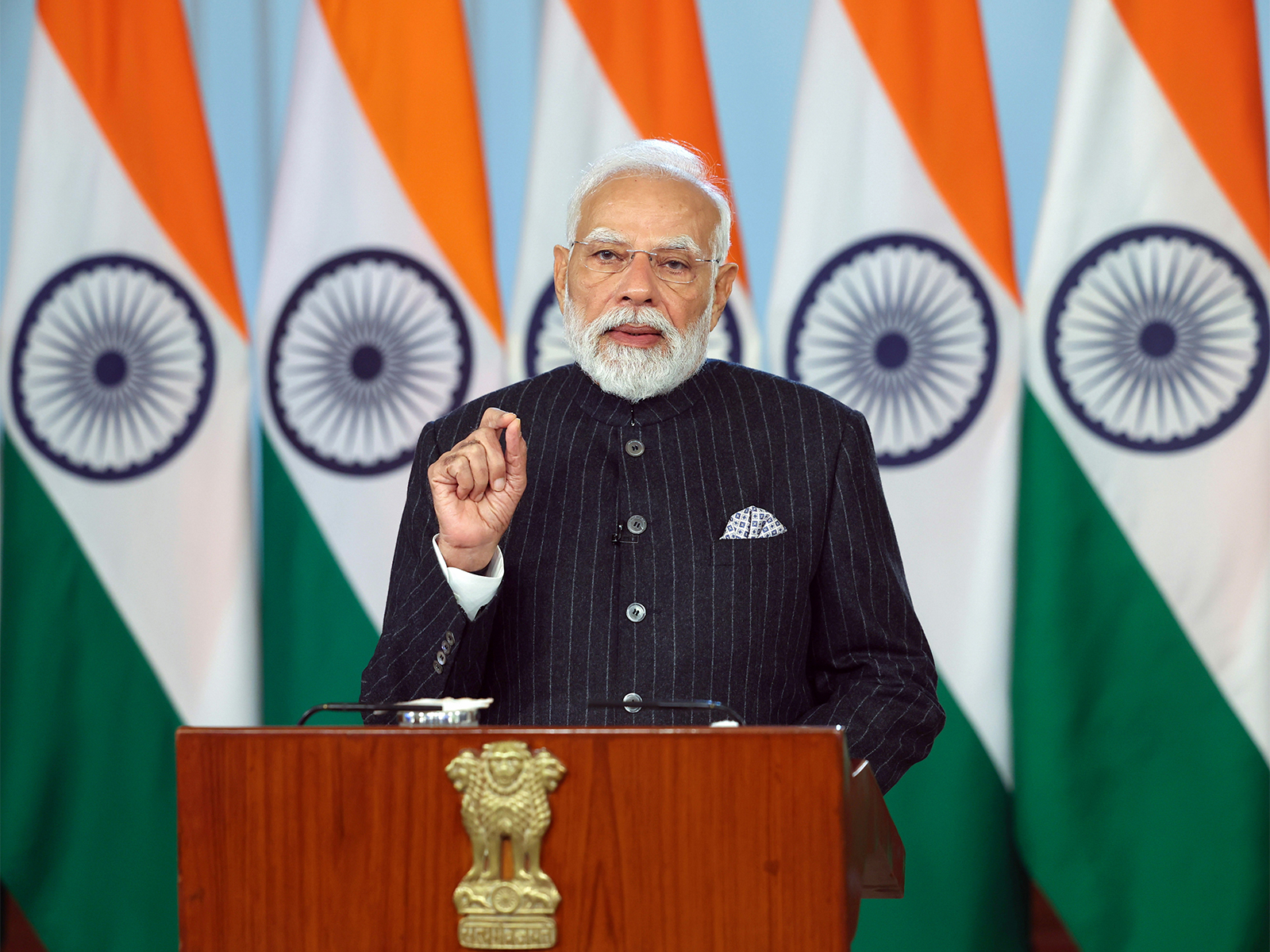
-Hardeep Singh Gill Vice Chairman, National Commission for Safai Karamcharis
The completion of 12 years of the central government under the leadership of Prime Minister Narendra Modi is not merely a political milestone; it symbolizes a significant journey of India’s development, self-confidence, and social transformation. Since 2014, the country has made unprecedented progress across various sectors and established itself as a strong, self-reliant, and credible nation on the global stage. During these 12 years, India has achieved remarkable success in the realms of the economy, society, technology, and infrastructure. Despite global economic challenges, the COVID-19 pandemic, and international instabilities, India has maintained its growth momentum. Today, India ranks among the world’s leading economies and is rapidly advancing towards the goal of a ‘Viksit Bharat’ (Developed India).
This achievement is the result of visionary leadership, effective policies, and the collective efforts of the nation’s citizens. Under Prime Minister Modi’s leadership, the country has witnessed an unprecedented expansion of infrastructure. Developments in national highways, expressways, railway networks, modern railway stations, airports, ports, and digital connectivity have imparted new momentum to India’s economic activities.
Today, even the country’s remotest regions are connecting to the mainstream of development, leading to growth in trade, industry, tourism, and employment opportunities. A defining characteristic of Prime Minister Modi has been his endeavor to ensure that the fruits of development reach the last person in society. Schemes such as Pradhan Mantri Jan Dhan Yojana, Ujjwala Yojana, Ayushman Bharat, Pradhan Mantri Awas Yojana, Swachh Bharat Mission, and Kisan Samman Nidhi have brought about positive changes in the lives of crores of people. These initiatives have empowered the poor, farmers, women, and marginalized sections of society. The Swachh Bharat Mission stands out as one of Prime Minister Modi’s most impactful campaigns. It generated nationwide awareness regarding cleanliness and transformed it into a mass movement. Cleanliness ceased to be merely a government program and became a matter of civic responsibility. The campaign strengthened sanitation infrastructure across the country and accorded new recognition to the contributions of sanitation workers.
Prime Minister Modi has prioritized the dignity, safety, and welfare of sanitation workers. Several significant steps have been taken for this section of society that had long faced neglect. Various schemes have been expanded to ensure the social and economic empowerment of sanitation workers. Initiatives related to skill development, self-employment, financial assistance, and social security have brought about positive changes in their lives. Promoting the use of modern machinery for cleaning sewers and septic tanks has been a crucial step. The objective is to ensure that no sanitation worker has to risk their life while performing their duties. Mechanization has enhanced workplace safety and prioritized the protection of human dignity. Simultaneously, numerous initiatives have been launched to facilitate the rehabilitation, training, and employment of sanitation workers.
The government has also made significant efforts to improve the education and future prospects of the children of sanitation workers. Scholarship schemes, skill development programs, and employment-oriented training are playing a vital role in making them self-reliant. I believe that true national progress is possible only when the most vulnerable and marginalized sections of society receive equal opportunities and respect. The Digital India campaign is another major achievement under Prime Minister Modi’s leadership. Digital payment systems, UPI, e-governance, and online services have made the lives of ordinary citizens simpler and more transparent. The direct transfer of benefits from government schemes to beneficiaries has reduced corruption and made the system more accountable. Furthermore, campaigns such as Startup India, Make in India, and Atmanirbhar Bharat (Self-Reliant India) have fostered a new spirit of innovation and entrepreneurship among the youth. Today, India boasts one of the world’s largest startup ecosystems, providing employment and selfemployment opportunities to millions of young people. India’s stature has also risen unprecedentedly in the realms of foreign policy and national security.
Today, India plays an influential role on the global stage. Its successful G-20 presidency has given new recognition to its leadership capabilities and global influence. India has presented a positive model of development, peace, and cooperation to the world. The achievements of the past 12 years form a strong foundation for building a developed India. Under the leadership of Prime Minister Narendra Modi, India will make further progress in the coming years and continue to work tirelessly to improve the standard of living for every section of society—particularly sanitation workers, laborers, the poor, and marginalized communities. The contribution of sanitation workers to nationbuilding is immense. Ensuring their dignity, safety, and welfare is the collective responsibility not only of the government but of society as a whole. We must all play our part in building a clean, empowered, inclusive, and developed India
New Delhi: The Supreme Court on Thursday referred the cheque dishonour cases against actor and comedian Rajpal Yadav...

Mirzapur: Uttar Pradesh Chief Minister Yogi Adityanath on Thursday accused the Samajwadi Party (SP) and the Congress of...
Congress leaders and workers in Dehradun raised slogans outside Lok Bhavan on Thursday regarding the infamous Ankita Bhandari...
New Delhi: The Delhi High Court on Thursday recorded the assuarance by Delhi Polices promise that all legal...
New Delhi: The Ministry of Defence on Thursday said it has signed contracts worth Rs 4,106 crore for...

Patna: An Excise Department constable was killed after suspected liquor smugglers and an alleged accomplice opened fire on...

Aries: The day will be auspicious...