


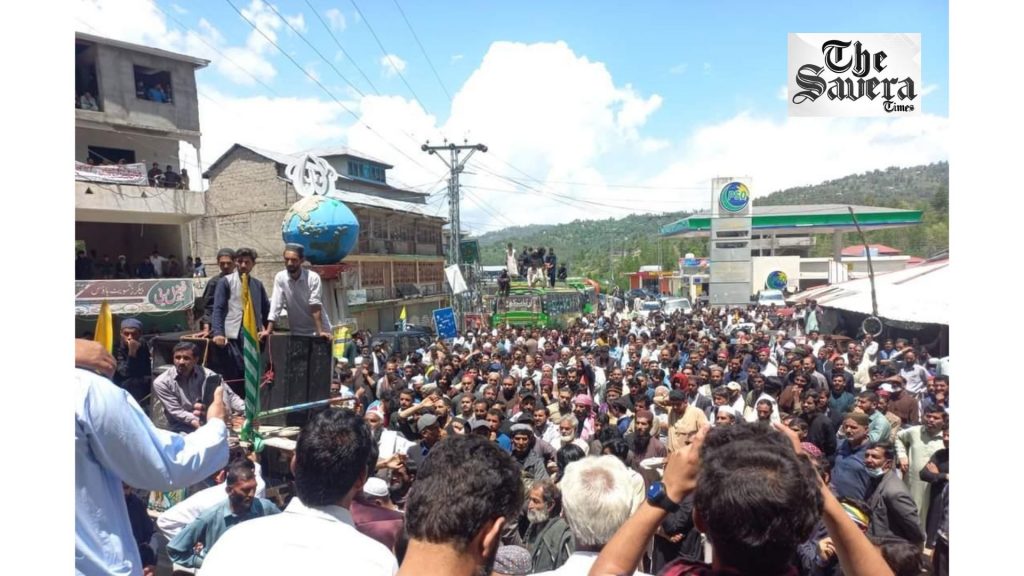
The ongoing unrest in Pakistan-occupied Kashmir (PoK) is increasingly challenging Islamabad’s long-standing narrative of control over the region, exposing a system of domination masked by the term “Azad” (freedom). While Pakistan may suppress the protests through crackdowns, arbitrary arrests and manufacturing temporary agreements, its exclusive hold over the Kashmir narrative has failed.
The people living there are now demonstrating what that freedom actually means. It means a regional government whose ultimate authority rests not in Muzaffarabad but in Islamabad. It means an assembly whose composition can be influenced through constituencies located outside the territory. It means economic exploitation, elite privileges, internet shutdowns, political arrests and anti-terrorism laws deployed against civilian protest movements.
Increasingly, it also means bodies in the streets. The latest unrest has produced demonstrations, strikes, road blockades and violent confrontations between protesters and Pakistani security forces. In July, nine people were killed during clashes in Tararkhal and Rawalakot. Six protesters and one police officer died in Tararkhal, while another protester and a security official were killed in Rawalakot. The latest deaths brought the number of people killed since the beginning of the current turmoil to roughly thirty, according to local estimates.
Pakistan’s response in PoK followed a familiar pattern, portraying the political movement as a terrorist organisation. It noted that the Joint Awami Action Committee (JAAC), a coalition of traders, lawyers, transport workers and civil society activists, was banned under anti-terrorism laws.