Last Updated: October 17, 2026
Last Updated: October 17, 2026





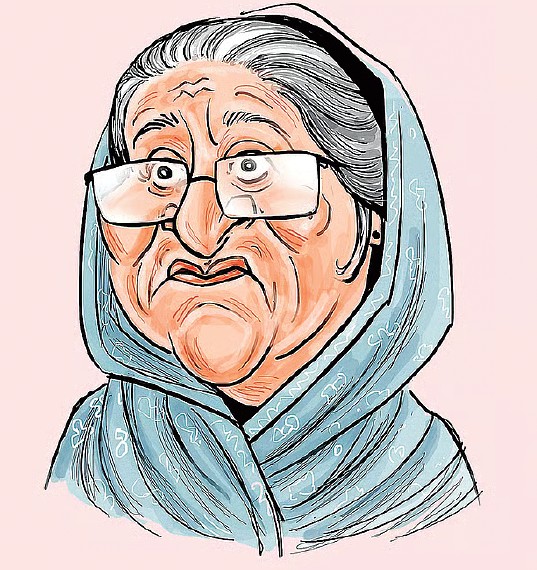
Sheikh Hasina’s death sentence by Bangladesh’s war crimes tribunal has opened a wave of confusion, debate and unease across India and beyond. The former Prime Minister, once one of South Asia’s most influential leaders, now sits in India as a political exile. Her fall from power in August 2024 after a student led uprising was dramatic enough. The legal process that followed has been even more extraordinary.
The verdict against Hasina came from the International Crimes Tribunal Bangladesh. On paper, this court was created to prosecute atrocities from the 1971 Liberation War. In practice, many legal experts argue that it was never designed to try a former Prime Minister for modern day crimes. The tribunal was created under the 1973 Act and remained focused on historic war crimes for decades. The decision to use it to prosecute Hasina has therefore become the first major point of contention.
Following the collapse of Hasina’s government, the interim administration led by Muhammad Yunus attempted to expand the tribunal’s mandate by ordinance. This ordinance amended the 1973 Act and gave the court authority to hear fresh cases unrelated to 1971. Legal scholars say the amendment itself does not stand on solid ground. They argue that the interim regime did not have the constitutional authority to pass such an ordinance because no valid executive leadership was in place, and the Parliament that should have endorsed it had already been dissolved in legally questionable circumstances. For these scholars, everything that followed was therefore built on a faulty legal foundation.
The appointment of the judges added a new layer of controversy. The days following Hasina’s removal from office saw large crowds surrounding the Supreme Court to pressure senior judges to resign. Within this tense environment, the new tribunal judges were appointed with unusual speed. Their promotions also bypassed normal constitutional procedures. Retired district judges were elevated to the High Court Division without the mandatory probation period. A practising lawyer was made a permanent High Court judge even though such an appointment requires prior judicial service. None of the judges had experience in international criminal law, despite being asked to preside over a case involving crimes against humanity. These irregularities weakened public confidence in the tribunal before the trial even began.
The political affiliations of some judges raised further questions. Reports circulated of promotions linked to perceived loyalties. One of the tribunal judges had previously run for a position on the Supreme Court Bar Association aligned with the Bangladesh Nationalist Party, a party long opposed to Hasina’s Awami League. In the eyes of observers, this contributed to a perception that the tribunal was politically shaped.
The timeline of the proceedings deepened that perception. The tribunal ordered that the investigation against Hasina be completed within 30 days, a period viewed by many legal analysts as impossibly short for charges that stretched across several years and involved major political events. The trial itself lasted less than three months. Such speed may be appropriate for routine criminal cases but not for matters involving complex allegations of mass crimes. By the time the verdict came, the belief that the outcome had been predetermined had already taken hold in many quarters.
The composition of the prosecution team also carried symbolic weight. Chief Prosecutor Mohammed Tajul Islam had earlier served as the main defence lawyer for Jamaat e Islami leaders charged with war crimes during Hasina’s rule. British barrister Toby Cadman, another lawyer who previously defended Jamaat leaders, was appointed adviser to the prosecution. Their involvement fuelled speculation that the trial was influenced by political payback rather than legal reasoning.
Hasina’s defence situation added a final layer of concern. Her chosen lawyer was not permitted to represent her. The tribunal instead assigned Md Amir Hossain, who lacked experience in international criminal law and made no attempt to contact Hasina. He received the thousands of pages of prosecution evidence only weeks before the trial. Yet he made no request for more time. He later stated that he could not file an appeal because his clients were absent, and he had not even been given a copy of the verdict. Observers say this violated basic standards of natural justice.
The prosecution also secured a bar on cross examining witnesses who had made contradictory statements. This was based on a 2013 judgment that the same prosecutors had once opposed. Combined with the restrictions on defence evidence, the trial process appeared heavily weighted in favour of conviction.
Government figures made public comments that created an atmosphere of prejudice. Senior officials described Hasina as the leader of mass killings even before the court had begun hearing evidence. One adviser declared that she would return to Bangladesh only to walk toward the gallows. The tribunal also ordered media outlets not to publish any statements from her, limiting her ability to address the charges.
Throughout this period, the interim government did not seek involvement from the International Criminal Court, despite Bangladesh being a party to the Rome Statute. Legal scholars suggest that such international scrutiny would have highlighted the weaknesses in the process.
Taken together, the questions around jurisdiction, judicial appointments, prosecutorial neutrality, defence rights and political commentary create a portrait of a deeply flawed trial. Many experts say the verdict is unsustainable in any constitutional sense. Dhaka has asked India to extradite Hasina, but few believe that will happen. She has dismissed the charges as political and has the option of appealing to the Bangladesh Supreme Court, though her supporters believe the broader system has already been compromised.
What remains is a case that has stirred regional tension and raised serious concerns about the future of the rule of law in Bangladesh.
Nepal is seeking substantial financial assistance from India ahead of Prime Minister Balendra Shah’s proposed visit to New...
The race to succeed Antonio Guterres remains uncertain after three leading candidates faced opposition from two permanent members...

Democratic lawmakers have criticised Donald Trump for waiving key sanctions and tariff provisions under the Graham Act, citing...
Shipping Minister Sarbananda Sonowal confirmed that all 24 Indian seafarers aboard two vessels struck in separate incidents in...

Katie Zacharia has left her role as White House press secretary less than a week after her appointment....
US President Donald Trump has praised Kaylub Giamanco for intervening during a shooting at Silver Rail Elementary School...

Aries: The day will be auspicious...