Last Updated: October 18, 2026
Last Updated: October 18, 2026





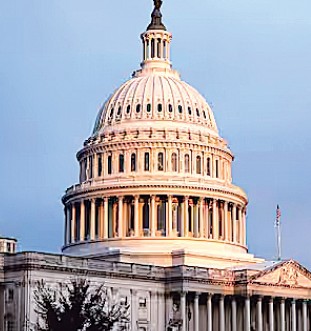
The decisive vote in the United States House of Representatives this week capped an unusual and highly charged episode in Washington. In a unanimous 426 to 0 decision, the House moved to repeal a recent law that allowed sitting senators to sue for substantial damages if law enforcement sought their phone records without prior notice. The vote captured a rare moment of unity across the political aisle and reflected deep frustration with both the substance of the law and the way it was quietly added to a larger bill.
The original provision appeared only days earlier in legislation designed to reopen the federal government. The bill had been crafted in the Senate, then sent to the House for final approval under pressure to avoid a prolonged shutdown. Amid the urgency, House members failed to spot the clause granting senators the right to sue for up to five hundred thousand dollars if their personal records were requested without notification. The omission came to light only after the bill had already become law.
The measure was rooted in a recent disclosure by Senator Chuck Grassley of Iowa. Grassley revealed that former special counsel Jack Smith’s investigation into attempts to overturn the 2020 election had sought phone records from ten Republican senators and at least one House member, Representative Mike Kelly of Pennsylvania. The inquiry, known internally as Arctic Frost, triggered political unease, as lawmakers confronted the possibility that federal investigators had quietly accessed their communications.
The revelation helped set the stage for the controversial protection clause. Yet House members felt blindsided when they discovered it. Speaker Mike Johnson expressed open anger, saying the House had no idea the provision had been added at the last moment. Johnson argued that the measure appeared to give senators an opportunity for personal financial gain at taxpayer expense, a prospect that provoked bipartisan discomfort.
Despite their frustration, House Republicans chose not to delay the government funding bill by removing the provision at the time. They argued that reopening the government was the immediate priority. That decision postponed the confrontation until this week, when the House returned to the issue with overwhelming force.
The repeal effort quickly met resistance in the Senate. Majority Leader John Thune defended the clause, noting that the original statute governing notification applied only to senators. He argued that the Senate had acted within its authority to strengthen protections against what he described as improper access to private information by federal agencies. Thune framed the dispute as a matter of constitutional powers rather than political preference.
Some senators supported Thune’s position, though many attempted to distance themselves from the potential financial benefit. Senator Lindsey Graham took a different view. He announced that he intended to sue and would keep a portion of any damages he received, a stance that highlighted the divide between those who saw the clause as necessary oversight and those who viewed it as self-serving.
In the House, the repeal sparked further political maneuvering. Representative John Rose of Tennessee introduced a resolution authorising Speaker Johnson to challenge the Senate if it refused to take up the repeal. Rose is running for governor in his home state, where he may face Senator Marsha Blackburn, who said she supported the legal right to sue but would not pursue monetary damages.
During debate, Representative Kevin Kiley of California sharply criticised House leadership for failing to prevent the clause from slipping into law. Kiley pointed to several weeks during which the House was not in session, arguing that the absence left lawmakers without influence in the negotiations leading to the government funding agreement. He contended that the Senate used that vacuum to shape the final terms without House participation.
The controversy has exposed tensions between the two chambers that extend beyond the immediate issue of phone records. It has also sparked a broader discussion about transparency, legislative oversight, and the balance of power within Congress. As the Senate weighs its next steps, the dispute now stands as a rare instance in which process, rather than policy, has become the driving force behind legislative conflict.
Azad M. Madni, an Indian-American engineer and USC professor who grew up in Mumbai, has won the 2026...

Nairobi: Kenya’s Ministry of Health on Saturday confirmed four new cases of Ebola Bundibugyo virus disease, bringing the...

Increasing Houthi attacks on Saudi Arabia are testing Pakistan’s ability to defend Riyadh without affecting its ties with...

Nepal is seeking substantial financial assistance from India ahead of Prime Minister Balendra Shah’s proposed visit to New...

The race to succeed Antonio Guterres remains uncertain after three leading candidates faced opposition from two permanent members...

Democratic lawmakers have criticised Donald Trump for waiving key sanctions and tariff provisions under the Graham Act, citing...
Aries: The day will be auspicious...