Last Updated: October 16, 2026
Last Updated: October 16, 2026





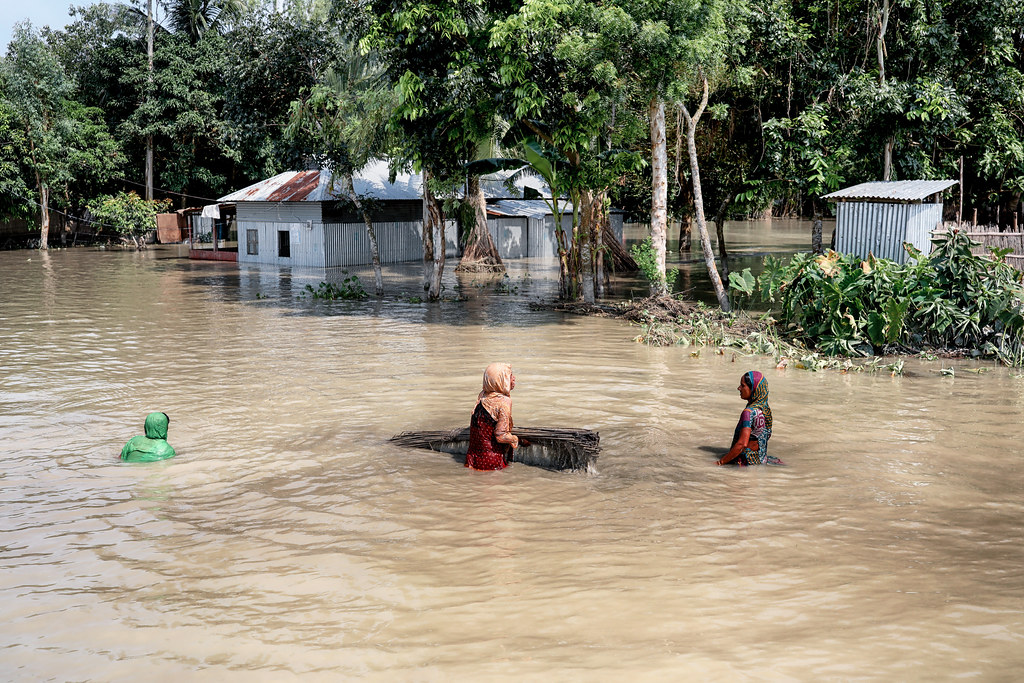
The Sundarbans is a cluster of mangrove islands situated between India and Bangladesh that is home to 4.5 million people. It is also ground zero for climate change. Rising seas, saltwater intrusion, stronger cyclones, and disappearing landare no longer distant warnings; they are the lived realities. Approximately 250 square kilometers (km²) of land between 1970 and 2020 have have disappeared into the sea, uprooting thousands of families.
For the children living here, the impacts are especially harsh: rates of stunting are over 50% in some villages, sanitation and clean drinking water are scarce, and schools double as cyclone shelters, which close often.
This narrative does not focus solely on a single delta. What is experienced in the Sundarbans is a cautionary tale about how climate change intensifies disparity among children everywhere. The children are more physically susceptible to heat and disease, less physically able to bounce back from malnutrition, and more reliant on schools and health systems to be operational.
It is the vulnerable, who already walk a razor’s edge, whose children fall first when those schools and health systems cease to exist. Climate shocks do not affect everyone the same way. In India, children from poor households face twice the risk of stunting after climate shocks, flooding, or drought, compared to wealthier households. UNICEF estimates that by 2050, over 2.2 billion children will face extreme heat waves and millions of children will face flooding globally, with South Asia as one of the most affected regions.
Climate shocks do not only affect health, they rob the chance to develop. A child who lacks access to education for months after a cyclone is unlikely to catch up on their missed education. At scale, that equates to billions of GDP in lost opportunities and multi-generational development hindrance. India calls itself a youthful nation with a demographic dividend. To fully realise this potential, we must ensure that our young people are healthy, educated, and protected from the disruptions of climate change. Investing in child nutrition, learning continuity, and climate resilience will convert our demographic dividend into a demographic strength.
The Sundarbans’ children are not an isolated tragedy; they are the frontline of a global injustice. The communities most affected contribute the least to carbon emissions, yet bear the heaviest burden. As António Guterres, the UN Secretary-General, has said, climate change is “a death sentence” for the most vulnerable. Nowhere is that more apparent than in the faces of children who may never see a stable school year, clean water, or a safe home. We see a pattern already.
Children in drought-stricken East Africa abandoning the school to collect water; children in the Philippines learning inside classrooms that were rebuilt three times after typhoons; Indigenous children in the Amazon watching forests and futures burn. Across places, this story is the same: climate change is destroying childhood. For India, the stakes are both moral and strategic.
By mid-century, rapid industrial growth, urbanisation and energy transitions will place increasing demands on land, water and resource systems. The government has already taken strong steps, from Mission LiFE to Poshan Abhiyaan, Swachh Bharat Mission and state climate action plans, that recognise resilience as central to development
Varanasi: A massive explosion triggered the collapse of a two-storey building in Uttar Pradesh’s Varanasi on Thursday, leaving...

Sofia: A vessel sailing under the flag of San Marino caught fire in the Black Sea near Romania...

New Delhi: Accusing the Congress of double-speak on women dignity, the Bharatiya Janata Party (BJP) Mahila Morcha on...

New Delhi: NITI Aayog’s Frontier Tech Hub released a Data Centre Evaluation Framework to help states plan for...
New Delhi: The Supreme Court on Thursday referred the cheque dishonour cases against actor and comedian Rajpal Yadav...

Mirzapur: Uttar Pradesh Chief Minister Yogi Adityanath on Thursday accused the Samajwadi Party (SP) and the Congress of...
Aries: The day will be auspicious...