Last Updated: September 30, 2026
Last Updated: September 30, 2026





-Abhishek Vij
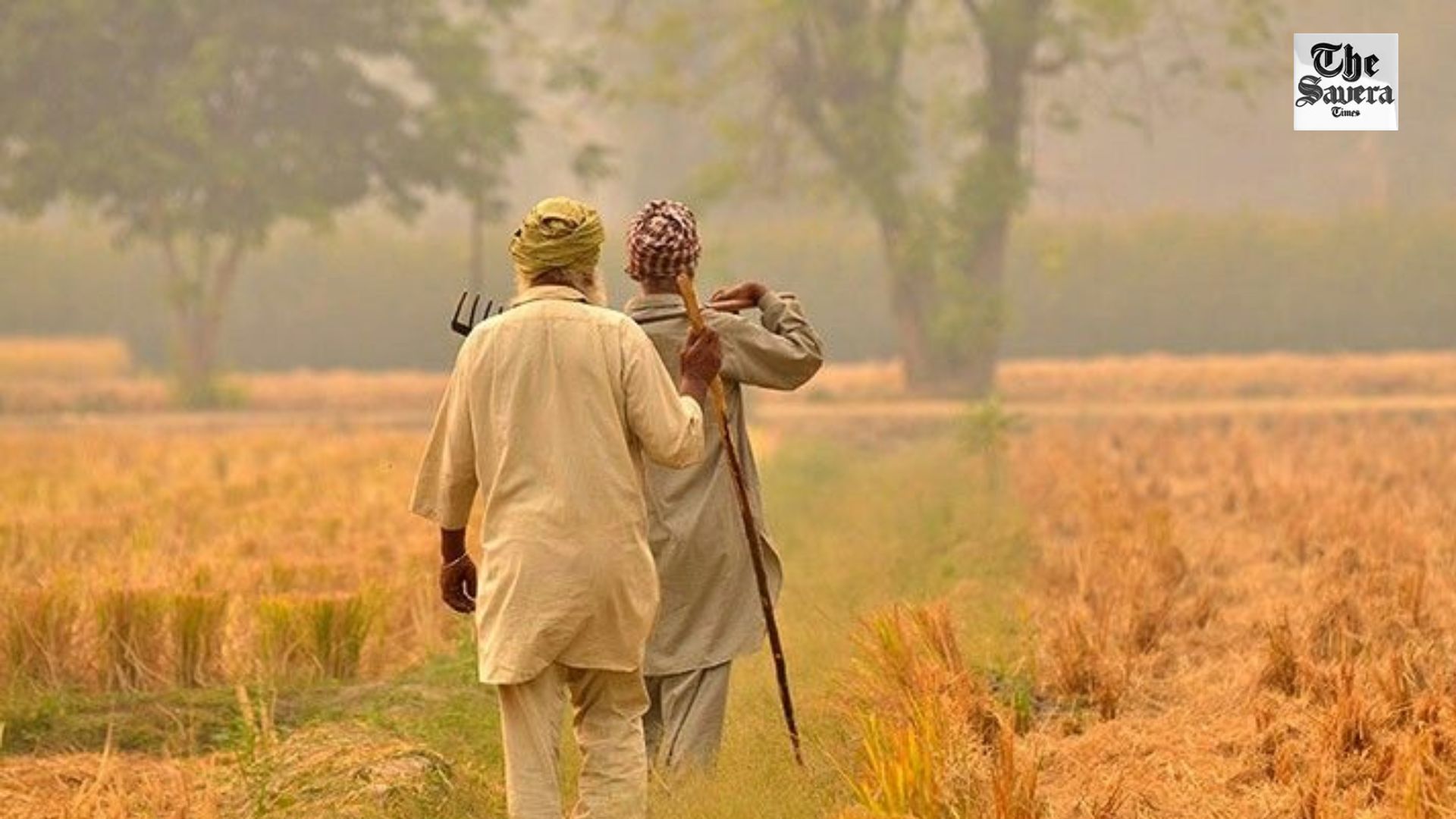
Punjab’s agriculture has followed a single crop cycle for centuries: first sowing and harvesting wheat, followed by sowing and harvesting paddy. Furthermore, while there’s much talk of decentralizing crops, diversification remains elusive. After harvesting, most regular and government procurement takes place in Punjab’s markets, making it one of the nation’s most well-off states. It’s true that Punjab has smallholding farms, ranging from 2 to 5 acres, yet Punjab’s productivity and yields set records. This year, despite the unfavorable weather, when wheat was harvested from Punjab’s fields and reached the markets, the bumper production spoke volumes, demonstrating the success of Punjab’s farmers. Now, after the marketing process is complete, fields are being prepared for the next harvest. In addition to the main crop, paddy, some other crops will also be sown. One drawback is that the productivity of Punjab’s farms is declining. Punjab farmers apply fertilizers, irrigate, and work tirelessly, but the productivity of some crops is low, and the quality of the crops is declining. However, due to farmers’ progressiveness, fertilizer and seed sales are increasing in Punjab. A major reason for this loss is that farmers are receiving substandard fertilizers and pesticides from the market. Counterfeit fertilizers are being sold, and seeds are also contaminated due to chemical coatings. Such seeds not only reduce productivity but also increase the risk of cancer, kidney disease, and liver disease. When farmers increased cotton production in the Malwa region of Punjab, strange diseases began to spread. Cancer became rampant. The Malwa region has even become known as the “Cancer Belt.” Looking back at the past five years, we find that the failure rate of samples of substandard fertilizers has increased, and the incidence of counterfeit seeds has also increased. The Ministry of Chemicals and Fertilizers states that 198 cases of counterfeit fertilizers were reported in 2021, rising to 330 in 2025-26. Whether it’s the Kharif or Rabi season, the supply of fake and unhealthy seeds is rampant. The ministry’s report states that one in every 38 seed samples fails. Despite this, it remains elusive because, when caught, the perpetrators are not immediately punished and escape this heinous crime with a minor sentence. The government issues warning notices and bans sales, but the sellers still fail to improve. So far, only three such cases have resulted in punishment. Research shows that the use of such fake seeds and fertilizers is also making Punjab’s soil sick. Fake fertilizers are adding toxic metals to the soil. Microorganisms begin to die, disrupting the soil’s balance. Crop roots are unable to access water and air properly. Fertilizers require nitrogen, phosphorus, and potassium, but adulterated fertilizers lack these elements. The trade in fake fertilizers and diseased seeds is growing because sellers see greater profit potential. Experts say that the use of such seeds and fertilizers has destroyed 54 percent of the beneficial bacteria in Punjab’s soil. Therefore, the scourge of fake seeds and fertilizers, which is harming Punjab’s agriculture, must be eradicated immediately.
Mission Clean Patiala has removed 13.79 tonnes of waste, planted 800 saplings and involved 1,814 volunteers as PPCB...

Punjab CM Bhagwant Mann has been denied political clearance for his proposed Japan visit to watch India's Asian...

Jalandhar: Union Home Minister Amit Shah met Radisson owner Gautam Kapoor over lunch in Jalandhar on Wednesday, where the...

PSPCL has introduced a 45-day Voluntary Disclosure Scheme to regularise unauthorised additional load on agricultural tubewell connections, with...
Chandigarh: The Punjab and Haryana High Court on Wednesday sought a status report from the Punjab government on...

Amit Shah arrives in Jalandhar as the BJP’s 13-day ‘Nasha Mukt Punjab Yatra’ concludes, with the Home Minister...

Aries: The day will be auspicious...