Last Updated: October 25, 2026
Last Updated: October 25, 2026





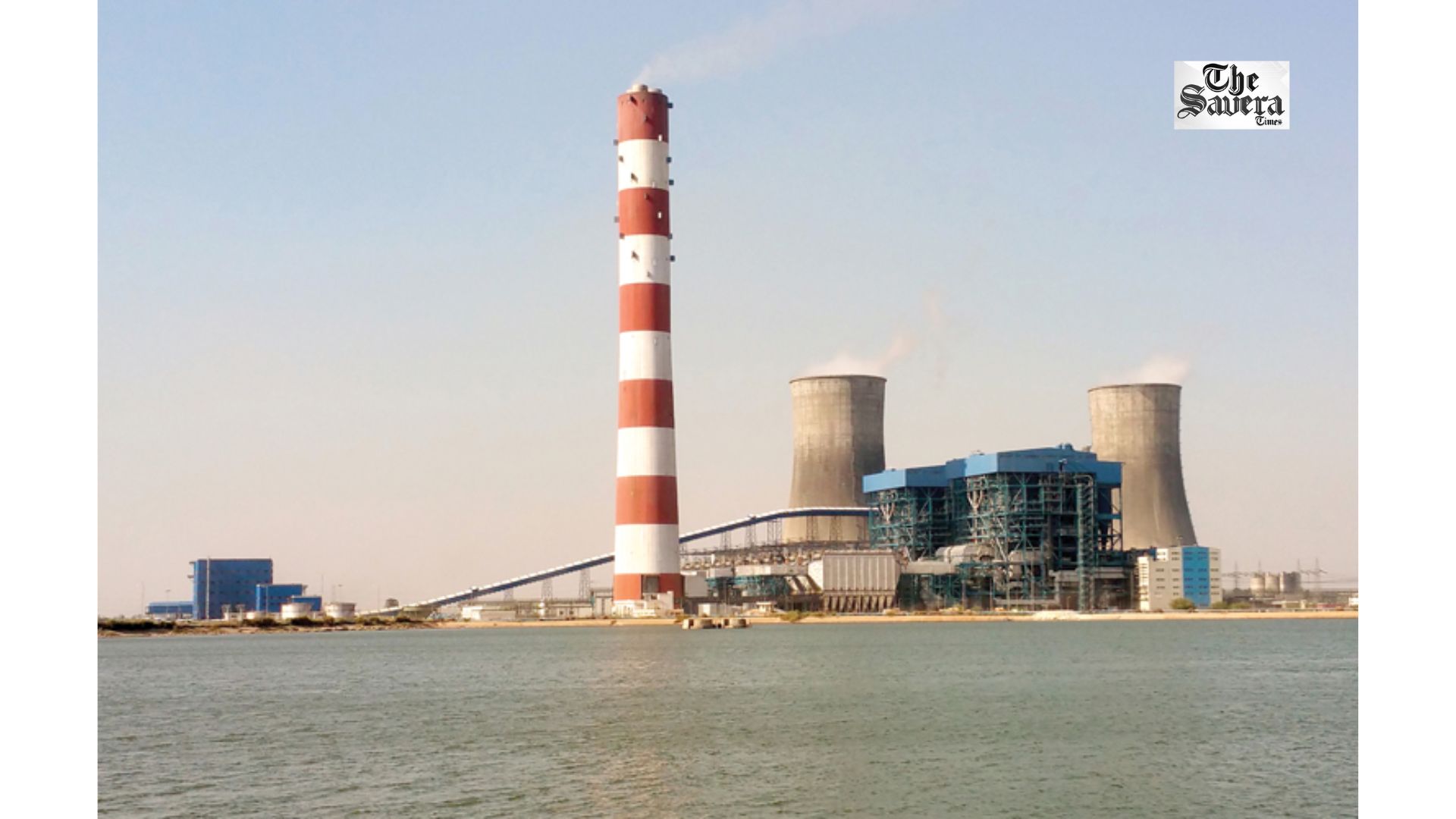
Chandigarh: Punjab is facing the possibility of prolonged power cuts as private thermal power plants in the state reportedly have only around two days of coal stock remaining, raising concerns over electricity generation if fresh supplies do not arrive soon.
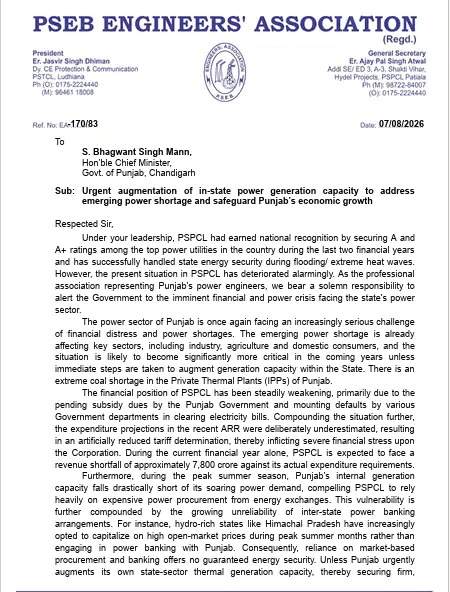
The warning comes amid rising electricity demand and concerns over the financial health of the Punjab State Power Corporation Limited (PSPCL). The PSEB Engineers Association has also warned that the corporation could face a revenue deficit of around ₹7,800 crore in the current financial year.
Punjab has a total thermal power generation capacity of around 5,680 MW, including 2,300 MW from three state-owned plants and 3,380 MW from two private thermal plants. Any prolonged disruption at the private plants could increase the state’s dependence on electricity purchases from the central pool and power exchanges.
Coal shortage raises blackout concerns
According to the Engineers Association, private thermal plants are facing an acute shortage of coal and could be forced to stop or significantly reduce generation if fresh supplies do not arrive within the next one or two days.
Punjab Power Minister Tarunpreet Singh Sond had also raised the coal issue on social media, claiming that private thermal plants were receiving insufficient coal from the Centre and were operating at less than half their capacity. He warned that prolonged power cuts could become a concern if the supply situation was not addressed.
However, the Union Ministry of Coal has maintained that there is no shortage of coal, saying adequate quantities have been allocated. The contrasting claims have triggered a political dispute in Punjab, with the ruling AAP blaming the Centre for the situation, while the BJP has accused the state government of mismanagement.
Engineers warn of ₹7,800 crore PSPCL deficit
PSEB Engineers Association General Secretary Ajaypal Singh Atwal has warned the Punjab government about the financial condition of PSPCL and projected a revenue deficit of approximately ₹7,800 crore based on the corporation’s expenditure requirements.
The association has attributed the financial pressure to factors including delays in government subsidy payments, outstanding electricity bills from government departments and what it describes as an inadequate assessment of PSPCL’s actual expenditure requirements under the latest Aggregate Revenue Requirement (ARR) process.
The association has also highlighted Punjab’s increasing dependence on costly power purchases during periods of peak demand. It said the state’s own generation often falls short during summer, forcing PSPCL to purchase electricity from power exchanges at higher rates.
Association seeks new power projects
The Engineers Association has urged the government to take immediate steps to strengthen Punjab’s own generation capacity.
Among its recommendations is the commissioning of three 800-MW units at the Ropar Thermal Power Plant. The association has also proposed a 250-MW solar power project on vacant land at Guru Nanak Dev Thermal Plant (GNDTP).
It has called for action against private Independent Power Producers (IPPs) that allegedly fail to maintain the mandatory coal stock prescribed for non-pithead plants. The association has sought penalties and appropriate action under the terms of power purchase agreements.
The association has further called for a long-term expansion plan to meet the expected rise in electricity demand from industry, agriculture, data centres and domestic consumption.
Ludhiana industry warns of business shift
Meanwhile, power outages have also caused concern among industrialists in Ludhiana. Entrepreneurs have reportedly warned the government that continued disruptions in electricity supply could force businesses to consider shifting their operations to other states.
The developments have intensified the debate over Punjab’s power supply, coal availability and the financial sustainability of PSPCL. With electricity demand expected to increase in the coming years, the state faces pressure to secure adequate fuel supplies while expanding its own reliable generation capacity.
Elon Musk has become the largest individual political donor ahead of the 2026 US midterms, with more than...

Punjab Police have registered up to 20 FIRs and rounded up as many as 52 suspects during action...

The arrest of a couple in Ferozepur over an alleged honey-trapping operation has brought renewed attention to suspected...

Catch up on the biggest developments across India and around the world with The Savera Afternoon Bulletin, covering...

The Enforcement Directorate is investigating alleged irregularities in GMADA plot allotments in Mohali. A preliminary estimate puts the...

Ludhiana, Punjab: In a shocking incident in Ludhiana, a group of miscreants allegedly barged into a house and...

Aries: The day will be auspicious...