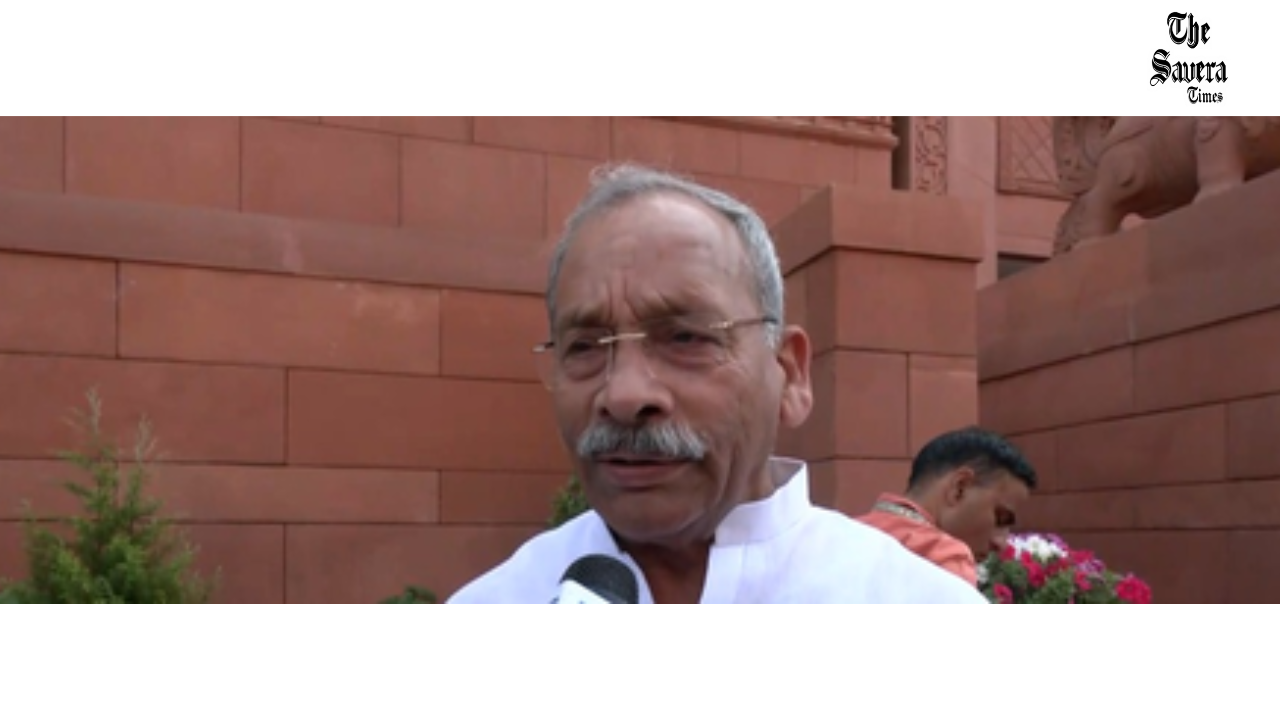
Rashtriya Lok Dal (RLD) MP Rajkumar Sangwan has criticised Leader of Opposition Rahul Gandhi, alleging that he “never attends all-party meetings.” The remark has triggered a fresh political debate over the participation of key opposition leaders in crucial discussions.
Sangwan’s statement comes at a time when all-party meetings are being seen as important platforms for consensus-building on national and parliamentary issues.
Allegations over absence in key meetings
Speaking on the issue, Sangwan claimed that Rahul Gandhi has frequently skipped all-party meetings convened to discuss important matters. According to him, such meetings are essential for ensuring coordination among political parties and addressing national concerns collectively.
He further suggested that the absence of senior opposition leaders weakens the effectiveness of these discussions and limits constructive engagement with the government.
Importance of all-party meetings
All-party meetings are typically convened ahead of Parliament sessions or during significant national developments. These meetings provide an opportunity for leaders across party lines to deliberate on legislative agendas, security issues, and policy matters.
Participation of prominent leaders like Rahul Gandhi is often considered crucial for presenting the opposition’s viewpoint and ensuring balanced dialogue.
Political reactions and implications
Sangwan’s remarks have added to the ongoing political discourse between ruling and opposition parties. While leaders from the ruling side have often questioned the commitment of opposition figures, the Congress party has in the past defended its leadership, stating that representation in such meetings is ensured through other senior members.
The comments are likely to intensify political exchanges, especially with Parliament sessions approaching and parties gearing up to take on key issues.
Congress yet to respond in detail
There has been no detailed response from the Congress party on Sangwan’s latest remarks so far. However, party leaders have previously maintained that attendance in all-party meetings is managed strategically, with different leaders representing the party depending on the issue and availability.
They have also argued that focusing solely on attendance diverts attention from substantive policy debates and governance issues.
Broader political context
The statement reflects the broader political tussle between parties over leadership roles and accountability. Attendance in formal meetings has increasingly become a point of criticism, often used to question the seriousness and involvement of political leaders.
With political temperatures rising, such remarks are expected to continue as parties position themselves ahead of upcoming legislative and electoral challenges.
Debate likely to continue
The issue is unlikely to die down soon, as both sides may use it to strengthen their narratives. While critics stress the importance of consistent participation, supporters argue that effectiveness should be judged by contributions rather than mere presence.
As Parliament proceedings and political engagements continue, the spotlight will remain on how actively leaders participate in key decision-making forums.