Last Updated: October 16, 2026
Last Updated: October 16, 2026





Abhishek Vij
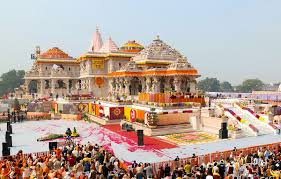
On November 25th, Prime Minister Narendra Modi participated in the Dharmadhwaja hoisting ceremony at the summit of the Ram Temple. Nation-building and election campaigning go hand in hand in Prime Minister Modi’s speeches. His speeches carry the message of national unity and faith in Ram from North India to South India. The significance of the Ram Temple in India’s cultural consciousness lies in its emergence as a symbol of a united India. The account of its final form that has emerged will also be interesting to know. The government of this country of faith completed the Ram Lalla Temple in five years with the help of 4,000 artisans.
It cost 1,800 crore rupees to build. The three-story temple is 161 feet high, 235 feet wide, and 360 feet long. The temple was constructed from sandstone from the Bansi Hills in Rajasthan. Iron or steel was not used anywhere because it would rust, shortening its lifespan. Even the nets to keep monkeys and birds away from this sacred temple are made of titanium. The temple is designed to withstand the effects of time, weather, and natural disasters for the next thousand years. The engineers who guided the construction of this temple were from the Research Institute of Roorkee, IIT Madras, IIT Delhi, IIT Mumbai, IIT Guwahati, and the Indian Institute of Astrophysics. The ceremony on November 25th marked the completion of its construction. The boundary wall and auditorium are now targeted for completion by the end of 2026. A museum is also being built to preserve its history. This temple is built in the 5th-century Nagara style of architecture and design. The main complex consists of five temples in addition to the sanctum sanctorum.
Information about the temple should be accessible to all, as the public donated generously for the construction of this temple, raising ₹3,000 crore (₹3,000 crore). Of this, ₹1,800 crore (₹1,800 crore) was spent to complete the temple. This expenditure includes the cost of 12.50 tons of titanium purchased from the Hyderabad Metal Corporation for the 31 lattices. The main complex features 160 pillars carved with images of deities. The first consecration ceremony of Ram Lalla was held in January 2024, and now, in just two and a quarter years, the three-story building has been completed. This is the result of the dedication and faith of the entire nation. The dignity of the temple was not compromised at all.
The temple has a total of 47 doors, 14 of which are on the ground floor and are plated with gold. The first floor houses the Shri Ram Darbar, which houses statues of Lord Ram in his royal form, Sita, Lakshman, and Hanuman, made of white Makrana marble from Rajasthan. This floor also features 132 pillars carved with images of deities. The main complex features five pavilions, including dance, color, singing, kirtan, and prayer, which are dedicated to various cultural and religious rituals within the temple.
The outer wall outside the main temple complex is 750 meters long and 14 feet thick. On the ground floor, there are six temples dedicated to the revered Sun God, Lord Shiva, Goddess Bhagwati, Ganesha, Hanuman, and Mother Annapurna. The upper floors feature circumambulatory paths that attract large numbers of pilgrims. This detail of the temple is worth collecting for devout Indians. Devotees can only truly understand how the Shri Ram Temple has evolved from ancient art to a representative of modern India by visiting it.
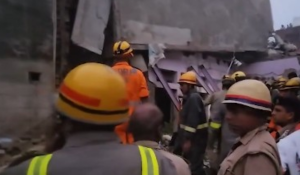
Varanasi: A massive explosion triggered the collapse of a two-storey building in Uttar Pradesh’s Varanasi on Thursday, leaving...
Sofia: A vessel sailing under the flag of San Marino caught fire in the Black Sea near Romania...

New Delhi: Accusing the Congress of double-speak on women dignity, the Bharatiya Janata Party (BJP) Mahila Morcha on...

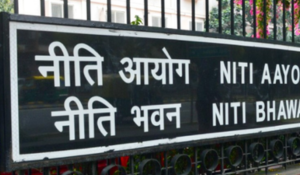
New Delhi: NITI Aayog’s Frontier Tech Hub released a Data Centre Evaluation Framework to help states plan for...
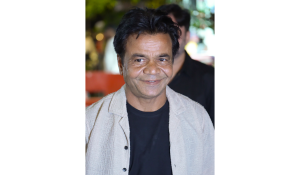
New Delhi: The Supreme Court on Thursday referred the cheque dishonour cases against actor and comedian Rajpal Yadav...
Mirzapur: Uttar Pradesh Chief Minister Yogi Adityanath on Thursday accused the Samajwadi Party (SP) and the Congress of...
Aries: The day will be auspicious...