Last Updated: October 22, 2026
Last Updated: October 22, 2026





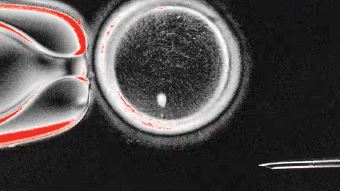
Science has long pushed the boundaries of what was once thought impossible. Now, researchers in the United States have reported a development that could transform the future of reproduction: the creation of human eggs from skin cells. The study, published this week in the journal Nature Communications by scientists at Oregon Health and Science University, demonstrates for the first time that skin cells can be reprogrammed into functional human oocytes, or immature egg cells. The work was led by Professor Shoukhrat Mitalipov, director of the university’s Center for Embryonic Cell and Gene Therapy.
How the process works
The method involves taking the nucleus from a human skin cell, which holds most of the genetic code, and placing it into a donor egg that has been stripped of its own DNA. Since eggs naturally contain chromosomes, researchers had to induce the egg to discard half of them, mimicking the process of meiosis. This step, referred to as “mitomeiosis” — a combination of mitosis and meiosis — was key to producing eggs with the correct number of chromosomes.
Through this process, the team created 82 functional human oocytes. These were then fertilised with human sperm in a laboratory setting and began to develop in the early stages, similar to the procedure used to create Dolly the Sheep, the first cloned mammal, in 1996.
Yet the experiment also revealed serious limitations. Only around 9 percent of the fertilised eggs reached the blastocyst stage — the point at which an embryo could, in theory, be implanted into a womb during IVF treatment. Moreover, none of the eggs were suitable for such use. The reason was that the eggs randomly discarded chromosomes, rather than selecting one of each type as normally happens in nature. This resulted in genetic abnormalities, preventing healthy embryo development. The eggs also failed to undergo “crossing over,” a natural process in which chromosomes exchange DNA segments, reducing the likelihood of disease.
Why this matters
Despite these flaws, researchers say the experiment is a major breakthrough. “We achieved something that was thought to be impossible,” Professor Mitalipov told the BBC.
If perfected, the technique could revolutionise reproduction by allowing babies to be conceived without a biological mother’s eggs. Millions of people who cannot naturally have children — including those facing infertility, women without eggs due to illness or age, and same-sex male couples — could potentially have genetically related children.
“In theory, the technique could result in a limitless number of eggs,” said Dr Paula Amato, a co-author of the study. She explained that DNA from a skin cell could be used to generate eggs even for people who do not have any of their own. Other experts echoed the significance. Dr Sigal Klipstein of the American Society of Reproductive Medicine called the research “a very significant step” towards the possibility of using skin cells to produce eggs. Professor Roger Sturmey of the University of Hull described the work as both “important” and “impressive,” though he stressed the need for public discussion and strict oversight. Professor Richard Anderson of the University of Edinburgh added that creating new eggs would be “a major advance” for many women struggling with infertility.
Concerns and uncertainties
Still, doubts remain. Amander Clark, a developmental biology expert at UCLA, noted it is unclear whether skipping normal meiosis in half of the genome is compatible with human development. The current research showed that embryos produced in this way would almost certainly fail to develop into healthy babies.
Beyond the scientific hurdles, the findings raise serious ethical and legal questions. Critics warn of the potential misuse of the technology, such as creating so-called designer babies or using stolen skin cells from unsuspecting individuals to produce children without consent. There are also concerns that wealthy individuals might attempt to produce offspring using only their own genetic material.
The road ahead
For now, the breakthrough remains a proof of concept rather than a practical option. Researchers emphasise that the technique will require at least a decade of further study before it could be considered safe for clinical use. But they are optimistic about its potential.
“We have to perfect it,” Professor Mitalipov said. “Eventually, I think that’s where the future will go, because there are more and more patients who cannot have children.”While the science is still in its infancy, this research has opened a new frontier in reproductive medicine. It has demonstrated that creating human eggs from skin cells is possible — a step that could one day reshape the very foundations of parenthood.
Good Evening Viewers! Get the latest updates from India and around the world with The Savera Times Evening...

Bharatiya Janata Party (BJP) National General Secretary Smriti Zubin Irani launched a scathing attack on Congress MP and...

New Delhi: Cockroach Janata Party (CJP) leaders Saurav Das and Ashutosh Ranka will be released from judicial custody...

According to police, three suspicious young men are seen in CCTV footage. Efforts are underway to identify them....

A video has surfaced of an alleged attempted assault on Jan Suraj Party's Bihar president Manoj Bharti. The...

Two accused have been convicted and sentenced to 10 years of rigorous imprisonment in a 2017 drug trafficking...

Aries: The day will be auspicious...