Last Updated: October 24, 2026
Last Updated: October 24, 2026





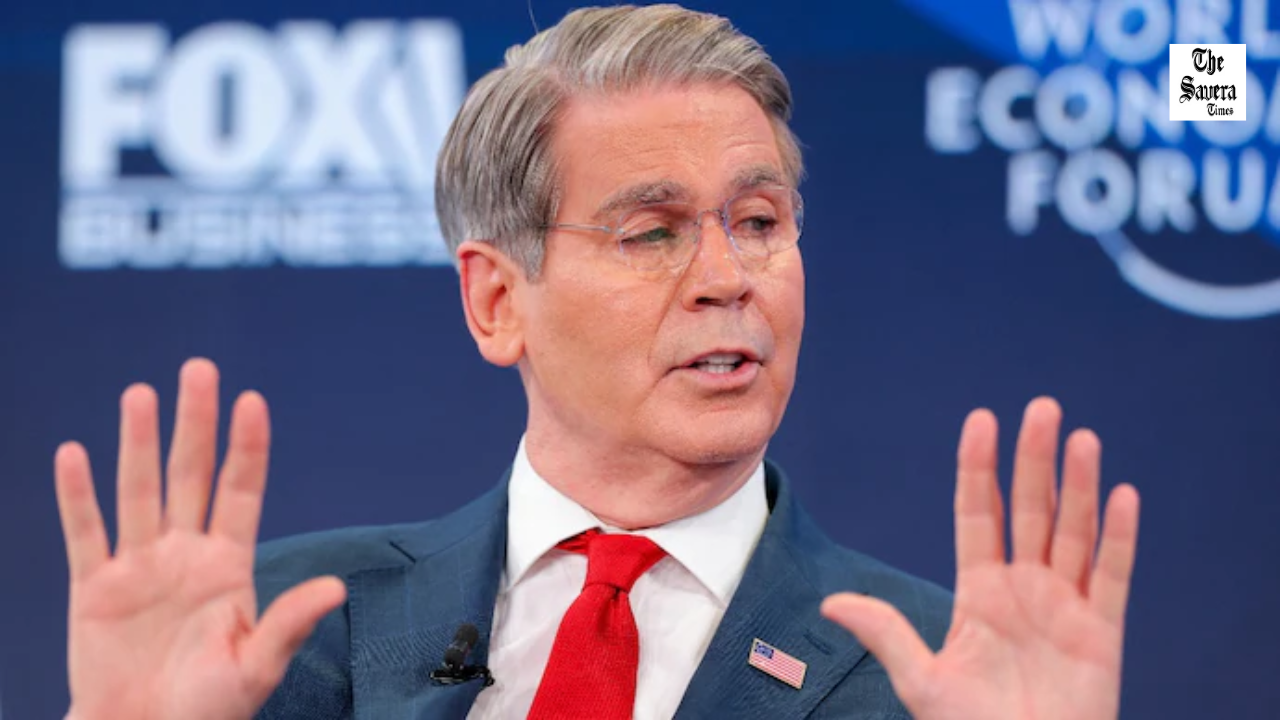
The United States has indicated it may roll back a portion of the steep tariffs imposed on Indian imports after New Delhi significantly reduced its purchases of Russian crude oil a move that could ease trade tensions between the two countries.
US Treasury Secretary Scott Bessent, speaking on the sidelines of the World Economic Forum in Davos, Switzerland, said the 25 per cent tariff imposed on India over its oil imports from Russia has worked as intended because Indian oil purchases have “collapsed.” While the tariffs remain in place for now, he suggested there’s a potential diplomatic “path” to remove at least part of the duties if India continues to scale back Russian oil imports.
The additional 25 per cent tariff on India was introduced under the Donald Trump administration as part of punitive measures linked to India’s energy ties with Russia, on top of a previous 25 per cent levy tied to broader trade grievances — effectively bringing the tariff rate on certain Indian exports to 50 per cent.
The tariff package was aimed at discouraging New Delhi from buying discounted Russian crude, which the U.S. saw as inadvertently financing Moscow’s war efforts. Bessent described the significant decline in such imports as a “success” of U.S. tariff policy, highlighting that Indian refinery purchases of Russian oil have dropped sharply.
India’s reduction in imports of Russian crude comes amid sustained global pressure following the Ukraine conflict, as Western allies sought to limit Moscow’s revenue sources. Bessent’s comments acknowledged that the dramatic fall in Indian Russian oil imports suggests that pressure tactics have had an impact.
However, he was clear that no final decision had been made and that the tariffs were still on the books. “The tariffs are still on,” he told Politico, but added that he “would imagine there is a path to take them off,” signaling possible relief for Indian exporters if conditions continue to evolve.
A rollback of punitive tariffs could help ease tensions that have overshadowed U.S.–India trade relations in recent months. Trade experts note that the tariffs strained negotiations toward broader trade agreements and discouraged American importers from sourcing key products from India due to elevated costs.
While a rollback is only at the signaling stage, the remarks from Bessent suggest that economic and geopolitical dynamics including energy policy shifts — may influence future trade decisions between the two partners.
Officials on both sides are likely to monitor how India’s energy sourcing evolves and whether tariff relief can be part of a larger framework of cooperation. Continued dialogue between economic and diplomatic representatives will be key in determining whether the 25 per cent tariff can indeed be eased.
Four pilots died after two Philippines Air Force aircraft collided midair during a training exercise in Batangas. The...

Multiple earthquakes of preliminary magnitudes 7.2, 6.9 and 6.3 were reported near the Vanuatu Islands on Saturday. India's...

Washington: US President Donald Trump has acknowledged that the war with Iran has driven up oil prices and...
Washington: US President Donald Trump has announced a new labelling initiative to identify American-produced seafood, seeking to give...
Kinshasa: A major clinical trial to evaluate vaccines against the Bundibugyo Ebola virus began Friday in the eastern...

Washington: US President Donald Trump has warned that American forces could launch another round of military strikes against...
Aries: The day will be auspicious...