Last Updated: October 9, 2026
Last Updated: October 9, 2026





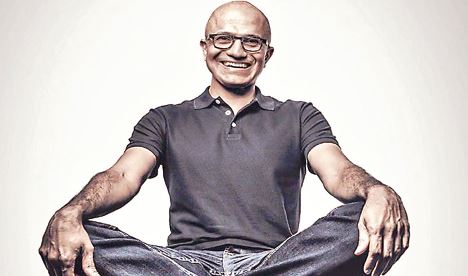
Microsoft’s decade-long transformation under Satya Nadella has not only reshaped the company’s fortunes but also placed its chief executive among the world’s highest-paid corporate leaders. The company’s latest proxy filing revealed that Nadella earned $96.5 million in fiscal 2025, a 22 per cent jump from the previous year and the highest total since he took charge in 2014.
The package includes a $2.5 million base salary, $9.5 million in cash incentives, $84 million in stock awards, and smaller benefits totaling about $196,000. More than 95 per cent of Nadella’s pay is tied to performance metrics such as revenue growth, total shareholder return, and market leadership — a structure that Microsoft says aligns his compensation with long-term value creation.
When Nadella succeeded Steve Ballmer in 2014, Microsoft was viewed as a fading software giant struggling to compete with faster-moving rivals in cloud computing and mobile technology. A decade later, it stands among the most valuable firms in the world, with a market capitalization approaching $4 trillion. Microsoft’s revenue has more than tripled during his tenure to $281.7 billion in fiscal 2025, while net income has quadrupled to $101.8 billion. Earnings per share have risen fivefold, and total shareholder return has exceeded 1,000 per cent.
In its filing, the board credited Nadella for leading Microsoft through a “generational technology shift,” positioning the company at the forefront of artificial intelligence. Over the past three years alone, Microsoft’s stock price has more than doubled, climbing 23 per cent in 2025.
Much of this success is linked to Microsoft’s early and aggressive push into AI. Its partnership with OpenAI, initiated years before ChatGPT’s launch in 2022, has evolved into one of the most consequential alliances in the tech industry. Microsoft rapidly integrated AI capabilities across its portfolio, embedding tools like Copilot in Microsoft 365, Azure, and GitHub.
This AI momentum has translated directly into financial results. Azure, Microsoft’s flagship cloud service, reported $75 billion in annual revenue for 2025, up 34 per cent year-on-year. The broader Microsoft Cloud division earned $168.9 billion, rising 23 per cent. The company now operates 70 cloud regions and runs more than 400 data centres globally, serving 430 million commercial Microsoft 365 users, 89 million consumer subscribers, and 1.2 billion LinkedIn members.
Microsoft’s AI initiatives continue to expand through platforms like Copilot Studio and Azure AI Foundry. The company reports that over 230,000 organisations use Copilot Studio, while 14,000 are connected to Azure AI Foundry. These products have helped Microsoft dominate a market that now defines the tech economy. According to Citigroup, nearly half of the S&P 500’s $57 trillion market capitalization is tied to AI-related businesses — with Microsoft at the centre of that boom.
Nadella’s compensation dwarfs that of most peers. The median CEO pay across S&P 500 firms in 2024 was $17.1 million, while major technology chiefs averaged $19.3 million. Nvidia’s Jensen Huang earned $49.9 million in 2025, and Apple’s Tim Cook took home $74.6 million in 2024. Microsoft said Nadella’s pay reflects “the scope of his responsibilities and the scale and performance of the company.”
Top executives at Microsoft have also benefited. Chief financial officer Amy Hood earned $29.5 million in fiscal 2025, up from $25.8 million. Commercial business head Judson Althoff and president Brad Smith each received around $28 million, with compensation similarly tied to performance goals.
However, Nadella’s pay rise has renewed debate over income disparity within the company. Microsoft reported a CEO-to-median-employee pay ratio of 480 to 1 in 2025, with the median salary at $200,972. The figure comes amid layoffs affecting about 9,000 employees this year, part of a restructuring to align operations with AI-driven priorities.
Critics argue that record CEO pay alongside job cuts underscores the tension between shareholder rewards and workforce stability. Microsoft maintains that its long-term growth benefits all stakeholders, though some analysts warn that the heavy investment in AI infrastructure may test profit margins in future years.
For now, however, Nadella’s formula appears to be working. A decade after steering Microsoft away from stagnation, he has delivered one of the most remarkable corporate turnarounds in modern business — and his latest pay packet is a reflection of that success.
At least five people were killed when a school bus plunged off the road in Nepal’s western city...

Finance Minister Nirmala Sitharaman is visiting Singapore from October 9 to 11 for meetings with the country’s top...

India and Liberia have condemned attacks on commercial ships and seafarers in the Gulf and Black Sea, calling...

The Trump administration has suspended eight major technology companies, including Infosys, TCS, Wipro, HCL Technologies and Microsoft, from...

Israel will honour Indian pilot Smit Machchhar with its Presidential Award for Civilian Heroism following his reported role...

US senators Ruben Gallego and Jim Banks have urged the Trump administration to appoint a delegation leader ahead...

Aries: The day will be auspicious...