Last Updated: October 12, 2026
Last Updated: October 12, 2026





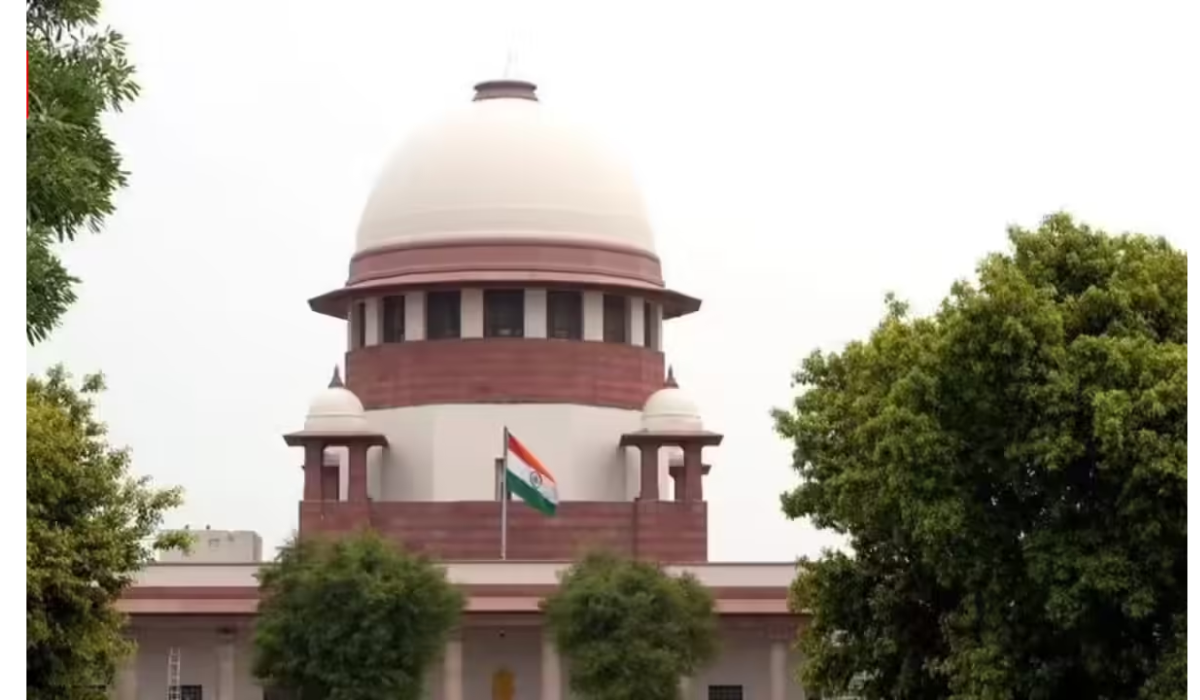
In a landmark judgment, the Supreme Court has legally recognized the domestic work performed by women who manage their households and families. Until now, a woman’s domestic work was merely considered a part of her life, and she was simply praised as a ‘homemaker.’ Although her work is deemed invaluable, it holds no tangible monetary value when calculating the GDP. Consequently, the domestic labor performed by women—who constitute half of India’s population—has long been viewed as unpaid work. However, the Supreme Court ruled that women are not limited to childbearing; they are a child’s first teachers, instilling moral values, discipline, social etiquette, and human empathy within the family. The human capital nurtured by them forms the cornerstone of the nation’s economic and social progress. Despite this, their contribution had gone unrecognized until now. The Supreme Court was adjudicating a petition concerning the death of a woman—who was traveling from Sirsa to Faridabad—in a collision between two jeeps in 2001. Her husband and three children had approached the Motor Accident Claims Tribunal seeking compensation. The Tribunal had awarded the family a compensation of Rs 2.42 lakh. Deeming this amount—based on a notional monthly income of Rs 30,000 for a housewife— to be grossly inadequate given the magnitude of a woman’s contribution to the household, the family appealed to the Punjab and Haryana High Court. Acknowledging their plea, the High Court recognized that a woman’s contribution extends far beyond mere domestic chores and, in 2024, increased the compensation to Rs 8.43 lakh. However, the family felt this amount was still insufficient and subsequently approached the Supreme Court. Delivering the verdict on this matter, Justices Sanjay Karol and N. The bench led by Justice Kotiswar Singh has clarified that compensation awarded upon the death of a housewife must include the value of the domestic care she provided as a distinct component. In its final verdict, the Supreme Court reasoned that earning members of a household rely heavily on the housewife; therefore, even if the woman has no formal income, the value of her domestic care work should be assessed at a minimum of Rs. 30,000 per month when determining compensation, with the final amount calculated based on this figure. Ultimately, the Supreme Court enhanced the compensation in this case to Rs. 62,77,900. This judgment is significant in its own right. This is because it marks the first time the country’s apex court has assigned a monetary value to the domestic services performed by women. Furthermore, expressing concern over the pendency of motor vehicle accident cases, the Supreme Court issued guidelines for their speedy disposal. It is noteworthy that unpaid care work performed by women is estimated to contribute 15–17% to India’s GDP, yet they receive neither remuneration nor recognition for it. Citing the 2019 Time Use Survey, the Supreme Court noted that women aged 15 to 59 spend over seven hours daily on domestic chores, whereas men spend less than three hours. We believe that this new framework for determining compensation upon the death of a housewife will serve as a precedent for future court rulling on the matter.
Start your day with The Savera Morning Brief, bringing you the top India and world news, breaking developments,...

Maharashtra MPSC Chairman Vivek Bhimanwar has been sent on compulsory leave until the inquiry into the alleged paper...

Rahul Gandhi and other INDIA bloc leaders are set to march towards the Supreme Court over alleged electoral...

Uttar Pradesh Chief Minister Yogi Adityanath extends greetings on the second day of Shardiya Navratri, dedicated to Maa...

New Delhi: Chief Justice of India (CJI) Surya Kant has declined a request from the Congress-led INDIA bloc...

India’s total pulse production rose to 274.09 lakh tonnes in 2025-26 from 256.83 lakh tonnes in 2024-25, driven...

Aries: The day will be auspicious...