Last Updated: October 12, 2026
Last Updated: October 12, 2026





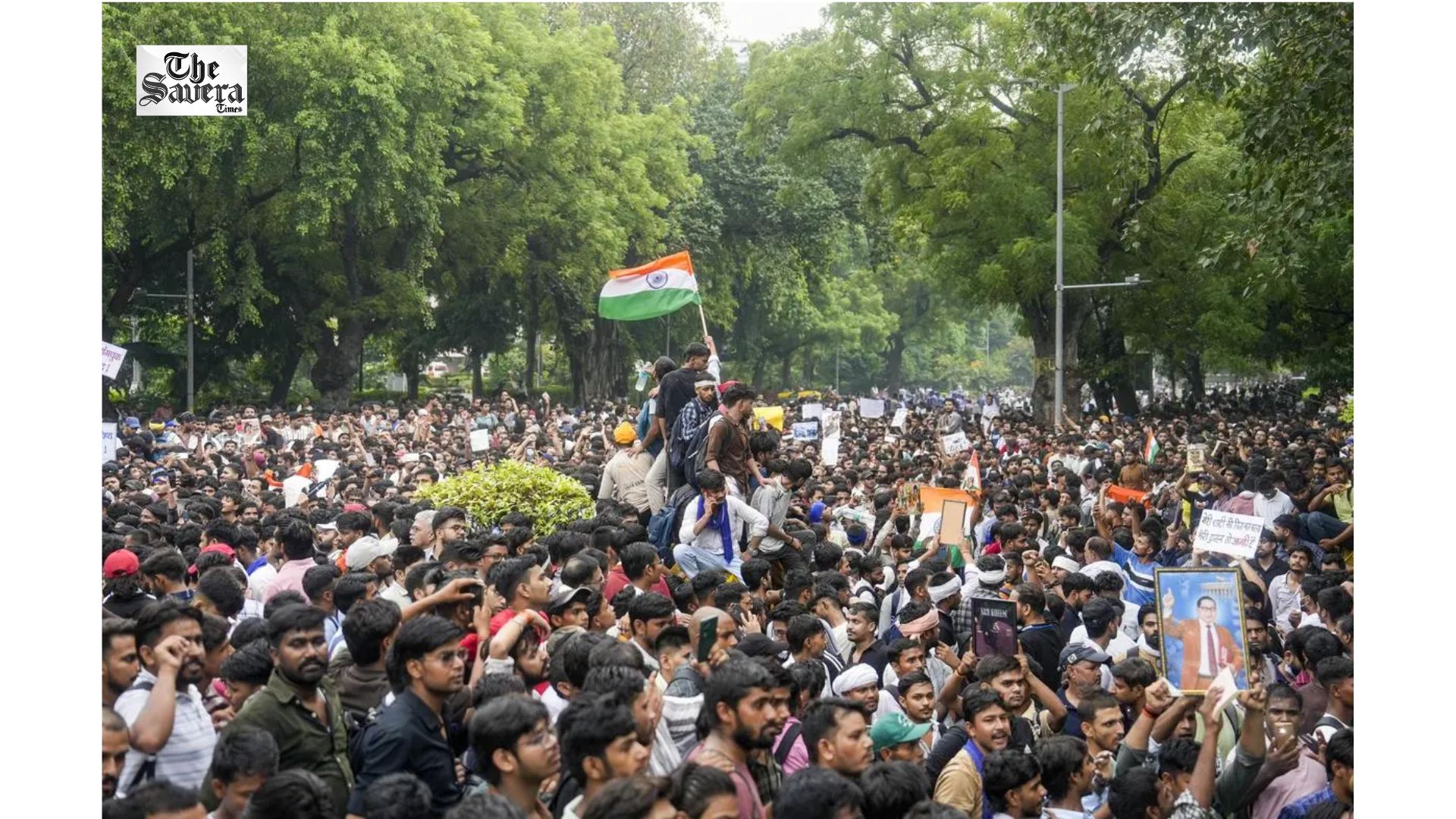
The student movement led by the Cockroach Janata Party (CJP) over the paper leak and the subsequent suicides of 22 students, reportedly linked to the leak, reached a crucial stage on July 20 when police resorted to a heavy lathi-charge during the students’ march to Parliament. The students remain firm on their primary demand for the resignation of Education Minister Dharmendra Pradhan, along with several other demands.
Following the Parliament march, the Central government intensified efforts to find an amicable solution to the issue. This became necessary as various political parties attempted to infiltrate the movement and politicise it. At midnight on July 23–24, Prime Minister Narendra Modi released a 2-minute and 56-second video message addressing the protesting youth for the first time. In his message, he assured students that those responsible for the paper leak would receive the harshest possible punishment.
On July 24, the Prime Minister also informed the Union Cabinet that fast-track courts would be established to deliver verdicts in paper leak cases within three months. Under the proposed law, offenders could face up to ten years of imprisonment and a fine of up to ₹10 crore. The government is expected to introduce the legislation in Parliament on Monday.
On behalf of the Union Cabinet, JP Nadda and Dr. Jitendra Singh took the initiative to ensure a peaceful resolution of the protest. On the night of July 23, they visited the hospital and ended Sonam Wangchuk’s hunger strike by offering him juice. The government also held talks with student representatives at the Constitution Club. Representing the CJP, Sourav Das and Ashutosh Ranka submitted a five-point charter of demands.
During the two-hour meeting, the government accepted in principle the demands for compensation to affected students and the withdrawal of FIRs registered against protesters. It also assured that the police would not harass students or their family members visiting Jantar Mantar.
However, the biggest issue remains unresolved—the resignation of Education Minister Dharmendra Pradhan. Student leaders reiterated that they would settle for nothing less. Government ministers said they would respond to this demand on Saturday. Although no final agreement was reached, the meeting helped create a more cordial atmosphere between the government and the students. If the government succeeds in addressing their concerns, attempts by political parties to exploit the issue for political gain may lose momentum.
Prime Minister Modi is an experienced politician. A change in the Education Ministry, by assigning Dharmendra Pradhan a different portfolio and appointing a new Education Minister, could help defuse the situation. Since the Chief Secretary and other senior officials of the department have already been replaced, such a move may not be difficult.
If the government enacts a strict anti-paper leak law, provides compensation to affected students, and withdraws FIRs against protesters, there is hope that the current situation can be resolved peacefully. Such measures could encourage students to move away from confrontation and return to constructive engagement, while preventing the movement from being overtaken by political interests.
Amidst heavy security and barricades by the Delhi Police, INDIA Bloc leaders began a protest march towards the...
The Reserve Bank of India (RBI)'s new measures to curb speculation in the rupee and maintain stability in...

Gold exchange-traded funds (ETFs) witnessed a sharp rise in investor interest in September, with net inflows surging 71.4...
Rahul Gandhi accused the Modi government of protecting Chief Election Commissioner Gyanesh Kumar, criticised security restrictions in Delhi...
Chief Justice Surya Kant said every citizen can approach the Supreme Court through a petition after declining a...
A major fire broke out at a scrap warehouse opposite the Maruti Temple in Sangameshwar, Maharashtra, around midnight....
Aries: The day will be auspicious...