Last Updated: October 10, 2026
Last Updated: October 10, 2026





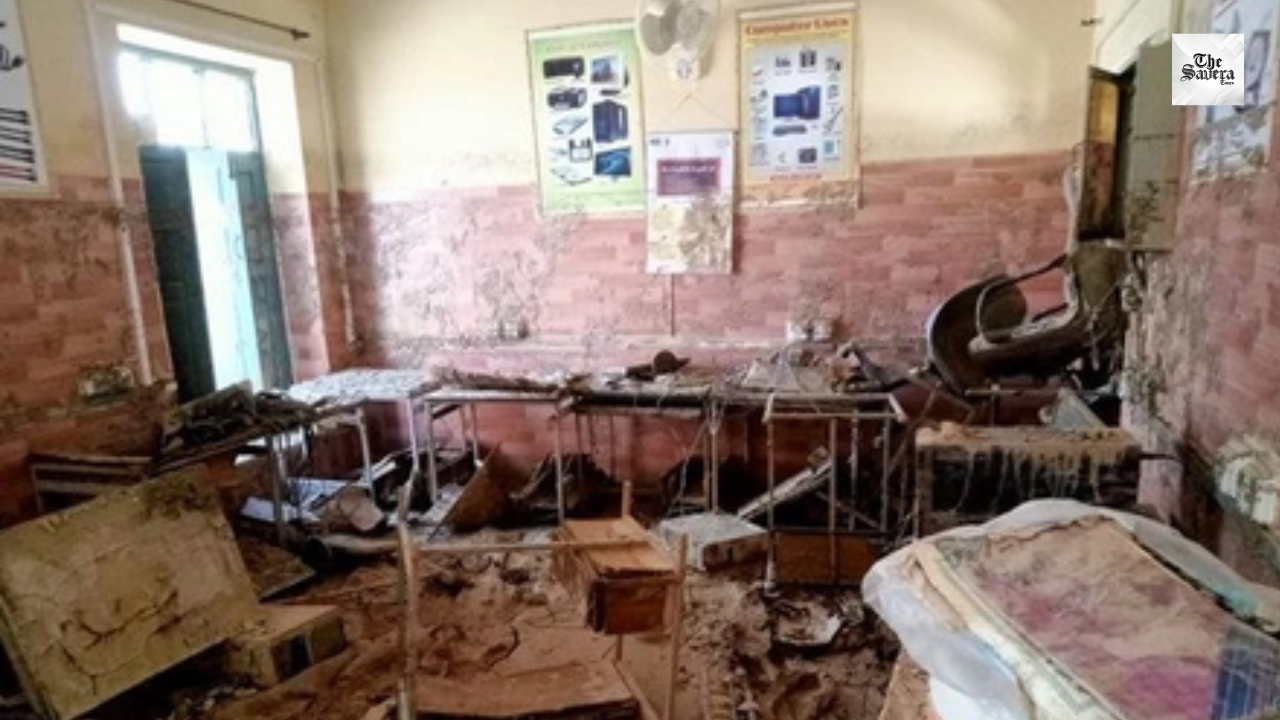
Nearly four years after the devastating 2022 floods in Pakistan, thousands of schools in Sindh province remain unrepaired, highlighting the slow pace of reconstruction. According to official data, as many as 19,808 schools were damaged during the disaster, making it one of the worst education crises in the region.
Out of these, only a portion has been taken up for rehabilitation so far, while over 14,000 schools are still awaiting reconstruction, leaving millions of students without proper learning facilities.
Authorities have initiated reconstruction work on thousands of schools under various provincial, federal, and international funding programmes. Around 5,400 schools have been included in rebuilding plans, with a mix of fully and partially damaged institutions.
However, progress remains uneven. While some schools have been completed and others are under construction, the majority are still pending due to funding gaps, logistical challenges, and the sheer scale of destruction caused by the floods.
Large-scale schemes like the Sindh School Education Investment Programme and federal development initiatives aim to complete several projects by 2026–2027, indicating that full recovery will take years.
The delay in reconstruction has had a direct impact on students. The 2022 floods had already disrupted education for millions of children across Pakistan, with many schools destroyed, damaged, or converted into relief shelters.
In Sindh alone, a significant number of children continue to face learning disruptions due to the lack of proper school infrastructure. Temporary learning spaces and partial reopenings have not been enough to fully restore normal education.
Experts warn that prolonged school closures increase dropout risks, especially among vulnerable communities, and may lead to long-term educational setbacks.
Reconstruction efforts are being supported by multiple stakeholders, including government programmes, international donors, and development partners. Billions of rupees have already been allocated, with a substantial amount spent on rebuilding efforts.
Despite this, the scale of the disaster considered one of the worst in Pakistan’s history continues to pose challenges. The 2022 floods caused widespread destruction across infrastructure, agriculture, and housing, with damages running into billions of dollars.
Climate experts also warn that recurring extreme weather events, including floods and heatwaves, could further delay recovery and put rebuilt infrastructure at risk.
Officials maintain that reconstruction work is ongoing and will continue over the next few years. However, with over 14,000 schools still awaiting rebuilding, restoring the education system in Sindh remains a long-term challenge.
The situation underscores the urgent need for faster implementation, increased funding, and climate-resilient infrastructure to ensure that children can safely return to classrooms and resume their education without further disruption.
Ukrainian President Volodymyr Zelensky has criticised Donald Trump’s reported agreement to allow Russian diesel supplies to global markets,...

A 7.2-magnitude earthquake struck Panama on Friday, shaking buildings in Panama City and prompting tsunami alerts. Panama Canal...

Russian President Vladimir Putin says proposed Russian oil supplies to the US could benefit the global economy following...

Sharjah, UAE: All 22 Indian seafarers aboard the Panama-flagged crude oil tanker MT GEM NO. 2 are safe...

China is facing a human resources problem as the country’s younger generation sees technical education as lower in...

~Abhishek Vij Crude oil and natural gas exported from Gulf nations to half the world form the energy...