Last Updated: October 15, 2026
Last Updated: October 15, 2026





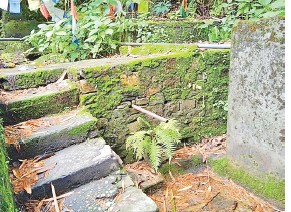
Residents of Kolbong in the Darjeeling Hills have revived a long-dry spring through a community effort that blends hydrogeological science with traditional knowledge. Their work offers a model for Himalayan villages facing growing water stress and shows how collective action can restore both water sources and the social fabric around them.
For nearly ten years, Kolbong’s spring had dwindled to silence. Summers became difficult as the once-steady flow that supplied the village faded. When private water sellers began arriving in the remote hills, residents recognised how sharply conditions had changed. Water, once freely available, was becoming a commodity, and the shift created anxiety in a region where shared access had long been central to daily life.
In 2020, researchers from Sikkim University reached Kolbong with findings from a major assessment of 300 springs in Darjeeling. Their report identified Kolbong’s springs as among the most vulnerable. But villagers remained cautious. They had witnessed many projects that documented their problems without offering lasting solutions.
Trust began to build when retired government employee Binod Dhanukia offered to delay construction near the spring’s catchment. His decision protected the recharge zone and encouraged others to support a community-led springshed management effort. The process combined scientific guidance with long-standing indigenous understanding of the landscape.
Social challenges were as significant as the ecological ones. Water scarcity had strained relations, weakening traditions of mutual support that once defined the hills. Reviving the spring required nearly 100 hectares of land for three years of interventions, a major commitment in a terrain where every plot is vital for livelihoods. Yet residents recognised the risk of inaction and agreed to contribute land in the interest of long-term security.
Once the community united, work began across slopes and farmlands where groundwater moves unseen. With help from hydrogeologists, villagers learned to interpret features such as root direction, ridge shape and vegetation cover to understand how water travelled beneath their feet. Families offered land for ponds, percolation pits, contour trenches and vegetation dams. Water-retaining species such as panisaaj, lapsi and kainjal were planted to strengthen the ecosystem.
Elders described old recharge zones from memory while youth, trained as para-hydrogeologists, mapped them using modern tools. Women, who had carried the burden of fetching water during the crisis, became central to the revival. They kept detailed records of spring discharge and handled maintenance throughout the process.
The community built soil-and-stone structures to slow monsoon runoff, allowing water to seep into the ground and recharge the aquifer. Each trench and sapling represented more than a technical intervention. It was a commitment to safeguard the landscape and secure water for future generations.
Supreme Court: Person Converting from Hinduism to Islam Cannot Claim Backward-Class Muslim Status

Higher reaches of Jammu and Kashmir received the season’s first snowfall, covering Doda, Gurez Valley and Pir Ki...

Mumbai Police has issued a 'Leave India' notice to Bollywood superstar Aamir Khan's nephew and actor Imran Khan....

Ram Kumar Singh, a 71-year-old retired Customs officer, was shot dead outside his home in Ara’s Kanakpuri locality....

Punjab AGTF and Haryana STF arrested Gurlal Singh in connection with Ajmeet Singh’s September 11 murder in Naushera...

Uttar Pradesh Police arrested a 28-year-old alleged criminal after an encounter in Noida’s Sector 63. Police said around...

Aries: The day will be auspicious...