Last Updated: October 22, 2026
Last Updated: October 22, 2026





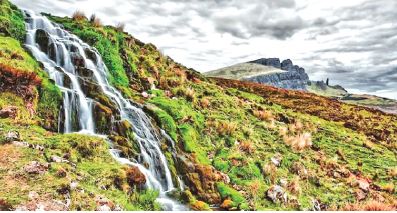
Springs across the Indian Himalayan Region (IHR) are fast disappearing, threatening water security in mountain states like Uttarakhand, Sikkim, and Nagaland. Despite efforts to revive them through spring-shed development programmes since 2017, the absence of reliable, district-level data has hampered restoration planning. A recent comprehensive spring census conducted in Uttarakhand’s Tehri and Almora districts has begun to fill this crucial information gap, offering valuable insights into the scale and nature of the crisis.
The census, launched in April 2025 by a Dehradun-based organisation, was the first of its kind in the state. Covering two key hill districts—one in the Garhwal region and one in Kumaon—it mapped over 10,000 springs across 2,413 villages within 17 administrative blocks. The study excluded springs located in reserved forest areas but included all others on civil and nearby land, whether active, seasonal, or dried. Conducted during the peak summer months of April to June, the census aimed to record the lean season discharge when water availability is at its lowest.
A district-saturation approach was adopted to ensure comprehensive coverage. More than 100 trained para-hydrogeologists, equipped with standardised tools and mobile devices, collected data on 55 parameters covering hydrology, ecology, and socio-economic factors. They also conducted on-site water quality tests, discharge measurements, and photographic documentation while engaging local communities for ground insights. This mix of digital precision and traditional knowledge helped create one of the most detailed datasets on Himalayan springs to date.
Each spring was analysed across six key categories—location and ownership, water characteristics, infrastructure and measurement, environmental setting, management and usage, and community dependency. Findings revealed three primary spring types: free-flowing, Naula or Bawdi (traditional systems), and seepage springs. Of the total 10,063 springs mapped, 56 per cent were free-flowing, 32 per cent were Naula/Bawdi, and 12 per cent were seepage sources. Notably, the Kumaon region had a higher concentration of traditional Naulas, with 56 per cent of them located in Almora compared to only eight per cent in Tehri Garhwal.
The difference reflects geological and cultural variations between the two regions. Kumaon’s terrain allows greater groundwater percolation and collection through stone-lined reservoirs, while Garhwal’s steeper, river-dominated landscape offers fewer such opportunities. Historically, Kumaon’s local governance and community management systems also encouraged the maintenance of Naulas, embedding them deeply into the region’s cultural and ecological identity.
However, the study’s data painted a worrying picture of decline. Eighty-one per cent of the springs showed a discharge of less than 10 litres per minute, while only one per cent had a flow rate of 40–50 litres per minute. Springs located on abandoned or fallow land were drying at twice the rate of those near cultivated areas. Nearly 59 per cent of responses indicated that spring discharge had reduced by half over the past decade.
These findings carry serious implications for Uttarakhand’s water security. In most mountainous parts of the state, drinking water supply systems depend on local springs. Declining discharge threatens both domestic supply and agricultural needs, intensifying conflicts over access and use. Decreasing winter rainfall, rising temperatures, and changing forest composition have all contributed to reduced groundwater recharge. Meanwhile, irregular weather patterns have led to both flash floods and droughts, compounding stress on fragile ecosystems and rural livelihoods.
The new data also highlights the continuing reliance of mountain communities on natural springs despite the expansion of piped water schemes. Across the surveyed villages, around 86 per cent of households still depend on springs for drinking and domestic purposes at least part of the year. Nearly 76 per cent of the documented springs have shown a decreasing discharge trend in the past decade, underscoring the urgency of intervention.
The district-level inventory provides a foundation for scientifically informed revival efforts. By linking discharge data with topography, land use, and rainfall trends, policymakers and planners can identify priority zones for restoration. The approach also demonstrates how a combination of local knowledge and scientific assessment can guide practical, nature-based solutions such as recharge area protection, watershed management, and revival of traditional water systems.
The census ultimately reaffirms that springs in the Himalayas are more than hydrological features—they are cultural and ecological lifelines that sustain rural communities where piped water remains unreliable or seasonal. As climate variability increases and urbanisation spreads into mountain regions, preserving and reviving these natural sources is essential not only for water security but also for maintaining the fragile balance of Himalayan ecosystems.
Good Evening Viewers! Get the latest updates from India and around the world with The Savera Times Evening...

Bharatiya Janata Party (BJP) National General Secretary Smriti Zubin Irani launched a scathing attack on Congress MP and...

New Delhi: Cockroach Janata Party (CJP) leaders Saurav Das and Ashutosh Ranka will be released from judicial custody...

According to police, three suspicious young men are seen in CCTV footage. Efforts are underway to identify them....

A video has surfaced of an alleged attempted assault on Jan Suraj Party's Bihar president Manoj Bharti. The...

Two accused have been convicted and sentenced to 10 years of rigorous imprisonment in a 2017 drug trafficking...

Aries: The day will be auspicious...