Last Updated: October 21, 2026
Last Updated: October 21, 2026





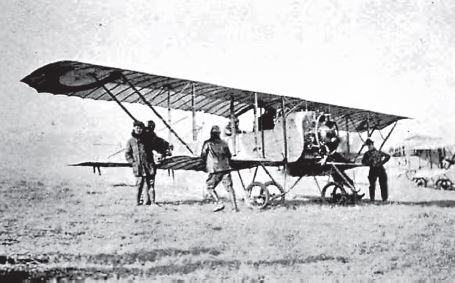
Air travel and private space exploration may feel commonplace today, but both have roots in defining milestones that reshaped history. September 28 stands out as a date linked to two such breakthroughs. In 1924, the United States Army Air Service completed the world’s first successful flight around the globe. Eighty-four years later, on the same date in 2008, SpaceX made history when its Falcon 1 rocket became the first privately developed liquid-fuel launch vehicle to reach Earth’s orbit. Both events, though separated by decades, underline how persistence against setbacks can change the course of human exploration.
The first circumnavigation by air
The idea of flying around the world in the early 20th century was as audacious as space travel would seem decades later. On April 6, 1924, four specially modified Douglas World Cruisers—named Seattle, Chicago, Boston, and New Orleans—took off from Seattle, Washington, to attempt the first aerial circumnavigation of the Earth. The aircraft were adapted to handle diverse terrains and climates. They could switch between wheels and floats, enabling landings on both solid ground and water.
The mission was led by Major Frederick Martin, who piloted Seattle. The route was westward, crossing the Pacific to Asia, through Europe, and across the Atlantic before returning to the United States. In total, the aviators planned to cover more than 26,000 miles and land in multiple countries for rest, refueling, and repairs.
The journey was not without losses. Early in the expedition, Seattle crashed in Alaska, though Martin and his mechanic survived. Later, Boston was lost near the Atlantic. These setbacks could have derailed the mission, but the remaining two aircraft, Chicago and New Orleans, pressed ahead. With fuel, parts, and logistical support carefully pre-arranged along their route, the pilots overcame treacherous conditions ranging from unpredictable weather to mechanical strain on their planes.
After 175 days of flying, covering six continents and 22 countries, the aviators finally returned to Seattle on September 28, 1924. They had achieved what seemed impossible: the first successful flight around the world. The feat captivated global audiences, proving that long-distance air travel was not only possible but practical.
The mission placed the United States at the forefront of aviation technology and boosted confidence in the future of international flight. The lead plane, Chicago, was preserved and today remains on display at the Smithsonian National Air and Space Museum in Washington, DC, as a tribute to the pioneering aviators.
Falcon 1 lifts private spaceflight
Fast forward to September 28, 2008, when another daring effort pushed the boundaries of exploration—this time beyond Earth. SpaceX, a private company founded by Elon Musk, successfully launched Falcon 1 into orbit from Omelek Island in the Marshall Islands. It was the first privately developed liquid-fuel rocket to reach Earth’s orbit, a milestone that shifted the landscape of space travel.
Falcon 1’s success did not come easily. The rocket’s first three attempts, between 2006 and early 2008, all ended in failure. Technical issues ranging from fuel leaks to stage separation malfunctions plagued the program. Each setback placed enormous financial pressure on SpaceX, with doubts growing in the aerospace community about whether a private company could truly match or exceed the capabilities of national space agencies.
By the time of the fourth launch, SpaceX was on the brink of collapse. Yet on September 28, the Falcon 1 lifted off flawlessly. Over the next nine minutes and 31 seconds, the two-stage rocket executed its mission with precision, placing a dummy payload into low Earth orbit. The achievement was more than a technical triumph; it was a turning point for the future of commercial spaceflight.
The implications were immediate. Falcon 1’s success secured NASA’s trust in SpaceX, leading to contracts under the Commercial Orbital Transportation Services (COTS) program. These agreements gave the company the resources to develop larger rockets such as the Falcon 9 and spacecraft like Dragon. Within a few years, SpaceX became the first private company to deliver cargo to the International Space Station, and later to carry astronauts, fundamentally reshaping the role of private industry in space.
A shared legacy of perseverance
Though separated by more than eight decades and involving very different technologies, both the 1924 circumnavigation and the 2008 Falcon 1 launch share striking parallels. Both projects were marked by repeated failures and doubts, yet perseverance and careful planning eventually led to groundbreaking success.
For the aviators of the United States Army Air Service, the journey proved that air travel could unite continents and laid the foundation for the global aviation networks of today. For SpaceX, Falcon 1’s success demonstrated that private innovation could drive space exploration, breaking a monopoly once held by government agencies.
September 28 thus carries dual significance in the history of exploration. On one hand, it celebrates the spirit of flight in its earliest global triumph. On the other, it marks the moment when the possibilities of space travel expanded beyond governments to include private enterprise. Together, these events highlight how human ambition, tested against setbacks, continues to push the boundaries of what is possible.
Start your day with The Savera Morning Brief, bringing you the latest news from India and around the...

Union Home Minister Amit Shah will pay tribute to police martyrs at the National Police Memorial in New...

Four more people, including two women, have been arrested in the Tiger Shroff firing case. Delhi Police are...

We are very proud that at present India is the number one country in the world by surpassing...

Every investor wants the wealth-creating power of equity and the reassuring stability of debt. Balanced Advantage Funds attempt...

Tourism is a major source of government revenue in our country. There are different types of tourism. Scenic...

Aries: The day will be auspicious...