Last Updated: October 12, 2026
Last Updated: October 12, 2026





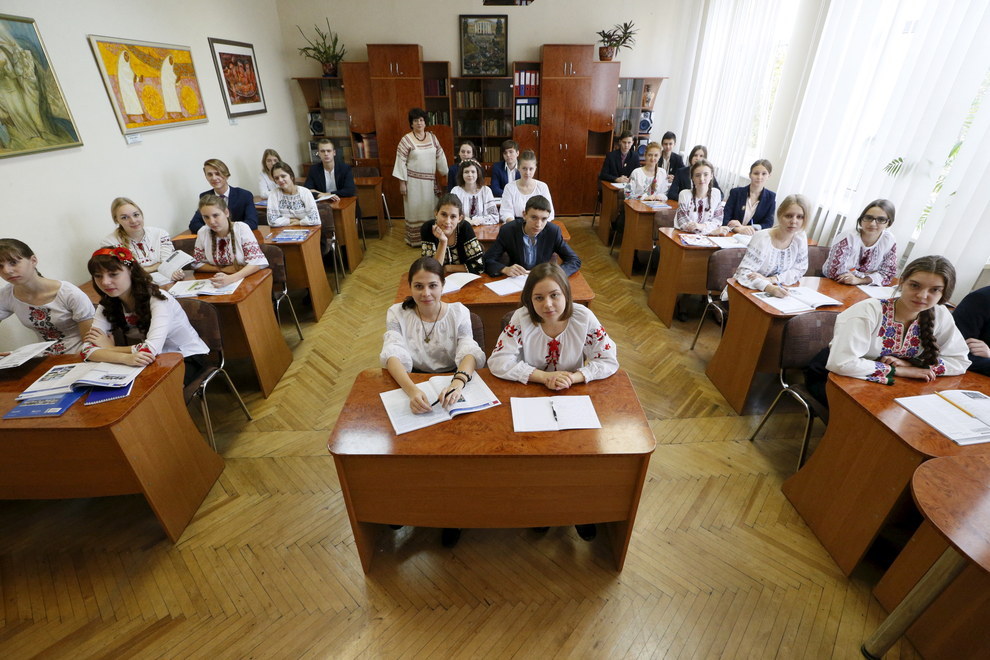
My interest in behaviour began with a simple question: why do people choose what they choose? Becoming a parent has made me realise that perhaps the question starts much earlier than we think.
Education is often associated with classrooms, books, teachers and examinations. But for a child, learning begins much earlier and happens in many more places.
A child learns by watching a parent, asking why the sky changes colour, touching a leaf, observing an insect, trying to build something and discovering that it does not work the first time. These seemingly small experiences are, in many ways, the beginning of education.
The early years of a child’s life are particularly important because this is when children begin developing not only knowledge, but also their way of looking at the world. They learn to observe, question, communicate, make choices, deal with mistakes and understand other people. These abilities can become more important than simply remembering facts.
This is why I find experiential education particularly relevant today. Children are growing up in a world where information is available almost instantly. A question that once required a visit to a library can now be answered within seconds.
With technology, screens and increasingly sophisticated AI tools, access to information is no longer the biggest challenge. The more important question is: Can children learn to pause, make sense of what they encounter and decide what deserves their attention?
Experiential learning can play an important role here. When a child plants a seed, the experience teaches more than the parts of a plant. When children visit a market, they can observe how people make choices. When they cook with their parents, they learn about measurement, patience and transformation. When they play together, they learn negotiation, cooperation and empathy.
These experiences create connections that are difficult to build through information alone.
My own work in consumer research has made me look at this from another perspective. I spend a considerable amount of time understanding why people make the choices they do, why one product feels more relevant than another, why an experience stays with someone, or why people respond differently to the same message.
Over time, I have realised that human behaviour is rarely shaped by information alone. Experiences, emotions, context, observation and memories play an equally important role. In fact, many of these patterns begin developing much earlier than we realise.
I notice this in small moments with my own child. A toy that was ignored yesterday can suddenly become fascinating after seeing another child play with it. A book can become a favourite not only because of its story, but because it has become part of a familiar bedtime routine.
A child may develop an interest in nature simply because someone encouraged them to stop and observe a butterfly. These experiences gradually shape preferences, curiosity and the way children interact with the world.
This is also why I believe education should not focus only on preparing children to answer questions. It should prepare them to ask questions of their own.
The ability to ask “Why?” is one of the most natural qualities of young children. Somewhere along the way, education can sometimes become more focused on finding the correct answer than exploring different possibilities. But in a rapidly changing world, curiosity may be one of the most valuable qualities we can preserve.
The purpose of primary education, therefore, should perhaps extend beyond reading, writing and numbers. These are essential foundations, but so are confidence, empathy, creativity, critical thinking and the ability to learn from mistakes.
A child who is encouraged to experiment learns that failure is not necessarily something to fear. A child who is encouraged to express an opinion learns that their voice matters. A child who is exposed to different people and experiences learns that there can be perspectives different from their own.
These lessons may not appear in a report card, but they remain with a person for much longer.
I also believe this becomes especially important in today’s world. Children are growing up surrounded by choices — what to watch, what to buy, what to believe, what to follow and increasingly, what information to trust. Education therefore has an important role in helping children become thoughtful participants in the world rather than passive recipients of information.
Perhaps good education is less about giving children a ready-made way of looking at the world and more about giving them the confidence to examine it for themselves — to observe carefully, question respectfully, think independently and choose consciously.
Perhaps good education is less about giving children a ready-made way of looking at the world and more about giving them the confidence to examine it for themselves — to observe carefully, question respectfully, think independently and choose consciously.
Maybe the purpose of early education is not to fill that curious mind with as many answers as possible. Maybe it is to make sure that, years later, the questions never stop.
The government will monitor the implementation of new UPI MDR charges to ensure merchants do not pass the...

New Delhi: The Union Cabinet, chaired by Prime Minister Narendra Modi, on Wednesday approved the proposal to enhance...
For years, the biggest test in India-China ties was the border. Now, as both countries try to bring...
Closure of land routes, costly air freight, limited alternative routes are all adding to the woes of Afghan...

What a sight I got when I found myself lost Where am I? What is this place? I...
The first International Film Festival of Jammu and Kashmir (IFFJK)–2026 beginning on Monday is set to witness the...

Aries: The day will be auspicious...