Last Updated: October 15, 2026
Last Updated: October 15, 2026





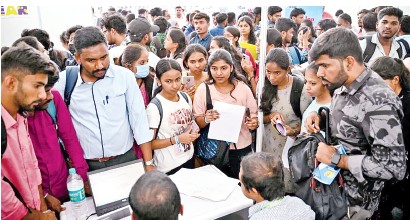
Across Indian cities, a quiet shift is reshaping the streets. University graduates, diploma holders, and postgraduates are increasingly visible in informal jobs once associated with low educational requirements. From running street food carts to driving app-based taxis and selling goods on pavements, educated youth are redefining survival in an economy that has failed to generate adequate formal employment.
India produces millions of graduates every year, but job creation has not kept pace. Formal sector employment, particularly in manufacturing and government services, has stagnated. Recruitment cycles are slow, competitive exams are overcrowded, and private sector jobs often demand experience that fresh graduates lack. As a result, many young people are left in limbo, overqualified yet unemployed.
For some, the informal economy offers immediacy. Setting up a food stall or small vending business requires limited capital and promises daily cash flow. Unlike waiting years for a government job or unpaid internships, informal work offers independence and dignity of labor, even if social prestige remains elusive.
Street food vending, in particular, has seen an influx of educated entrants. Graduates experiment with branding, hygiene, social media marketing, and menu innovation. QR codes replace cash boxes, Instagram pages replace signboards, and customer engagement becomes a learned skill. Education, though unused in conventional ways, still plays a role in navigating competition and visibility.
However, this transition is not without challenges. Informal workers lack job security, social protection, and legal safeguards. Street vendors face harassment, eviction drives, and arbitrary fines. Without health insurance or income stability, a single illness or market disruption can push families into debt. For educated youth who invested heavily in education, this insecurity adds emotional strain and social pressure.There is also a cultural contradiction at play. While entrepreneurship is celebrated in policy speeches, informal self-employment is often stigmatized. Families that financed education through loans or land sales struggle to accept outcomes that do not align with white-collar aspirations. This disconnect fuels frustration, anxiety, and in some cases, migration or mental health crises.
The growth of educated workers in informal sectors also raises questions about the value of higher education. Degrees promise mobility but increasingly fail to deliver. Curricula remain disconnected from market realities, emphasizing theory over skills. As a result, education delays unemployment rather than preventing it. Yet, this shift also reveals resilience. Young people are adapting rather than remaining idle. They are challenging narrow definitions of success and reclaiming agency in constrained circumstances.
Some informal ventures eventually scale up, transitioning into small businesses that generate local employment.
Policy interventions must acknowledge this reality. Instead of treating informality as a temporary failure, governments should provide structured support. Access to credit, designated vending zones, social security coverage, and skill upgradation can stabilize livelihoods. Education systems must also evolve, aligning learning with local economies and entrepreneurial pathways.
The presence of educated youth on India’s streets is not a sign of individual failure, but of systemic imbalance. It reflects an economy where ambition outpaces opportunity, and survival demands reinvention. Whether this reinvention leads to empowerment or prolonged precarity depends on how institutions respond.
Supreme Court: Person Converting from Hinduism to Islam Cannot Claim Backward-Class Muslim Status

Higher reaches of Jammu and Kashmir received the season’s first snowfall, covering Doda, Gurez Valley and Pir Ki...

Mumbai Police has issued a 'Leave India' notice to Bollywood superstar Aamir Khan's nephew and actor Imran Khan....

Ram Kumar Singh, a 71-year-old retired Customs officer, was shot dead outside his home in Ara’s Kanakpuri locality....

Punjab AGTF and Haryana STF arrested Gurlal Singh in connection with Ajmeet Singh’s September 11 murder in Naushera...

Uttar Pradesh Police arrested a 28-year-old alleged criminal after an encounter in Noida’s Sector 63. Police said around...

Aries: The day will be auspicious...