Last Updated: October 12, 2026
Last Updated: October 12, 2026





Manish Sharma
Director, International Trade Expo Centre Ltd
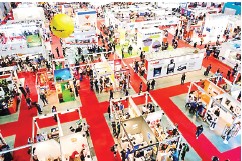
India’s exhibition industry has evolved from traditional village haats and cultural melas into a dynamic, high-value business ecosystem supporting trade, exports, tourism, innovation, and employment. Today, exhibitions function as strategic platforms connecting industries, markets, and global stakeholders, reflecting India’s broader economic transformation.
India’s centuries-old tradition of fairs fostered commerce through face-to-face interaction and community engagement. With industrialization and economic liberalization, these informal gatherings gradually transformed into organized trade fairs. The establishment of the India Trade Promotion Organisation (ITPO) in 1977 institutionalized exhibition activity, while flagship events such as the India International Trade Fair and the New Delhi World Book Fair symbolized India’s expanding trade ambitions.
Post-pandemic recovery has been robust, with exhibition activity growing by nearly 40 percent. The industry contributes approximately Rs.50,000 crore directly to the economy and facilitates business transactions worth nearly Rs.3 lakh crore annually. Valued at about USD 5.23 billion in 2024, the sector is projected to reach USD 7.8 billion by 2029, growing at over 8 percent annually. Growth has expanded beyond metros to Tier-II and Tier-III cities such as Noida, Hyderabad, Jaipur, Bengaluru, Indore, and Kochi.
Government initiatives including Make in India, Vocal for Local, Atmanirbhar Bharat, and Production Linked Incentive (PLI) schemes have positioned exhibitions as key instruments for industrial promotion and export growth. State-led platforms such as the Uttar Pradesh International Trade Show, Vibrant Gujarat, and Global Investors Meets further reinforce exhibitions as strategic economic tools.
World-class venues such as Bharat Mandapam (Pragati Maidan), India Expo Centre & Mart (Greater Noida), Expocentre Noida and Jio World Convention Centre have elevated India’s exhibition infrastructure to global standards. The industry has also shifted toward specialized B2B exhibitions in manufacturing, defence, electronics, healthcare, renewable energy, textiles, and logistics—facilitating high-value deal-making and technology transfer. Digital innovations including AI-driven matchmaking, QR-based lead capture, hybrid formats, and data analytics have enhanced reach and exhibitor ROI. Public exhibitions and cultural fairs increasingly drive tourism and city branding. India’s 63 million MSMEs form the backbone of the exhibition ecosystem, gaining affordable access to buyers and markets, while exhibitions generate large-scale employment across event management, fabrication, logistics, hospitality, and digital services. As India progresses toward a USD 5-trillion economy, exhibitions will play a catalytic role in linking local enterprises to global markets and culture to commerce. The evolution from village melas to world-class trade platforms reflects India’s economic dynamism and global aspirations.
The writer is a graduate from King’s College London, is a young Entrepreneur with almost 20 years of experience in the Indian Exhibition Industry. His work, knowledge, research and experience in the Indian Exhibition and MICE Sector makes him a prominent figure pioneering innovative and new methods for advancements and growth of the sector and economy as a whole.)
Good Evening Viewers! Stay updated with The Savera Times Evening Bulletin for the latest news from Punjab, India...

eader of the Opposition in the Lok Sabha, Rahul Gandhi and 10 other INDIA bloc leaders have moved...
Amidst protests in central Delhi, the Delhi Metro Rail Corporation (DMRC) announced the reopening of entry and exit...
The Delhi Police has registered an FIR regarding the alleged disturbance at the Bangla Sahib Gurdwara in...
The Delhi Police on Monday removed Jantar Mantar from the list of officially designated protest sites. The police...
The Supreme Court on Monday clarified that it has not passed any judgment on the Election Commission's (ECI)...
Aries: The day will be auspicious...