Last Updated: October 12, 2026
Last Updated: October 12, 2026






On June 10, 2026, Indian political history quietly crossfaded into a new era. By reaching 4,399 continuous days in office, Narendra Modi surpassed Jawaharlal Nehru’s record of post-1952 unbroken service to become India’s longestcontinuously serving elected Prime Minister. For decades, the standard vocabulary of Indian governance was written in a distinctly Nehruvian script: secularism defined by state-managed distance, an economy comfortable with incrementalist “Hindu rates of growth,” and a foreign policy wrapped in the cautious virtue of non-alignment. Today, that script has not just been revised; it has been completely rewritten.
Over twelve consecutive years, Modi has bent the trajectory of the nation toward a fundamentally different destiny—shifting it from a self-effacing postcolonial state into an assertive, infrastructure-heavy, digitally unified civilizational power. To understand the shape Modi has given to India is to look past the high-decibel political polarization and examine the hard structural scaffolding built since May 26, 2014. The Architecture of the Welfare State: Contentment Over Appeasement The most profound shift under Modi is arguably how India manages its vast poverty. For generations, state welfare was transactional, leaking heavily through intermediaries and designed around electoral cycles. The Modi doctrine replaced this with a technocratic, scale-driven welfare engine that bypasses the local power broker entirely. By weaponizing the “JAM Trinity” — Jan Dhan bank accounts, Aadhaar biometric identity, and Mobile connectivity — the state constructed a frictionless digital pipeline.
The scale of this intervention has completely decoupled welfare from traditional patron-client politics: • Direct Benefit Transfers (DBT): Hundreds of billions of dollars have been sent straight to beneficiaries, virtually eliminating the systemic leakages that former Prime Minister Rajiv Gandhi once famously quantified as 85 paise out of every rupee. • The Scale of Daily Amenities: The administration transformed welfare into tangible asset creation: building over 110 million household toilets under Swachh Bharat, laying pipelines to bring tap water to more than 110 million new rural homes via the Jal Jeevan Mission, and providing free food grains to over 800 million citizens through the PM Garib Kalyan Anna Yojana. • Poverty Alleviation: According to NITI Aayog and UNDP metrics, an estimated 250 million Indians moved out of multidimensional poverty during this 12-year stretch. Critics rightly note that this “new welfarism” has not instantly created high-wage employment for the masses. However, it has achieved something politically potent: it has created a broad base of laabharthils (beneficiaries) who experience the state not as an abstract, corrupt bureaucracy, but as a reliable delivery mechanism.
This has effectively shifted the political lexicon from competitive appeasement to what the administration calls the “politics of contentment.” From Ideology to Asphalt: The Infrastructure Revolution If the digital pipeline redefined the rural household, physical infrastructure rewritten the Indian landscape. For decades, India’s economic growth was choked by chronic underinvestment in logistical bottlenecks. The Modi years treated infrastructure building not as routine public works, but as a national obsession. Under the unified banner of the PM GatiShakti National Master Plan, capital expenditure became the primary engine of economic growth. The numbers speak for themselves. The national highway network expanded from roughly 91,287 kilometers in 2014 to over 146,000 kilometers. The country went from around 74 operational airports to more than 150, dragging air travel out of elite luxury status and into the middle-class mainstream. Simultaneously, the Indian Railways underwent an aggressive facelift—undergoing rapid electrification and introducing indigenous semihigh-speed Vande Bharat trains that visually signaled a modernizing state. This focus on steel and concrete has anchored India’s position as the world’s fastestgrowing major economy, sustaining an average GDP growth rate hovering around 7% despite the severe disruptions of a global pandemic and geopolitical fragmentation.
By moving from a consumption-led model to a capital-expenditure-led model, India built the physical muscle required to realistically position itself as a viable alternative to China in global supply chains. The New Geopolitical Realism: Assertive Multialignment In international affairs, Modi’s 12-year tenure marks the formal burial of post-colonial insecurity. Where India once viewed global alignments through the defensive lens of vulnerability, it now operates with the pragmatism of a swing power. This transformation is best captured by the concept of “multialignment.” Modi’s foreign policy, tightly executed by External Affairs Minister S. Jaishankar, does not seek approval from traditional global blocs; it negotiates with them on strictly transactional terms. Dimension T h e Traditional Approach (Pre2014) The Modi Doctrine (2026 Reality) Strategic Stance Ideological Non-Alignment; avoiding major power blocks. Assertive Multialignment; simultaneous deep engagement with competing powers. National Security Strategic restraint; measured diplomatic protests after cross-border incidents.
Active Deterrence; crossborder surgical strikes and infrastructure building along disputed frontiers. Global Positioning Acted as a balanced mediator or a voice of protest among developing nations. Positions as the “Vishwa Mitra” (Friend of the World) and the primary bridge between the Global North and Global South. When the geopolitical crisis broke out in Ukraine, New Delhi explicitly rejected Western pressure, multiplying its imports of discounted Russian crude to safeguard domestic energy security, while simultaneously elevating its partnership with the United States via the Quad to counter Chinese expansionism in the Indo-Pacific.
This unapologetic pursuit of the national interest has fundamentally altered how the world deals with New Delhi. India successfully navigated its G20 Presidency to position itself as the undisputed voice of the Global South, forcing developed nations to acknowledge that the road to solving global challenges—from climate finance to digital public goods—runs directly through India. The Changing Soul of the Polity: A Civilizational Second Republic Yet, evaluating Narendra Modi solely through the lens of highways built, bank accounts opened, or global summits hosted misses the core of his historical project. Modi’s ultimate achievement— and his most fiercely debated legacy—is the comprehensive de-Nehruvianization of the Indian psyche. He has dismantled the old consensus that required an Indian leader to secularize their public profile to govern a pluralistic country.
By personally leading the consecration of the Ram Janmabhoomi Temple in Ayodhya, abrogating the temporary status of Article 370 in Jammu and Kashmir, and systematically replacing colonial symbols—from renaming the Rajpath to Kartavya Path to building a new Parliament building—Modi has sought to inaugurate what observers call India’s “Second Republic.” This is a republic where political legitimacy is explicitly anchored in civilizational pride. To his supporters, this is a longoverdue cultural decolonization, a therapeutic restoration of self-respect for a majority that felt marginalized by old elite consensus. To his critics, this shift has come at a severe cost, putting pressure on institutional independence, shrinking the space for dissent, and leaving minorities feeling politically peripheral.
The Road to 2047 As Narendra Modi moves deeper into his historic third term, leading an NDA coalition that demands greater political negotiation than his previous single-party majorities, the institutional architecture he has built remains entirely intact. He has cured India of its chronic “chalta hai” (anything goes) fatalism, replacing it with a hyper-efficient, competitive corporate state model focused on execution and national pride.
The challenges ahead remain formidable: generating high-quality jobs for a massive youth population, navigating a deeply hostile neighborhood, and managing the internal social strains of a majoritarian cultural shift. But as the ledger of these 4,399 days is written into the history books, one truth is undeniable: Narendra Modi did not just inherit India; he has thoroughly remade it in his own image. The modern Indian state is now faster, visually grander, digitally seamlessly connected, and geopolitically unyielding. For better or worse, we are all living in Modi’s India
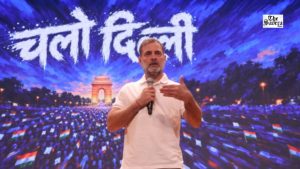
Rahul Gandhi accused the Modi government of protecting Chief Election Commissioner Gyanesh Kumar, criticised security restrictions in Delhi...
Chief Justice Surya Kant said every citizen can approach the Supreme Court through a petition after declining a...
A major fire broke out at a scrap warehouse opposite the Maruti Temple in Sangameshwar, Maharashtra, around midnight....

A 48-year-old man, Pawan Sharma, died after an alleged altercation over a senior citizen seat at Delhi’s Supreme...

Shiv Sena (UBT), in its mouthpiece Saamana, has criticised the Centre over security measures and detentions during anti-government...
Former BJP MLA Attar Singh Bhedana died at Jaipur’s SMS Hospital after a violent clash at a crusher...
Aries: The day will be auspicious...