Last Updated: October 16, 2026
Last Updated: October 16, 2026





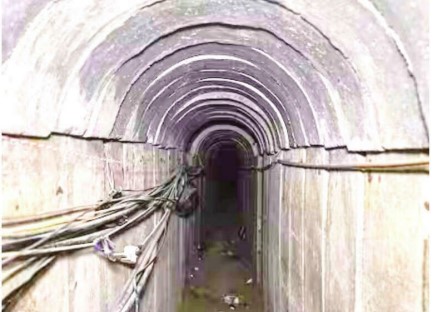
When soldiers pried open the map of Rafah, they found more than streets and houses. They found a subterranean world: a maze of tunnels that for years have been a arteries of movement, supply and secrecy for Hamas. Now, about 200 gunmen reported to be trapped in that underworld have become a test of Israeli policy and purpose. The question was simple, the consequence complex. Should those fighters be allowed safe passage out of the tunnel network and into Hamas-controlled territory, or should Israel finish what its forces began by forcing a military end to their presence? Prime Minister Benjamin Netanyahu answered without ambiguity.
No safe passage would be offered. The announcement, and the political debate that followed, crystallises a wider dilemma that has shadowed the Gaza campaign since its inception. For Israeli officials, the mission is framed in three linked objectives: to dismantle the military capabilities of Hamas, to secure the release of hostages and to create conditions that prevent the militant group from reconstituting its strength. For many in the Israeli public and political class, compromise on the ground appears as surrender in principle and in practice.
Allowing armed fighters to leave an encircled position would, critics warned, amount to granting tactical relief to an enemy while denying the closure many Israelis demand. The tactical situation in Rafah explains much of the backdrop. The city sits at Gaza’s southern gateway on the border with Egypt. Its urban fabric, combined with a long history of tunnel construction, produces an operational challenge that is both physical and moral. Subterranean networks provide concealment, complicate detection and allow fighters to move even as surface routes are cut.
Israeli military success in recent days, according to multiple accounts, came from cutting escape routes and supply lines, leaving a pocket of fighters isolated beneath the city. That isolation converted a tactical opportunity into a political flashpoint. Do you use the moment to force a surrender, negotiate a withdrawal, or risk further escalation while seeking a solution that satisfies legal and humanitarian constraints? The option of safe passage, reportedly discussed in some Israeli media outlets, had a logic of its own.
Negotiated exits have precedent in modern conflicts as a way to reduce casualties among civilians and soldiers, to recover bodies and occasionally to return hostages. In the grim arithmetic of urban warfare, corridors and evacuations can lower immediate bloodshed. Yet by their nature such arrangements are political. They require trust, verification and a credible assurance that fighters will not simply regroup. For Israeli leaders and many of their constituents, such guarantees did not exist and could not be entrusted to Hamas.
That political unease erupted quickly. Members of the government and rivals across the spectrum denounced any notion of negotiated withdrawal. Finance Minister Bezalel Smotrich called the idea madness. National Security Minister Itamar Ben Gvir demanded harsher measures, urging that trapped militants be killed or jailed rather than permitted to walk away.
Even figures outside the current government, such as former prime minister Naftali Bennett, framed the moment as an operational victory not to be squandered. Their reactions reflect a broadly held conviction within Israeli politics: moments of tactical advantage must be seized lest the costs be visited upon future security. The prime minister’s firm refusal to allow departure also reflects the centrality of the hostage issue in Israeli politics and public sentiment. For many families, the war began with the murder, abduction and displacement of civilians. Any deal that appears to allow fighters to leave intact risks being read as diminishing the prospect of accountability and the return of captives.
Political leaders must weigh those human dimensions alongside strategic calculations. There are, however, consequences beyond Israel’s immediate political and military calculus. A refusal to permit evacuation raises questions about proportionality, civilian protection and the law of armed conflict. Tunnels run below populated areas where non-combatants sometimes shelter. Military operations to clear underground networks are inherently destructive and risky. International humanitarian organisations have repeatedly warned that intensified ground assaults in dense urban environments multiply civilian suffering and complicate access for relief services. The longer a siege or battle drags on, the more powerful those humanitarian arguments become. There is also the risk of strategic ripple effects.
If one major power resumes testing or rearmament in defiance of long-standing arms control norms, other states may follow. In much the same way, a hard-line approach in Rafah could harden positions across the region: it may reduce the short-term risk of militants slipping away but increase long-term instability, feeding cycles of violence that produce yet more recruits and hardened networks. For Israeli commanders, the immediate calculation remains squarely operational: deny mobility, remove armed capability, minimise friendly casualties. For many politicians, the calculation is electoral and moral: do not risk the appearance of leniency toward those responsible for terror. For humanitarian actors and neighbouring states, the calculation is about containment and protection: how to limit civilian harm and prevent a wider regional conflagration. History suggests there is no neat answer. Urban sieges produce bitter choices. Tactical victories can convert into political liabilities if they do not account for reconstruction, justice and durable security. Negotiated exits can save lives while leaving the political problem unresolved. Military eliminations can remove immediate threats but seed longterm grievances. The trapped fighters in Rafah, for now, are a single node in this wider knot.
What the episode makes clear is that modern warfare remains as much political as it is military. Every decision, down to whether to offer safe passage to a group of cornered fighters, has consequences that echo through domestic politics, international diplomacy and the lives of civilians caught between guns and geography. Netanyahu’s answer was decisive and predictable within his political logic. Whether it will yield lasting security or open another chapter of violence will depend on actions that follow, and on the willingness of all parties to imagine an exit from a destructive cycle that now seems all too familiar.
A Houthi attack on the al-Maashiq Presidential Palace in Aden killed five people and injured 16, amid intensifying...
A shooting at Silver Rail Elementary School in Bend, Oregon, left three children and a teacher dead. The...

Prime Minister Narendra Modi will visit Canada on December 11-12, 2026, with both countries aiming to strengthen strategic...

US Vice President JD Vance has warned that anyone found selling access to the White House should face...

Washington: US President Donald Trump has claimed that drug cartels effectively control Mexico and warned that his administration...

Bangladesh is home to around 41.6 million child brides, including 22.3 million who were married before the age...