Last Updated: October 14, 2026
Last Updated: October 14, 2026





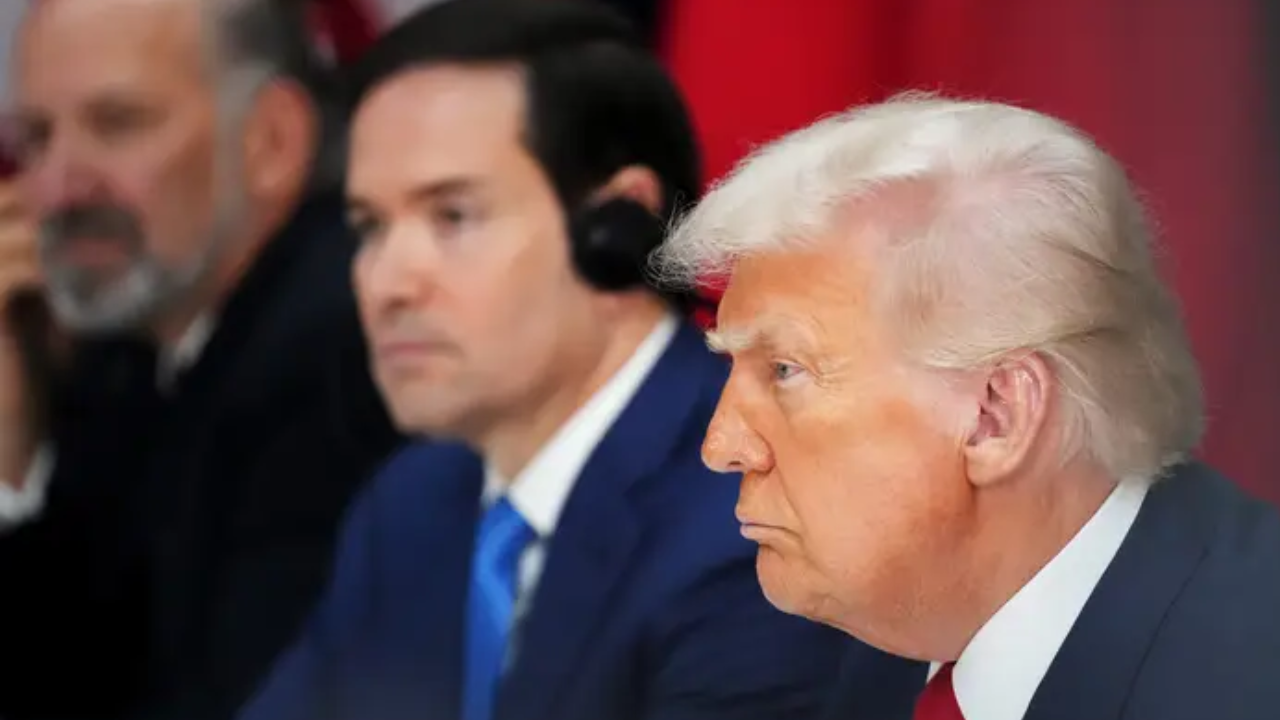
Washington, D.C.: In a stunning announcement, President Donald Trump declared on Thursday that the United States would resume nuclear weapons testing, ending a 33-year moratorium in place since 1992.
The decision, unveiled just ahead of Trump’s meeting with Chinese President Xi Jinping, marks a dramatic shift in U.S. nuclear policy — one that experts warn could trigger a new global arms race and destabilize decades of arms control efforts.
A Strategic Signal to Rivals
According to senior officials, Trump has directed the Pentagon to prepare for renewed nuclear tests at designated U.S. test sites. The move, administration sources say, is intended to signal that Washington will not cede nuclear superiority to rivals such as Russia and China.
Defense analysts view the decision as both a technological move—to validate new warhead designs—and a strategic message that the U.S. remains ready to assert dominance in an increasingly competitive global environment.
Breaking a Cornerstone of Restraint
The United States has not conducted a nuclear test since 1992, when President George H. W. Bush declared an end to explosive testing. That moratorium became a symbol of restraint, forming a cornerstone of modern arms control.
By reversing it, Trump’s decision undermines decades of nuclear stability, potentially encouraging other nations to follow suit. Experts caution that Russia, China, India, and Pakistan could soon resume their own testing programs.
The Birth of the Nuclear Age
The nuclear era began on July 16, 1945, with the Trinity Test in New Mexico under the secret Manhattan Project, led by physicist J. Robert Oppenheimer.
Weeks later, the U.S. used atomic bombs on Hiroshima and Nagasaki, bringing World War II to a close and ushering in an era defined by nuclear power — and peril.
Cold War Arms Race: 1945–1992
Between 1945 and 1992, the U.S. conducted 1,054 nuclear tests, more than any other nation. These tests drove advances in miniaturization, delivery systems, and thermonuclear design, forming the foundation of America’s nuclear triad—bombers, ICBMs, and submarine-launched missiles.
Meanwhile, the Soviet Union carried out 715 tests, achieving nuclear parity and the doctrine of Mutually Assured Destruction (MAD).
China joined the nuclear club in 1964, conducting 45 tests by 1996 — continuing even after Washington and Moscow froze theirs.
The 1992 Moratorium and the CTBT Era
Following the Soviet Union’s collapse, President Bush announced the U.S. testing moratorium in 1992. Four years later, the Comprehensive Nuclear-Test-Ban Treaty (CTBT) was opened for signature.
Though the U.S. signed the treaty, it never ratified it. Still, Washington upheld the moratorium for over three decades, relying on advanced simulations and subcritical tests to ensure warhead reliability without detonations.
Modernisation and Renewed Competition
In recent years, a new nuclear competition has emerged. Both Russia and China have undertaken massive modernization programs, developing new delivery systems and hypersonic capabilities.
A December 2024 Arms Control Today report noted that the U.S. is investing $1.7 trillion over 30 years to modernize its own arsenal — covering all three legs of the nuclear triad.
At the time, analysts warned that this modernization “may force the U.S. to consider resuming nuclear testing.” That prediction now appears to have come true.
Global Fallout: A New Nuclear Age
Experts fear that renewed testing could shatter the global taboo against nuclear detonations that has held since 1998.
“Once one nation tests, others will follow,” warned an Arms Control Association statement. “The world risks returning to an era of brinkmanship and coercive deterrence.”
With several nuclear-armed nations pursuing “exotic” and “battlefield” nuclear weapons, analysts warn the world may be entering a dangerous new phase—technologically advanced but politically unstable.
Jerusalem: The Israel Defence Forces (IDF) said in a statement on Wednesday that it had killed a Hamas...

US President Donald Trump has promised that if the Republican Party retains control of both houses of Congress,...
New Delhi: American singer Mary Millben on Wednesday made an explosive claim about the Delhi protests, alleging that...

Prime Minister Narendra Modi on Wednesday wished Pope Leo XIV a speedy and complete recovery. The Pope underwent...
A large group of Harvard University alumni expressed concern on Wednesday over the alleged negative propaganda and campaign...
US Secretary of State Marco Rubio will visit India and Uzbekistan from October 17 to 22. During his...
Aries: The day will be auspicious...