Last Updated: October 26, 2026
Last Updated: October 26, 2026





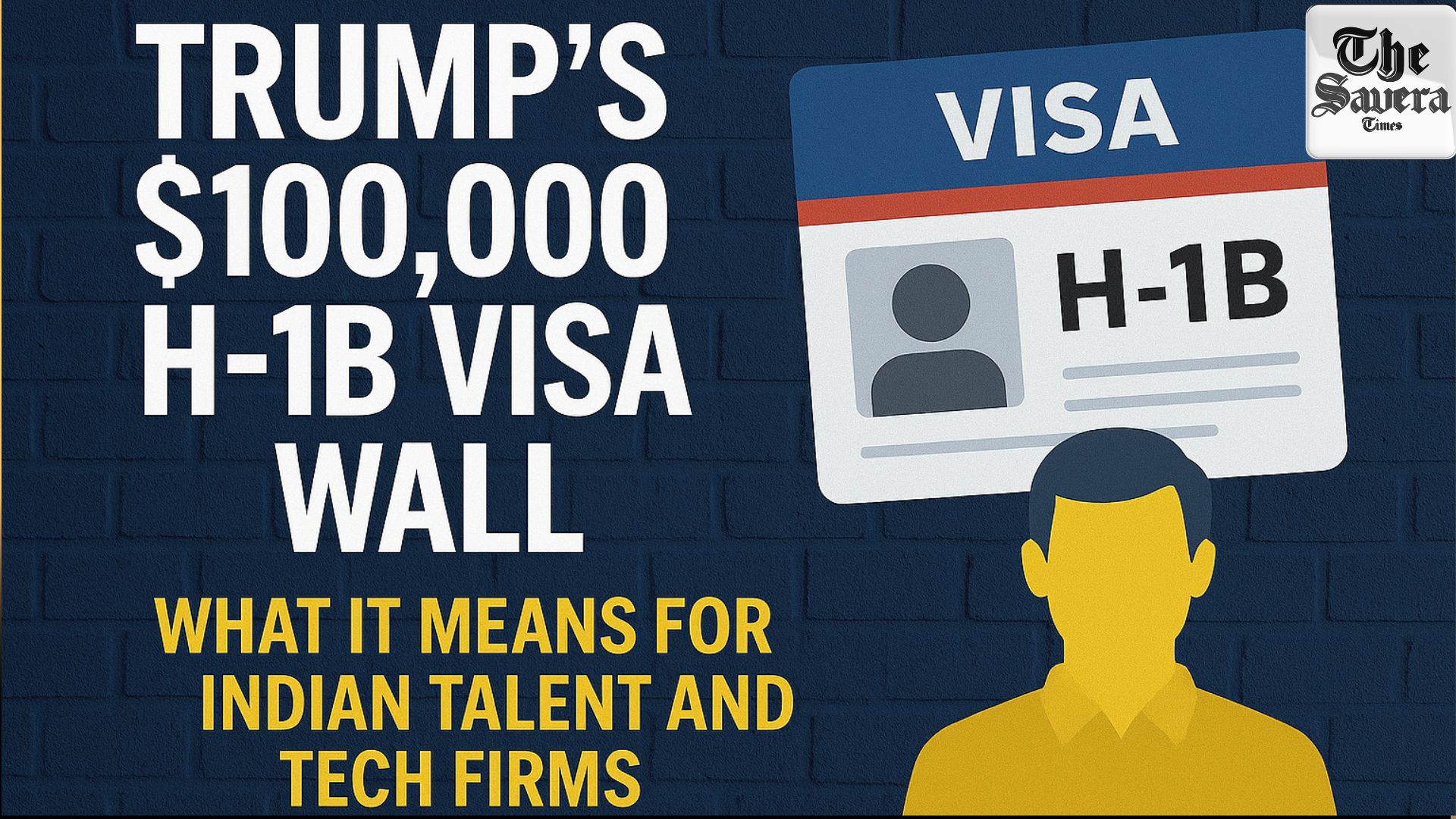
On September 20, 2025, US President Donald Trump signed a proclamation that dramatically raises the cost of hiring foreign workers. Under the new order, employers must now pay a $100,000 fee for every H-1B worker entering the US. The rule, effective September 21, has been dubbed a “visa wall” and is set to reshape global talent flows—especially from India, which dominates the H-1B program.
What Exactly Has Changed?
The proclamation mandates that no H-1B petition filed for a worker outside the US will be approved unless the sponsoring employer pays the new six-figure fee upfront. Without proof of payment, stamping will be refused and entry denied.
Workers already inside the US on valid H-1Bs are not directly impacted, but anyone travelling abroad and seeking re-entry must also comply with the new requirement.
The order also:
Together, these steps are designed to shift the programme away from entry-level jobs toward senior, high-paying roles.
What Was the Cost Before?
Employers were already paying several fees to hire H-1B talent:
Trump’s proclamation makes clear that the $100,000 levy is in addition to these existing costs, not a replacement.
Why India Is at the Centre
India is the largest user of H-1Bs. In FY2024, 71% of approved petitions went to India-born professionals, most in computer-related roles. The pathway has long been a bridge for Indian students, IT workers, and outsourcing firms into the US.
The new fee threatens that pipeline. Many US employers may hesitate to spend six figures on fresh graduates or junior employees, reducing opportunities for Indian talent. Families on H-1Bs may also face disruption if travel coincides with the new rules.
For India’s IT services giants (Infosys, TCS, Wipro, HCL, Cognizant) and Global Capability Centres (GCCs) of multinational firms, the impact is structural. Both rely on sending staff to US client sites for training and delivery. With costs now prohibitive, more work is expected to remain offshore in Bengaluru, Hyderabad and Pune.
Which Companies Are Most Exposed?
Are There Any Exemptions?
Yes—but they’re unclear. Section 1(c) of the proclamation allows DHS to waive the $100,000 requirement for individuals, entire companies, or whole industries if hiring is deemed in the US “national interest.”
Traditionally, areas like healthcare, defence, critical technology and higher education have qualified. However, the proclamation provides no automatic exemptions, leaving broad discretion with US agencies.
Why Is This Move Different?
Past H-1B reforms adjusted quotas or tightened eligibility. This is the first time a massive upfront cost has been imposed, fundamentally changing the programme’s character.
The H-1B could now become a premium channel reserved for top-end or politically favoured roles, while the traditional pipeline of young Indian graduates and junior engineers risks drying up.
What Happens Next?
Legal challenges are expected. Immigration experts argue that imposing such a large fee without Congressional approval could be unconstitutional. Industry groups, universities and hospitals are also preparing to lobby for exemptions.
For India, the consequences are immediate. IT majors will adapt delivery models, families will weigh travel risks, and students may reconsider career plans. On the flip side, India’s domestic tech ecosystem could strengthen as more companies expand in Indian cities instead of relocating talent abroad.
Trump’s $100,000 H-1B fee is more than just another visa tweak—it’s a structural barrier. For India, which dominates the programme, the fallout will be severe. For the US, the move may look like job protection, but it risks cutting off access to the very talent that has powered American innovation for decades.
Imagine opening WhatsApp on your phone, but the SIM card linked to your account is not inside the...

Delhi’s air pollution is once again raising health concerns, with the Air Quality Index (AQI) entering the ‘poor’...

Ladakh is seeing two changes at once: a new district has been announced, and the Centre has proposed...

What if a decision taken in Washington could influence India’s oil bills, export earnings and trade relations with...

What happens when the world’s richest business leaders clash over one of the world’s biggest internet markets? A...

Pakistan is heading into its wheat-growing season with a serious water problem. The country is facing a projected...
Aries: The day will be auspicious...