Last Updated: October 26, 2026
Last Updated: October 26, 2026





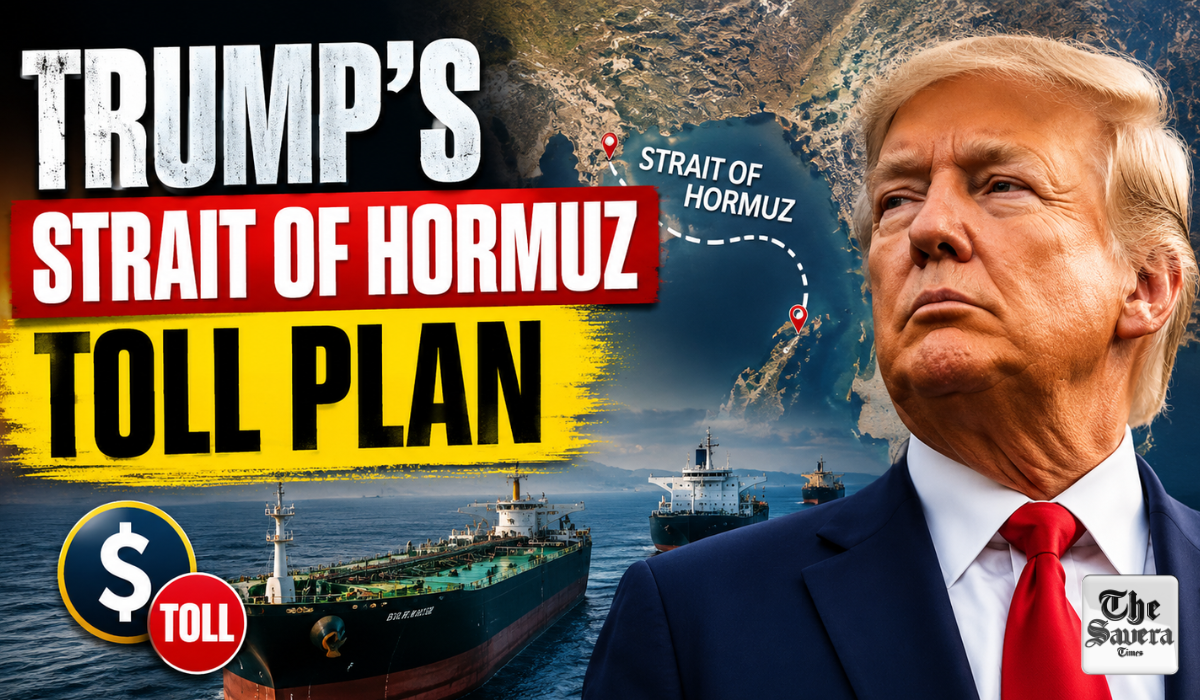
A narrow stretch of sea, just a few kilometres wide, carries nearly one-fifth of the world’s oil every single day. Now, it is back in the global spotlight. US President Donald Trump has proposed that the United States become the “guardian” of the Strait of Hormuz and impose a 20 per cent toll on all commercial cargo ships passing through it.
The proposal has sparked global debate. While it is yet to be implemented and faces legal hurdles, it has raised one big question—could this make oil costlier for countries like India? To understand that, let’s first understand why this waterway matters so much.
Why Is The Strait Of Hormuz Important?
The Strait of Hormuz is a narrow sea passage between Iran and Oman. It connects the Persian Gulf to the Arabian Sea and is one of the world’s busiest energy routes.
Around 21 million barrels of oil pass through this route every day, which is nearly 21 per cent of global petroleum consumption. Most of this oil is exported by countries like Saudi Arabia, Iraq, the UAE, Kuwait and Qatar to major Asian economies, including India, China, Japan and South Korea.
This makes the Strait of Hormuz one of the world’s most important energy lifelines.
Why Has This Route Always Been Sensitive?
The Strait has remained a geopolitical flashpoint for decades.
During the Iran-Iraq War between 1980 and 1988, both countries attacked oil tankers in what became known as the Tanker War. Iran also laid sea mines in the region, prompting the United States to launch Operation Praying Mantis in 1988, its biggest naval operation since World War II.
Since then, Iran has repeatedly threatened to block the Strait whenever tensions with the United States or Western countries have increased.
What Triggered The Latest Crisis?
Tensions have escalated sharply in 2026.
Following fresh US and Israeli military strikes on Iran, including attacks that killed Iran’s Supreme Leader Ali Khamenei, the conflict intensified. Iran responded by targeting ships and disrupting traffic near the Strait of Hormuz using missiles and sea mines.
Several commercial vessels have come under attack in recent weeks, including a tanker incident in which one Indian crew member was killed. The United States has also carried out strikes on Iranian targets and increased its naval presence in the region.
The ceasefire efforts have failed, keeping the entire region on edge.
What Is Trump’s New Proposal?
Amid these tensions, President Donald Trump announced that the United States would protect the Strait of Hormuz and charge a 20 per cent toll on commercial cargo ships using the route.
According to Trump, countries benefiting from safe passage should contribute towards the cost of American security operations.
However, the proposal has immediately raised legal questions.
The International Maritime Organization, the UN’s shipping regulator, says there is no legal basis under international law for imposing mandatory tolls on ships passing through an international strait.
That means the proposal could face significant diplomatic and legal challenges before it can ever be enforced.
Why Should India Be Worried?
India imports more than 85 per cent of its crude oil requirement.
Although India has increased purchases from Russia in recent years and reduced dependence on Gulf suppliers, a significant share of its oil, LNG and LPG imports still comes from countries connected through the Strait of Hormuz.
If the proposed toll is implemented, importing crude oil could become more expensive.
But experts say the bigger concern isn’t the toll itself.
Whenever tensions rise in the Gulf, shipping companies pay higher war-risk insurance, freight charges increase, and oil prices climb because of uncertainty.
These additional costs eventually increase the price of crude oil.
How Could This Affect You?
If oil becomes more expensive, Indian refiners will have to spend more on imports.
That can eventually increase the prices of petrol, diesel, LPG and aviation fuel.
Higher fuel prices also make transportation costlier, which can increase the prices of food, consumer goods and everyday essentials.
A prolonged rise in crude prices can also increase inflation, widen India’s trade deficit and put pressure on the economy.
The Bottom Line
Trump’s proposed 20 per cent Strait of Hormuz toll has not been implemented, and its future remains uncertain.
But the proposal highlights one important reality—a single waterway in West Asia continues to influence global energy markets.
For India, the real challenge is not just a possible transit fee, but the wider impact of geopolitical tensions, rising oil prices, higher shipping costs and expensive insurance.
As long as the Strait of Hormuz remains at the centre of global conflict, its impact can eventually be felt thousands of kilometres away—right at India’s fuel stations and in the monthly budgets of millions of households.
Imagine opening WhatsApp on your phone, but the SIM card linked to your account is not inside the...

Delhi’s air pollution is once again raising health concerns, with the Air Quality Index (AQI) entering the ‘poor’...

Ladakh is seeing two changes at once: a new district has been announced, and the Centre has proposed...

What if a decision taken in Washington could influence India’s oil bills, export earnings and trade relations with...
What happens when the world’s richest business leaders clash over one of the world’s biggest internet markets? A...

Pakistan is heading into its wheat-growing season with a serious water problem. The country is facing a projected...
Aries: The day will be auspicious...