Last Updated: October 22, 2026
Last Updated: October 22, 2026





Abhishek Vij
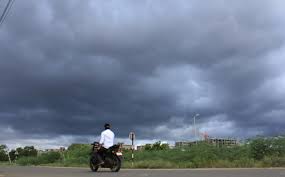
Just as the weather has been erratic this year, the Meteorological Department is predicting similar weather patterns in the future. When the weather changes, life becomes difficult for everyone, from farmers to businessmen to the common man. Now, after causing floods, the monsoon season has retreated, but recently, Delhi and its surrounding areas received heavy rainfall, leaving some cities flooded. This monsoon season witnessed a strange situation in September.
While floods were rampant in July and August due to unusual rainfall, the rains in September were less than normal. In Punjab, Ferozepur, Fazilka, and Bathinda districts, which fall under the Malwa region, are experiencing less rainfall than normal, while all other districts are experiencing more than normal. What a paradox: where rainfall decreased, the floods are more severe. After the monsoon’s departure in September, daytime temperatures are hovering around 32-33 degrees Celsius.
According to the Meteorological Department, in the last 12 years, only 2020 was the year when the daytime temperature was this high; otherwise, temperatures typically rise in September. The Meteorological Department says that Western Disturbances will become active from October 4th, bringing clouds and rain again. Isn’t this a loss of familiarity for producers and farmers while working? Work is determined by the seasons. Hard work is done, and crops ripen.
When the weather becomes unstable, it will affect labor productivity and the quality of produce, just as it affects crops. This year, the wheat crop suffered this, and now the paddy crop is also facing the same consequences. Regular markets are forced to purchase lower-quality crops. Reports indicate that this year’s higher-than-normal rainfall has reduced paddy production by 20 percent. It is well known that the government has to provide affordable food grains to the country’s more than 800 million people. On one hand, supplies were not as expected, and on the other, substandard grain was purchased during both parts of the crop cycle. Thus, uncontrolled and unusual weather has led to malnutrition for the common man. We cannot say that this is the government’s or our fault; the unusual weather is a natural phenomenon.
But this is wrong. Humanity is to blame. The United States and other wealthy countries have turned a blind eye to global warming and carbon emissions by ignoring them as their own problems. Third-world countries, led by India, have not stepped forward to control them. This is why we have witnessed the wrath of nature in our country, from the mountains to the plains. Governments believe that this is a natural phenomenon, not a man-made one. However, the lack of proper policies has contributed to this phenomenon being man-made. The Geological Survey of India (ESI) states that 22 percent of Uttarakhand is vulnerable to landslides.
Chamoli, Rudraprayag, and Uttarkashi are home to 1.5 million people. Then, in the race for modernity, attempts to build two-lane and four-lane roads by blasting mountains invite landslides, earthquakes, broken roads, and overflowing rivers. On top of that, cloudbursts have caused a disaster not only in Uttarakhand but also in Himachal Pradesh. When the weather continues to be so uncontrollable, life for the common man won’t become difficult.
Good Evening Viewers! Get the latest updates from India and around the world with The Savera Times Evening...

Bharatiya Janata Party (BJP) National General Secretary Smriti Zubin Irani launched a scathing attack on Congress MP and...

New Delhi: Cockroach Janata Party (CJP) leaders Saurav Das and Ashutosh Ranka will be released from judicial custody...
According to police, three suspicious young men are seen in CCTV footage. Efforts are underway to identify them....
A video has surfaced of an alleged attempted assault on Jan Suraj Party's Bihar president Manoj Bharti. The...
Two accused have been convicted and sentenced to 10 years of rigorous imprisonment in a 2017 drug trafficking...

Aries: The day will be auspicious...