Last Updated: October 6, 2026
Last Updated: October 6, 2026





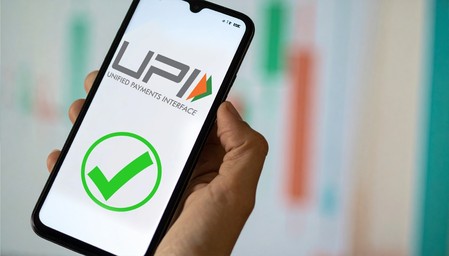
Last week, the Supreme Court, while hearing a petition, refused to grant an interim stay on the UPI fee, which was set to be implemented on October 15. The Supreme Court stated that the issue was more technical than legal. This means that the rules regarding UPI fees will remain in place, meaning that UPI payments above ₹2,000 will be charged a 0.4% MDR. No person-to-person fee will be charged, and small shopkeepers with monthly turnover up to ₹100,000 will not be charged MDR. Payments of ₹75,000 or more will be charged a maximum of ₹300. Payments for fuel, railway tickets, insurance, and telecom services above ₹2,000 will be charged a flat fee of ₹5. It’s worth noting that in this new era, the UPI system has made commerce much easier and safer. Previously, when transactions were conducted only in cash, merchants faced the challenge of closing their establishments daily and storing cash safely. When businesses operate only in cash, the scope of sales of any product becomes limited. However, online payments have significantly increased the sales and transactions of business establishments at both national and international levels. Online payments have grown to such an extent that, according to statistics, 95 percent of major trade in India is conducted online. The government has attempted to increase its revenue by imposing fees on UPI payments. RBI data shows that on September 15, the public held notes and coins worth ₹42,10,170 crore. A year earlier, these notes and coins were 13.6 percent less than this. The full fiscal year 2025-26 shows that banknotes also increased by 11.9 percent to ₹41.24 lakh crore. This means that if online payments are expensive, people will readily switch to cash. But don’t forget that if people switch to cash on a large scale, the huge cost of printing notes will also increase at government mints. It may happen that the income you intend to earn through online payments is offset by the mint expenses. Although the government has stated that there will be no fee for payments below ₹2,000, the attitude of small shopkeepers, street vendors, and petrol pumps towards UPI payments is already changing. They don’t want to be burdened with UPI fees, so now, from petrol pumps to milk booths, cash payments are being emphasized. Any country seeking rapid economic growth and international expansion will be reluctant to impose the burden of online payments, especially if it’s a developing country like ours, where the middle class spends with a high degree of scrutiny. Another question is: where the government can clearly create a new source of income, shouldn’t it? Central and state governments implement numerous schemes to woo voters in the name of welfare measures, regardless of the burden on the treasury. Now, if the government sees a new source of income, why not start it? The answer is, it should definitely be started, but with careful consideration. It’s important not to adopt revenue-boosting measures while simultaneously increasing spending on welfare programs. The result will be a disaster. One thing is clear: if cash payments are revived, large malls and showrooms will begin to attract customers, replacing online businesses. It’s also important to note that increased cash payments may open a backdoor for laundering black money.
Abhishek Vij
Swachh Bharat Mission (SBM), launched in 2014, has evolved into a broader movement for cleanliness, waste management, and...
The US has postponed the 100% additional tariff on Russian oil purchases for China until January, but no...
Antibiotics, antiinflammatory drugs, and other active pharmaceutical ingredients have been "invisibly" polluting rivers in Bangladesh, thereby impacting marine...

A 13-volume biography of Pramukh Swami Maharaj, spanning 8,848 pages and 2,146,447 words, has been recognised by the...

A group of former bureaucrats, social activists, and civil society members has issued a 'People's Notice of Impeachment'...
Good Evening Viewers, we hope you spend your evening well with The Savera Times Evening Bulletin. Stay updated...

Aries: The day will be auspicious...