Last Updated: November 7, 2026
Last Updated: November 7, 2026





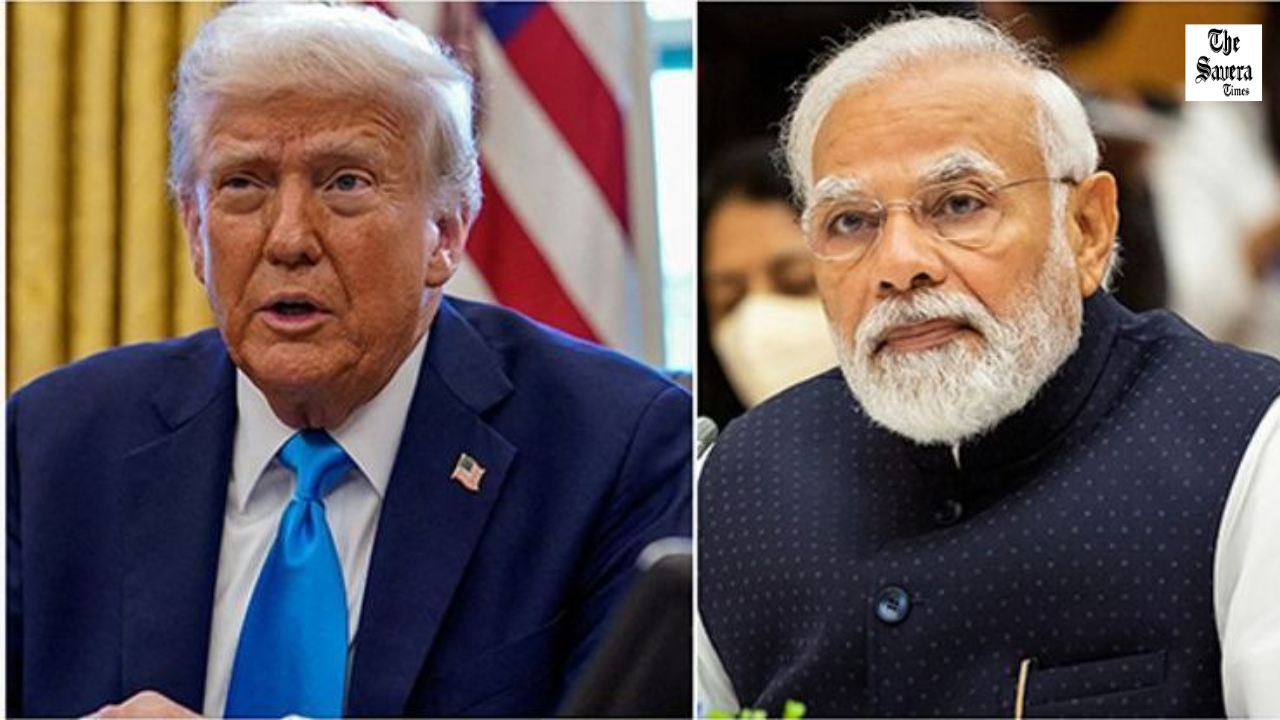
New Delhi / Washington: In a landmark shift meant to reshape trade dynamics, India and the United States have agreed on a new trade deal that significantly lowers tariffs on Indian goods entering the US market a move expected to give Indian exporters a competitive edge over rival economies such as China, Pakistan and Bangladesh.
Under the agreement announced by US President Donald Trump after consultations with Prime Minister Narendra Modi, reciprocal tariff rates on Indian exports into the US have been cut to 18 per cent from as high as 50 per cent.
Previously, Indian goods faced a combined tariff burden that included a 25 per cent reciprocal tariff and an extra 25 per cent punitive duty linked to India’s oil purchases effectively putting tariffs around 50 per cent. Under the new pact, the punitive levy has been withdrawn, and the reduced rate now serves as the baseline for Indian products entering the US market.
This shift positions India more favorably than many regional competitors:
China still faces US tariffs of around 34 per cent, giving Indian exporters a notable advantage.
Neighboring exporters such as Pakistan (approx.19 per cent) and Bangladesh (20 per cent) also confront higher rates than India.
Prime Minister Modi welcomed the development, highlighting that the tariff cuts will support “Made in India” goods in the US market and strengthen bilateral trade ties. The deal is expected to expand export opportunities for key Indian sectors, from textiles and garments to engineering goods and agricultural products.
External Affairs Minister S. J. Jaishankar described the agreement as beneficial for both economies, emphasizing potential growth in jobs, innovation, and bilateral cooperation.
Economists say that the tariff advantage could help boost India’s global export competitiveness, especially as global supply chains diversify and firms seek alternatives to traditional suppliers.
Apart from tariff restructuring, the deal also entails India making certain trade and non-tariff barrier adjustments, including a commitment to stop purchasing Russian oil a condition that facilitated the punitive tariff’s removal.
US leaders have also framed the agreement as a way to increase American exports to India, particularly agricultural products, which could help balance the trade relationship and support US farm interests.
Stock markets reacted positively to the news, with Indian indices opening higher and the rupee strengthening against the dollar, reflecting investor optimism about improved export prospects.
India’s newly negotiated tariff rate gives its exporters a clear competitive edge compared to regional peers:
Compared with China, India now faces significantly lower duties (18 % vs 34 %).
Against Bangladesh and Vietnam, which face tariffs around 20 %, India’s reduced rate boosts its appeal to US importers.
Analysts believe that India’s stronger access to the US market could help diversify export destinations, spur manufacturing, and reinforce India’s position as a key player in global trade.
While this deal represents a major step forward, details on its full implementation and sector-specific outcomes will continue to unfold in the coming weeks. Governments and business groups on both sides are expected to monitor its effects closely as export orders and trade strategies adjust to the new tariff landscape.
New Delhi: Hockey India on Saturday paid tribute to former India women’s chief coach Gurdial Singh Bhangu, who...

Three people, including a young girl, died and more than half a dozen passengers were injured after a...

A mural of Rabindranath Tagore at Bangladesh's Khulna Railway Station was defaced with black ink. Police have launched...

US President Donald Trump has described the confrontation with Iran as “not a war”, claiming Washington has made...
Bengaluru: The investigation into the murder of seven members of a family is progressing, with police examining the...

Samajwadi Party chief Akhilesh Yadav will visit Ayodhya's Ram Temple on December 12, marking his first visit since...
Aries: The day will be auspicious...