Last Updated: October 21, 2026
Last Updated: October 21, 2026





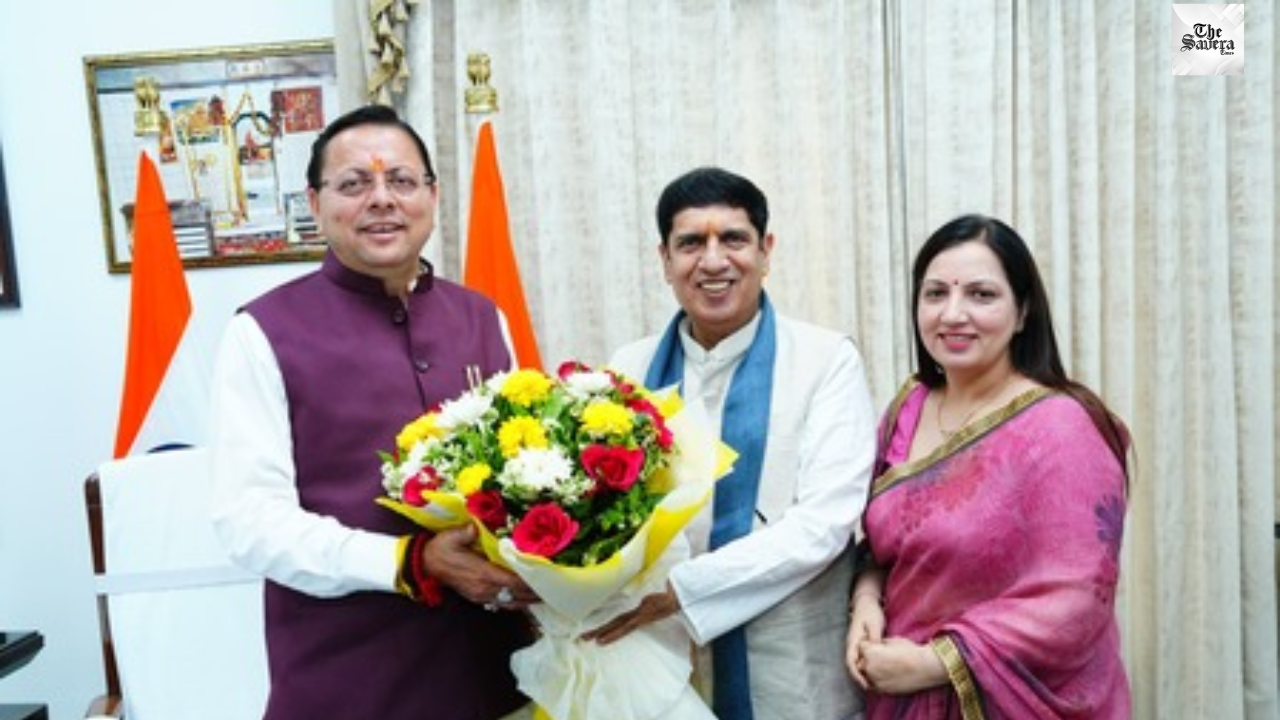
The Uttarakhand government has officially allocated portfolios to its cabinet ministers, marking a key administrative step aimed at streamlining governance and accelerating policy implementation across departments. The decision, approved under the leadership of Chief Minister Pushkar Singh Dhami, outlines the distribution of responsibilities among senior ministers following recent political developments in the state.
The allocation is expected to ensure smoother functioning of the government machinery while providing clarity on departmental leadership and accountability.
Chief Minister Pushkar Singh Dhami has retained several crucial departments, including Home, Personnel, Finance, and Information, reflecting his central role in steering governance and maintaining oversight over key administrative functions.
Among other prominent allocations, senior ministers have been assigned departments aligned with their experience and political standing. These include portfolios such as Public Works Department (PWD), Health, Education, Tourism, Agriculture, and Urban Development, all of which are vital to the state’s development agenda.
The allocation aims to strike a balance between continuity and fresh administrative energy, with both experienced leaders and relatively newer faces entrusted with significant responsibilities.
The distribution of portfolios comes at a time when Uttarakhand is focusing on infrastructure development, tourism growth, disaster management, and employment generation. With the state’s unique geographical challenges and economic priorities, the cabinet’s composition and portfolio allocation are seen as critical to delivering results on the ground.
Departments like Tourism and PWD are particularly significant, given Uttarakhand’s reliance on pilgrimage tourism and the need for robust infrastructure in hilly terrains. Similarly, Health and Disaster Management portfolios carry added importance due to the state’s vulnerability to natural calamities.
The government has indicated that ministers have been chosen for these roles based on their ability to deliver targeted outcomes and manage complex challenges effectively.
The allocation of portfolios is also expected to bring administrative stability and improve coordination between departments. Clear division of responsibilities allows ministers to focus on policy execution and long-term planning while ensuring quicker decision-making.
Officials believe that well-defined roles will help avoid overlaps in authority and enhance efficiency in governance. Coordination between departments such as Urban Development, Transport, and Environment will be essential for sustainable growth, especially in rapidly urbanising areas of the state.
From a political perspective, the portfolio allocation reflects the leadership’s attempt to maintain internal balance within the ruling party while rewarding experience and managing expectations among ministers. Such decisions often play a crucial role in maintaining cohesion within the cabinet and ensuring smooth functioning of the government.
Observers note that assigning key departments also signals the government’s priorities and policy direction, offering insights into which sectors will receive greater attention in the coming months.
With portfolios now assigned, the focus shifts to execution. Citizens and stakeholders will be closely watching how effectively ministers deliver on promises related to infrastructure, healthcare, education, and employment.
The government is expected to push forward with key initiatives, including improving road connectivity, boosting tourism, strengthening healthcare services, and enhancing livelihood opportunities in rural areas.
The coming months will be crucial in determining whether the newly structured cabinet can meet public expectations and accelerate development in the state.
Akshay Kumar met Uttarakhand Chief Minister Pushkar Singh Dhami in Dehradun to discuss film production opportunities, the state’s...
The Roshnabad District Jail superintendent in Haridwar received WhatsApp death threats allegedly invoking the Lawrence Group, prompting a...
New Delhi: Congress leader and former Uttarakhand Chief Minister Harish Rawat on Saturday denied reports that he had...
Two people died and a woman was rescued after an SUV was swept away by a strong water...

Congress has appointed Sandeep Gupta and Akshit Singh as National Coordinators for its Social Media and Digital Platforms...

Pauri Garhwal: More than 100 students of a private school reached the Divisional Forest Officer (DFO) office in...

Aries: The day will be auspicious...