Last Updated: October 21, 2026
Last Updated: October 21, 2026





Snow cover across the Hindu Kush Himalayan region fell 27.8 per cent below the long-term average between November 2025 and March 2026, the lowest in more than two decades, stated the recently released Snow Update Report 2026 by the International Centre for Integrated Mountain Development (ICIMOD).
This is the fourth consecutive year of below-normal snowpack. Of the 12 major river basins, ten are below normal. The Mekong, Tarim and Tibetan Plateau have recorded their lowest snow persistence in 24 years.
The Hindu Kush Himalayas sustain nearly two billion people. In basins such as the Helmand and Amu Darya, snowmelt accounts for more than 70 per cent of annual runoff, found the ICIMOD report. Reduced snow means less groundwater recharge and greater drought vulnerability downstream.
Only two basins recorded above-normal snow: the Ganges at +16.3 per cent and the Irrawaddy at +21.8 per cent offering limited local relief but nowhere near enough to offset the wider trend. Kashmir sits within the Indus basin, where warming trends are more pronounced. The valley has recorded five consecutive years of below-normal precipitation. Weather analysts tracked the pattern: a 20 per cent deficit in 2020, 28 per cent in 2021, 16 per cent in 2022, 7 per cent in 2023, and then 2024, the driest year in five decades. January alone saw a 91 per cent deficit.From December 2025 to February 2026, Jammu and Kashmir recorded a 65 per cent precipitation deficit, the seventh consecutive deficient winter. February saw an 89 per cent shortfall, with the region receiving just 100.6 millimetres against a normal of 284.9 mm. Srinagar was down 64 per cent, Budgam 71 per cent, Shopian 82 per cent. “This is not a single bad year,” Arif said. “It is a sequence of deficit years steadily weakening the water balance.”
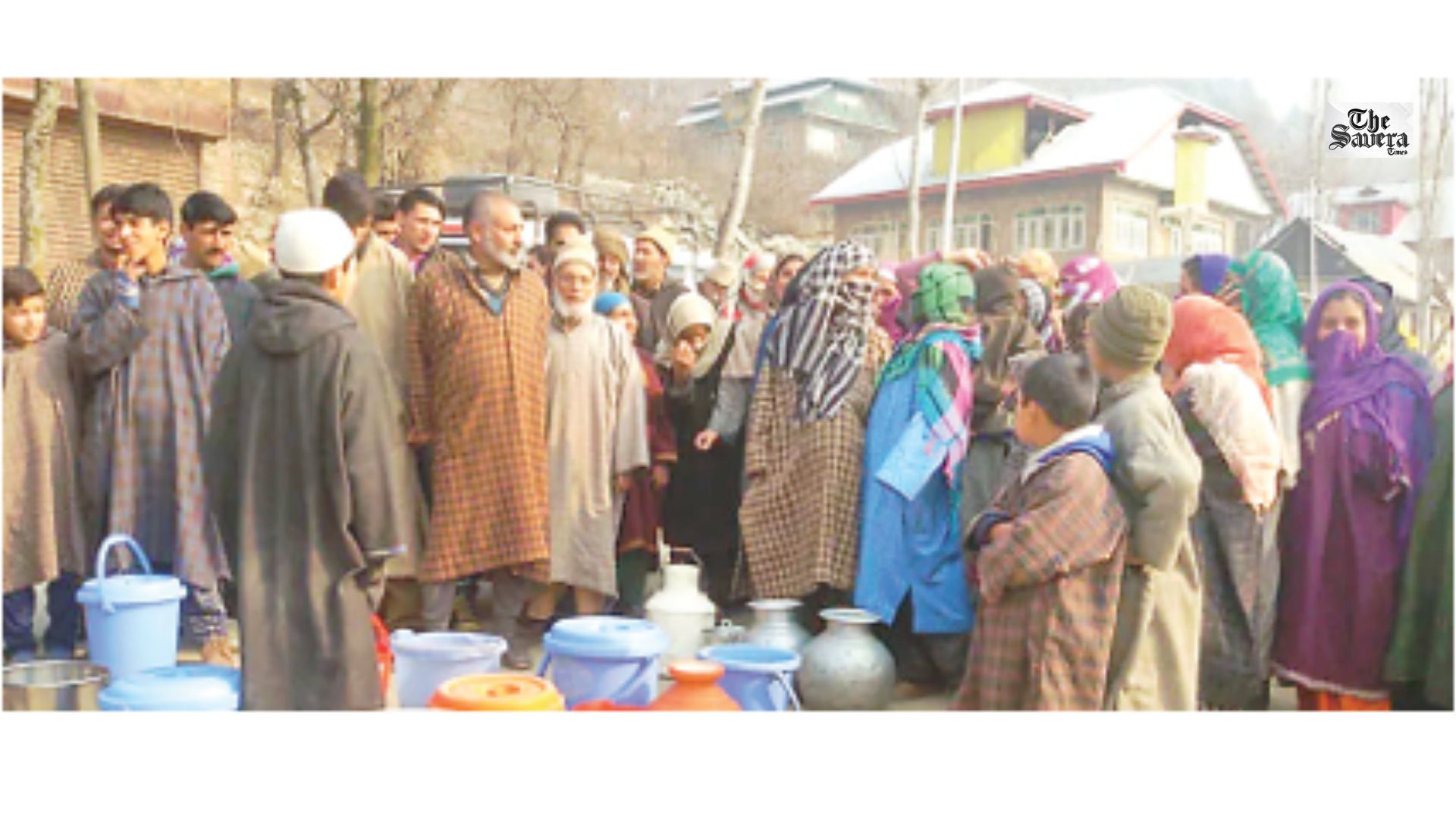
Across Kashmir, the impact is visible. In Anantnag, the Achabal Mughal Garden built by Noor Jahan, wife of Emperor Jahangir ran dry in winter 2025. It was the first time in its recorded history that the spring feeding the garden had failed.
The crisis is not only about less water. It is about water arriving differently. Snow accumulates and releases gradually, sustaining rivers and groundwater when most needed. Rain arrives and leaves quickly, running off before it can recharge aquifers.Groundwater recharge is declining, springs are weakening, and rivers are showing higher winter flows but reduced lean-season discharge. Rainfall patterns are becoming more erratic: fewer rainy days but higher intensity events that increase runoff while reducing infiltration.
A Srinagar-bound bus with a Jammu and Kashmir registration number was attacked with stones outside the Divine Star...

An encounter broke out in Jumgund in Jammu and Kashmir's Kupwara district after troops detected suspicious movement near...

Higher reaches of Jammu and Kashmir received the season’s first snowfall, covering Doda, Gurez Valley and Pir Ki...
Several high-altitude areas in Jammu and Kashmir have received the season's first snowfall in the past 24 hours....
Jammu: Joint security forces recovered a cache of arms and ammunition during a search operation in Jammu and...
Kashmir’s handicraft industry is on a path to revival after the turbulent years of militancy and the Covid-19...

Aries: The day will be auspicious...