Last Updated: October 26, 2026
Last Updated: October 26, 2026





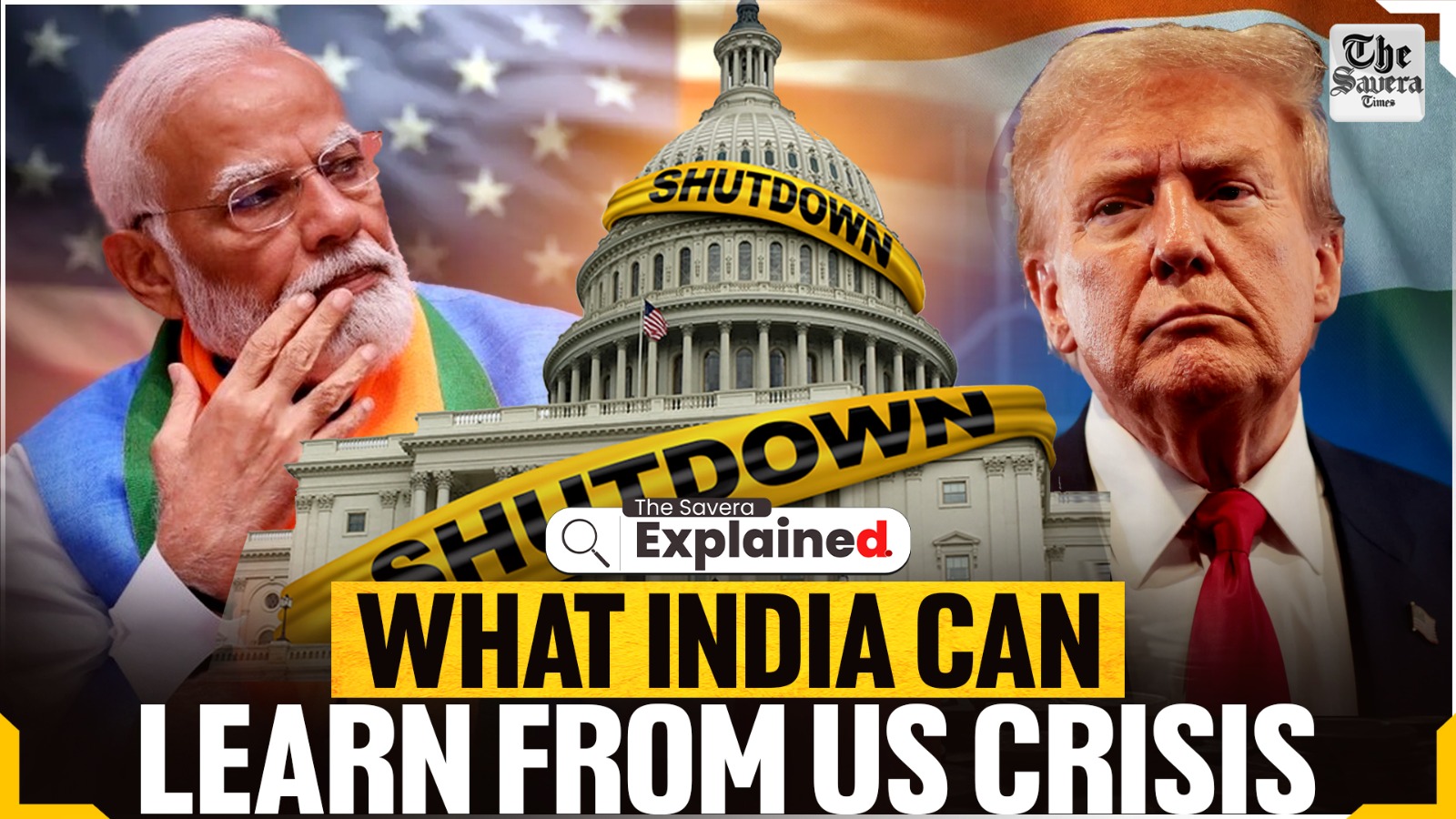
The United States narrowly avoided a deeper crisis as President Donald Trump signed a bill on November 12 to end the longest government shutdown in its history. The 43-day standoff, running from October 1 to November 12, left 1.4 million federal workers without pay and disrupted food aid for 42 million Americans.
The conflict stemmed from a budget fight over healthcare funding, exposing deep political fractures.
As agencies reopen, the nation again asks: why do such shutdowns recur, and what do they signal for the world’s largest economy?
What is a Shutdown
A US government shutdown happens when Congress fails to pass funding before the fiscal year begins on October 1. Without appropriated money, federal agencies must stop non-essential operations.
Essential services—air traffic control, border security, national defense—continue, but many functions halt. Workers are either furloughed without pay or work temporarily without compensation, receiving back pay only after a funding bill is signed.
Shutdowns are partial, not total. In this case, the Department of Defense continued operating due to advance funding. But national parks closed, scientific research stalled, and federal loan processing slowed sharply. Since 1977, the US has experienced 20 shutdowns, averaging eight days.
The 2018-2019 shutdown lasted 35 days; this 2025 shutdown surpassed it at 43 days. The Congressional Budget Office estimates at least $7 billion in long-term economic losses by 2026 from reduced productivity, halted services, and delayed spending.
Process of Passing Budget
The US budget cycle begins in February when the president submits a spending proposal for the coming year. The plan outlines funding levels across sectors such as defense, healthcare, and education—totaling about $6.8 trillion for fiscal year 2025.
Congress then debates the proposal and must pass 12 separate appropriations bills by September 30. When lawmakers miss deadlines, they commonly rely on a “continuing resolution” to extend previous funding levels temporarily.
This year, negotiations collapsed over Democratic demands to extend expiring healthcare subsidies and reverse earlier Medicaid cuts. Republicans, with narrow congressional majorities, pushed to link funding to increased border security.
With no compromise reached, the government entered shutdown. The final bill passed the House 222–209 and the Senate 60–40, reflecting strained but bipartisan support.
Trump signed the measure late Wednesday, restoring government funding through January 30, 2026. Federal workers are guaranteed back pay, though full operational recovery may take weeks.
Key Points
This shutdown highlighted deep political and economic vulnerabilities, disrupting services nationwide.
State of US Finances
The US faces rising fiscal pressures. On November 5, 2025, gross national debt reached $38.09 trillion, up from $36.1 trillion at the year’s start. Debt held by the public stands at $30.59 trillion.
Interest payments alone cost $1.216 trillion in fiscal 2025—17% of federal spending. The debt ceiling was raised to $41.1 trillion in July through the “One Big Beautiful Bill Act,” providing temporary relief but no structural fix.
The fiscal 2025 deficit totaled $1.74 trillion, while private investors hold $24.4 trillion of US debt. Economists warn that without reforms, growth may slow and borrowing costs may rise. Shutdowns further weaken global confidence in US fiscal stability.
For India, a Cautionary Tale
India’s budget system offers stability by comparison. Parliament passes the Union Budget once a year by April 1, preventing shutdowns. The US system—fragmented, polarized, and requiring consensus among 535 lawmakers—remains vulnerable to recurring deadlocks.
For India, growing at 7% GDP, this is a warning: polarization could delay reforms on jobs or welfare. With elections ahead, leaders must prioritize consensus.
The US pain—lost wages, empty shelves—shows how budget fights hurt everyday people. Stability matters more than wins.
Imagine opening WhatsApp on your phone, but the SIM card linked to your account is not inside the...

Delhi’s air pollution is once again raising health concerns, with the Air Quality Index (AQI) entering the ‘poor’...

Ladakh is seeing two changes at once: a new district has been announced, and the Centre has proposed...

What if a decision taken in Washington could influence India’s oil bills, export earnings and trade relations with...

What happens when the world’s richest business leaders clash over one of the world’s biggest internet markets? A...

Pakistan is heading into its wheat-growing season with a serious water problem. The country is facing a projected...
Aries: The day will be auspicious...