Last Updated: October 14, 2026
Last Updated: October 14, 2026





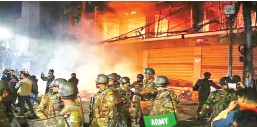
There’s something deeply uneasy about reading a story where a family’s home is reduced to ash while the world watches a wider storm of unrest sweep a nation. In Bangladesh’s Pirojpur district, in a village called Dumritola, unidentified attackers targeted a Hindu family’s house in the early hours of December 27, stuffing a room with cloth and setting it alight.
The blaze spread fast, devouring several rooms and leaving the Saha family’s possessions — furniture, important documents, cash, certificates — charred beyond recognition. Local police have said they’ll investigate, but the desperation you feel reading that is tied not just to the loss of property but to what the act signals about where things are headed for minorities in the country right now.
This wasn’t an isolated arson. Across southern and eastern Bangladesh in recent days, Hindu homes have been repeatedly hit. In the Chittagong region, two other houses belonging to expatriate Hindu families were set on fire after attackers reportedly locked the families inside before lighting the flames. All eight residents escaped by the skin of their teeth, but the pattern is alarming: homes, the ultimate symbol of safety, are being breached and targeted.
Locals in Pirojpur and other districts aren’t just feeling the heat of literal fire. Many describe an atmosphere thick with tension after a wave of communal and political unrest swept the country in December. The killing of a young Hindu garment worker, beaten and then set ablaze by a mob over alleged religious insult, sparked outrage both inside Bangladesh and internationally. That incident became a grim catalyst, and amid heightened political turmoil, attacks against minorities appear to be increasing.
What’s striking — and disheartening — is that in many of these arson cases there have been no confirmed arrests reported yet, and authorities are still trying to pin down who is responsible. In the Dumritola attack, police say the exact cause of the fire has not been officially confirmed, even though witnesses and local reports point to deliberate ignition by attackers.
When you zoom out from that one family’s home, what emerges is a broader, unsettling picture of communal strife and minority vulnerability. Reports from multiple regions suggest that homes of at least seven Hindu families have been burnt in recent days, forcing some to flee or live in fear of retaliation.
Voices from within the community bristle at the lack of security and protection. Some Muslim community leaders have publicly condemned the violence and called for calm — but those statements coexist with the very real fear of targeted aggression that families are living with day to day.
There’s also an international reaction shaping the backdrop to these local stories. Governments and human rights advocates abroad have condemned the surge in violence against minorities in Bangladesh, and NGOs and diaspora groups are demanding accountability and stronger protection for vulnerable communities. That adds another layer of pressure and complexity, because what’s happening in small villages like Dumritola now resonates far beyond district borders.
The burning of a home is never just about bricks and wood. It’s about the idea of sanctuary being violated. When minority families start seeing their houses set alight in patterns that mirror each other across regions, it doesn’t just signal isolated crime — it points toward a pervasive insecurity. For the Saha family and others like them, returning to normal life once the smoke clears isn’t as simple as rebuilding walls. It’s about reclaiming a sense of safety in a place that suddenly feels unstable.
Bangladesh has a long and complex history with communal tensions. Violence against minorities is not new, but the intensity and frequency of these recent attacks — in the midst of national political upheaval — raise critical questions about protection, justice, and how the country navigates its diversity at a moment of internal stress.
The world may talk about democracy, political change, and elections, but for families on the ground, democracy means the right to live without fear. And when that right is overshadowed by targeted attacks on homes and lives, it’s not just property that burns — it’s trust in the system that’s supposed to protect you.
A major train accident occurred on Tuesday in the Multan district of Pakistan's Punjab province. At least four...

Canadian Foreign Minister Anita Anand will arrive in New Delhi on an official visit on Tuesday. During her...

International human rights organization Amnesty International has expressed serious concern over the alleged arbitrary arrests of prominent leaders...
US President Donald Trump says Vladimir Putin may be more willing than Volodymyr Zelenskyy to reach a peace...

A magnitude 6.1 earthquake struck Panama early Tuesday at a depth of 10 kilometres. The tremor followed a...

US President Donald Trump has indicated the possibility of meeting North Korean leader Kim Jong Un during his...

Aries: The day will be auspicious...