Last Updated: November 8, 2026
Last Updated: November 8, 2026






The Botanist is a quiet, meditative film that draws its strength from stillness rather than drama. Set in a remote hamlet in China’s Xinjiang region, the film turns landscape into an emotional force. Mist, sparse homes, and long silences give the valley a sense of memory, resisting the rapid modernisation unfolding beyond its borders. Conversations about mining and migration echo through the community, yet the land seems determined to hold its ground.
At the centre is Arsin, a man who chooses to remain rooted as others move on. His girlfriend leaves for boarding school, his uncle-brother departs for Beijing, but Arsin stays behind. His solitude is not portrayed as despair but as dignity. He is self-contained, committed to a life shaped by silence, routine, and belonging.
The limited cast heightens the film’s intimacy. With each departure, Arsin’s solitude deepens, yet he refuses to follow the path of development. His choice becomes a quiet form of resistance. He rejects the lure of economic opportunity and the pressure to migrate, holding on to a way of life that is slowly disappearing.
The film’s closing image of a dark horse galloping across the valley is striking. The horse becomes a symbol of the passage of time, freedom, and inevitable change. Placed against Arsin’s ageing face, it captures the tension between endurance and the slow erosion that comes with staying.
The score is sparse and atmospheric, allowing silence to become central to the film’s emotional weight. Long stretches without dialogue reflect Arsin’s inner world more powerfully than words could.
Set against China’s rapid transformation, The Botanist reflects on what communities lose when modernisation accelerates. Arsin’s decision to stay becomes a cultural statement, a protest against erasure and forgetfulness.
Jing Yi’s direction shapes a compelling meditation on solitude, identity, and the quiet strength of staying rooted.
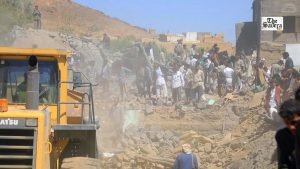
At least 11 people were killed after airstrikes hit Ash Sharyah village near Yemen's capital, Sanaa, according to...
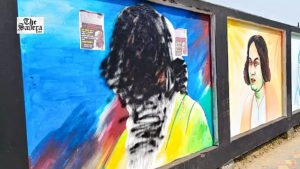
A mural of Rabindranath Tagore at Bangladesh's Khulna Railway Station was defaced with black ink. Police have launched...
US President Donald Trump has described the confrontation with Iran as “not a war”, claiming Washington has made...

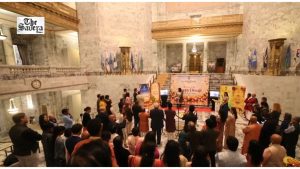
American governors and federal leaders celebrated Diwali while recognising the contributions of Indian Americans. President Donald Trump received...
Washington: A 30-year-old Venezuelan national was arrested near the White House after US Secret Service agents discovered three...

Washington: US President Donald Trump outlined plans for a sprawling aerospace exhibition venue at Florida’s former space shuttle...
Aries: The day will be auspicious...