Last Updated: October 22, 2026
Last Updated: October 22, 2026





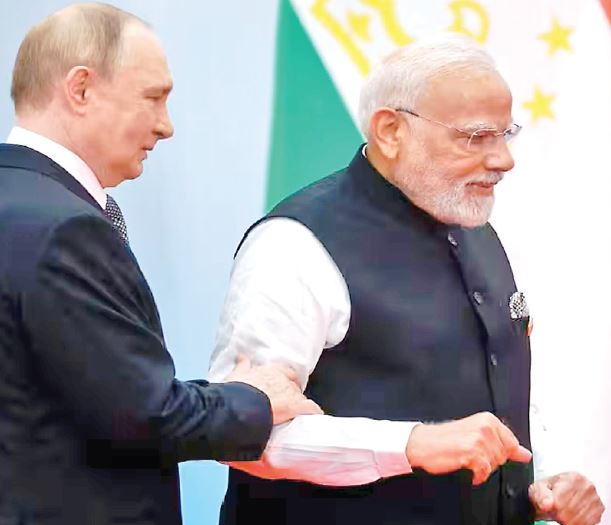
A fresh controversy has stirred diplomatic circles in New Delhi after the Congress party claimed that Russia, India’s long-time strategic ally, is moving ahead with a deal to supply advanced RD-93MA jet engines for Pakistan’s fleet of Chinese-made JF-17 fighter aircraft. The allegation has raised questions over Moscow’s loyalty to India and comes just weeks before Russian President Vladimir Putin’s expected visit to India on December 5-6.
The Congress, led by its communication in-charge Jairam Ramesh, alleged that the Narendra Modi government had failed to prevent Moscow from providing the upgraded engines to Pakistan, despite direct intervention by External Affairs Minister S. Jaishankar earlier this year. Ramesh wrote on X that the latest JF-17 Block III jets will be equipped with RD-93MA engines and PL-15 missiles, “believed to have been used against our country during Operation Sindoor.”
He argued that the move undermines India’s national interest and reflects a failure of the government’s foreign policy. “The government owes the nation an explanation as to why a long-time and trusted partner like Russia is now providing military support to Pakistan,” Ramesh said, adding that India continues to buy Russian S-400 missile systems and negotiate for Su-57 stealth fighters.
The opposition party also accused the Modi government of failing to diplomatically isolate Pakistan. Ramesh pointed out that “Pakistan’s leadership is being courted warmly by President Donald Trump and supplied weapons by President Vladimir Putin, while enjoying unqualified backing from China.”
However, the claim was swiftly dismissed by the ruling Bharatiya Janata Party. BJP spokesperson Amit Malviya called the allegations “reckless information warfare,” noting the absence of any credible confirmation from Russian or Indian authorities.
Moscow too rejected the reports, terming them “mischievous and baseless.” Citing official sources, The Economic Times reported that Russia and India have an understanding that Moscow would not supply any defence equipment to Pakistan that could harm Indian interests. A Russian diplomat quoted by a news channel said, “It looks illogical for serious observers who follow big deals ahead between Russia and India. Someone is trying to compromise exceptionally promising cooperation, especially on the eve of high-level meetings.”
The issue nonetheless highlights India’s deep dependency on Russia for defence supplies. For over five decades, Moscow has been New Delhi’s most reliable military partner, providing aircraft, tanks, and missile systems. The relationship has endured through changing geopolitical alignments, including India’s growing ties with the United States.
Pakistan, by contrast, has maintained limited military ties with Russia. The two countries signed a modest defence cooperation agreement in 2014, followed by a deal for four Mi-35M attack helicopters, which have since been delivered. Russia later turned down Islamabad’s request for modern Kalashnikov rifles in 2019, assuring India that no further military cooperation was planned.
The JF-17 fighter, jointly developed by China and Pakistan, already uses Russian-designed RD-93 engines supplied indirectly through Beijing under an older trilateral arrangement. Experts note that Pakistan does not buy these engines directly from Russia. “Russia has been selling fully assembled RD-93 engines to China since the early 2000s, which China then fits into the JF-17 before exporting it to Pakistan,” said a defence analyst familiar with the matter.
Still, even the perception of Russia deepening military ties with Pakistan could strain its relationship with India. Political scientist Muhammad Murad of the University of Bonn noted that “while ties between Islamabad and Moscow have improved, mistrust remains due to Pakistan’s ambiguous stance on the Russia-Ukraine war and reports of Pakistani arms reaching Ukraine.”
Some experts, however, argue that the controversy is being exaggerated. Pyotr Topychkanov of Moscow’s Primakov Institute said any continued use of Russian-origin engines in Pakistani jets may actually work in India’s favour. “It shows that China and Pakistan haven’t yet managed to develop an indigenous alternative. Moreover, India’s familiarity with this engine makes the aircraft’s performance predictable for its air force,” he told PTI.
For now, Moscow’s denial and the timing of the reports — just ahead of Putin’s India visit — suggest that the controversy may be politically motivated. Still, the episode underscores how global defence alignments are shifting in an era where traditional partnerships are increasingly being tested.
Whether Russia chooses to stay firmly on India’s side or diversifies its military outreach to Pakistan could determine the next phase of New Delhi’s decades-old defence diplomacy.
Good Evening Viewers! Get the latest updates from India and around the world with The Savera Times Evening...

Bharatiya Janata Party (BJP) National General Secretary Smriti Zubin Irani launched a scathing attack on Congress MP and...
New Delhi: Cockroach Janata Party (CJP) leaders Saurav Das and Ashutosh Ranka will be released from judicial custody...

According to police, three suspicious young men are seen in CCTV footage. Efforts are underway to identify them....

A video has surfaced of an alleged attempted assault on Jan Suraj Party's Bihar president Manoj Bharti. The...
Two accused have been convicted and sentenced to 10 years of rigorous imprisonment in a 2017 drug trafficking...

Aries: The day will be auspicious...